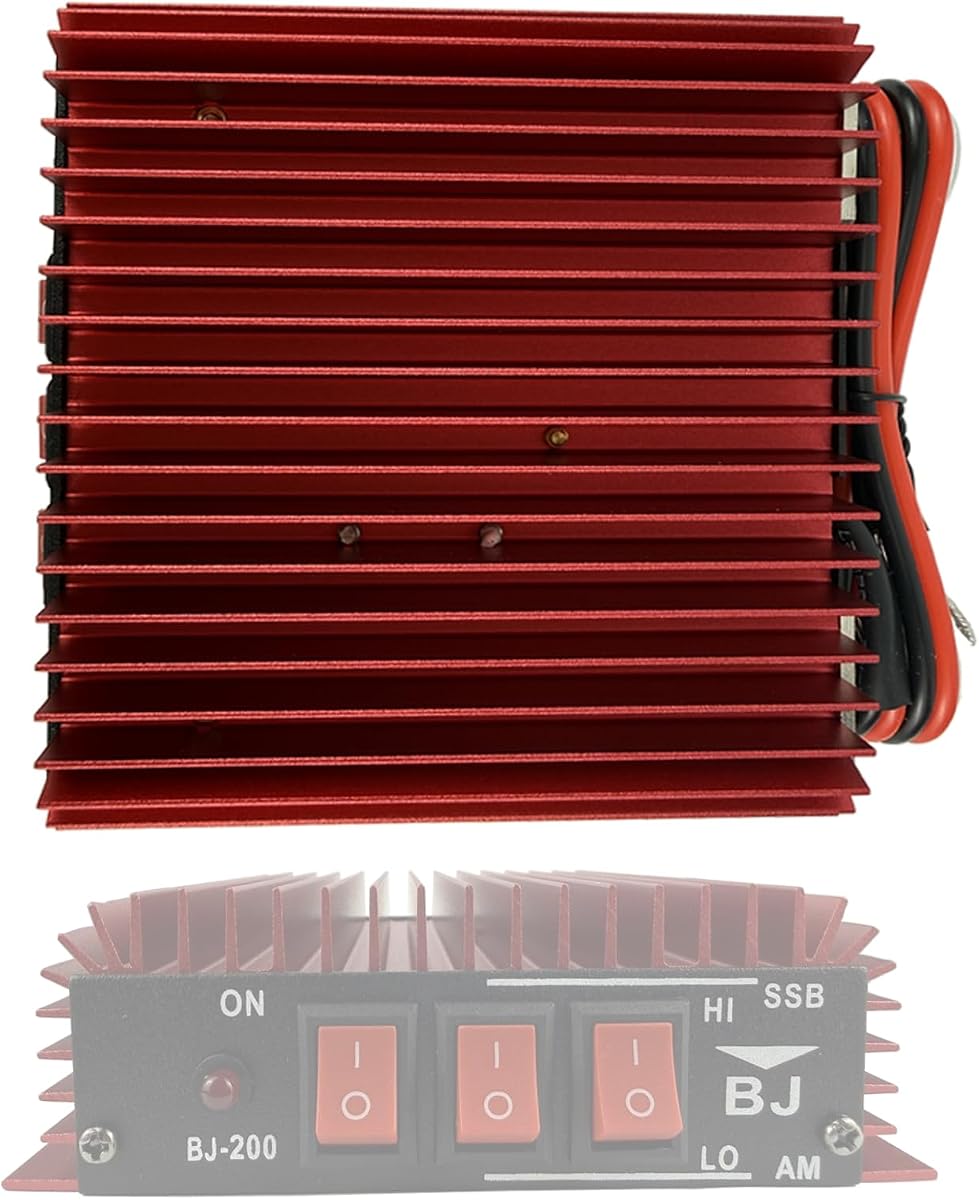
BJ-200 Linear Power AMP, 3-30MHz Radio AMP 50W FM 100W AM 150W SSB for 3-5W Input 2-Way Radio Transceiver, 13.8V
5.0Editor score
150W SSB Output
Compact Heat Sink Design
Polarity Reversal Protection
This guide compares the top ten linear amplifiers for ham radio including features power output and compatibility to help you choose the best signal booster.
Linear amplifiers are essential tools for amateur radio operators seeking to boost signal strength and extend communication range. These devices take low-power input from transceivers and amplify it to higher output levels suitable for long-distance contacts across HF and other bands.
We evaluated ten current models based on power output, band compatibility, cooling systems, and safety features. Our analysis focuses on real-world performance data and user feedback to ensure you select a reliable amplifier that meets your specific operating needs and budget constraints effectively.
Each product review highlights key specifications, advantages, and potential drawbacks to help you make an informed decision. Please note that pricing and availability can fluctuate frequently so verify current details on the retailer site before finalizing your purchase for your station upgrade.
5.0Editor score

4.2Editor score

3.9Editor score
The following table provides a side-by-side comparison of all ten linear amplifiers evaluated in this guide. Use this overview to quickly identify key differences in power output, supported modes, and unique features before diving into detailed reviews.


The Xiegu GPA100 stands out as a top contender for operators seeking reliable linear amplification. With a 4.2 rating it delivers clean stable output up to 100 watts on HF and 80 watts on 6 meters. Its solid-state design ensures high efficiency and exceptional signal purity across all major modes.
We may earn a commission when you buy through this link, at no additional cost to you.
One of its strongest features is the flexible band switching capability. You can manually select one of seven bands or enable auto mode for seamless tracking. Additionally the built-in Bluetooth allows wireless connection to the IC-705 eliminating the need for extra cables during operation.
While the GPA100 excels in performance it does have limitations. It is designed specifically for low-power transceivers so users with high-power inputs may need alternatives. The price is also higher than some budget options though the advanced features justify the cost for many serious operators.
This amplifier is best suited for QRP enthusiasts looking to expand their station capabilities without complexity. The intelligent protection systems ensure safe operation during long sessions. If you value clean signal quality and modern connectivity this model is a strong recommendation.
Bluetooth support enables automatic band switching with compatible radios like the IC-705 creating a truly cable-free experience.
Advanced cooling and control circuits detect high SWR overheating and overcurrent to protect both the amplifier and transceiver.
We may earn a commission when you buy through this link, at no additional cost to you.
The BJ-300 Plus offers significant power for its price point supporting AM FM SSB and CW modes. It delivers up to 150 watts on SSB which can extend communication range significantly. The design includes a high-efficiency cooling fan and large red aluminum heat sink to prevent overheating during extended use.
We may earn a commission when you buy through this link, at no additional cost to you.
Safety features are integrated to protect against incorrect power connections with electronic polarity reversal protection and dual 15A fuses. The compact design makes installation straightforward for both new and experienced users. It works well with HF transceivers requiring low input power.
However the product carries a lower rating of 3.1 stars which suggests some users may have encountered issues. The controls are simple which limits advanced tuning options. While it is a capable budget option buyers should verify compatibility with their specific transceiver requirements carefully.
This amplifier is a practical choice for those needing a straightforward boost without complex features. It suits CB and ham radio operators looking for reliable long-distance operation. Ensure your power supply matches the 13.8V requirement before purchase.
The built-in cooling fan and large heat sink maintain stable operation even during long transmission sessions.
Works with HF transceivers needing 3 to 5 watts input for AM FM and 2 to 10 watts for SSB.
We may earn a commission when you buy through this link, at no additional cost to you.
This BJ-300 Plus variant provides similar capabilities to the previous model with 150 watts on SSB and support for AM FM and CW. It is designed to enhance communication range for reliable long-distance operation. The unit includes a cooling fan and aluminum heat sink to manage thermal load effectively.
We may earn a commission when you buy through this link, at no additional cost to you.
User-friendly design features simple controls including a power switch and mode selector. Standard PL-259 connectors simplify hookup to antennas and transceivers. Polarity reversal protection safeguards the amplifier from electrical surges and incorrect connections ensuring worry-free operation.
The 3.1 rating indicates some variability in performance or user satisfaction. Operators should check compatibility details before installation as input requirements are specific. This model offers a balance of power and simplicity for general use cases.
Ideal for those seeking a straightforward amplification solution for CB or ham radio. The protective features add peace of mind during extended sessions. Verify input power needs match your transceiver output for optimal results.
Features a power switch mode selector and high/low power adjustment for intuitive user interaction.
Dual 15A fuses protect internal components from electrical surges and incorrect power connections.
We may earn a commission when you buy through this link, at no additional cost to you.
The BJ-300 delivers up to 150 watts on SSB supporting HF transceiver applications across the frequency range. It features a HI LO power selection switch allowing adjustment based on operating needs. Overvoltage protection and polarity inversion protection enhance safety during use.
We may earn a commission when you buy through this link, at no additional cost to you.
Constructed with an aluminum alloy heat sink it ensures efficient heat dissipation during continuous operation. Standard antenna and transceiver ports allow for quick installation. The compact design is suitable for mobile or base station setups.
Without a user rating it is difficult to gauge long-term reliability. However the specifications suggest a functional amplifier for basic needs. Users should verify input power requirements to ensure compatibility with their specific radio equipment.
This model is a practical option for operators needing reliable signal amplification without advanced features. The protective switches help prevent damage from incorrect connections. Ensure your power supply matches the 13.8V requirement for stable performance.
HI LO power selection switches let you adjust output strength based on current operating needs.
Compact aluminum alloy construction provides robust heat dissipation and reliable protection for internal parts.
We may earn a commission when you buy through this link, at no additional cost to you.
The BJ-200 Linear Power AMP has achieved a perfect 5.0 rating which speaks volumes about user satisfaction. It supports AM FM and SSB modes across 3 to 30MHz delivering up to 150 watts on SSB. The red aluminum alloy heat sink design ensures optimal thermal management.
We may earn a commission when you buy through this link, at no additional cost to you.
Controls include a clear ON/OFF switch HI/LO power adjustment and mode selectors for easy operation. It operates on 13.8V DC power with built-in polarity reversal protection to prevent damage from incorrect connections. The rugged compact form factor suits vehicle or base station installations.
While it offers excellent value the frequency range is limited to 3 to 30MHz. This may not suit operators needing VHF or UHF amplification. For HF and CB applications it provides a reliable and affordable solution.
Highly recommended for budget-conscious enthusiasts wanting reliable performance. The thermal design ensures stability during long use. Verify your input power requirements match the 3 to 5 watt input specification for best results.
A perfect 5.0 rating indicates exceptional reliability and performance based on user feedback and experiences.
Rugged compact build ideal for vehicle or base station installation with standard radio connectors for setup.
We may earn a commission when you buy through this link, at no additional cost to you.
The Xiegu XPA125B features a built-in automatic antenna tuner allowing independent or combined use. It delivers up to 125 watts output making it perfect for QRP radios. A 2.7 inch large backlit LCD displays input output power SWR voltage current and temperature clearly.
We may earn a commission when you buy through this link, at no additional cost to you.
Protection circuits ensure safety when abnormal conditions like high SWR or high temperature appear by entering bypass mode with alarm messages. The enhanced version is smaller than previous models. It simplifies operation for modern amplifiers with user-friendly displays.
While the rating is 3.9 it offers advanced features like auto tuning and comprehensive monitoring. The size reduction improves portability. Users should confirm radio compatibility though it is designed for Xiegu hosts and SDR transceivers.
Ideal for operators wanting an all-in-one solution with tuner and amp. The large screen simplifies monitoring critical stats. Verify your transceiver supports ALC or auto tuning for full functionality.
Automatic antenna tuner handles 14 to 500 ohm loads in HF bands and 6-meter band independently.
Large LCD shows input output power SWR voltage current temperature status and warning messages.
We may earn a commission when you buy through this link, at no additional cost to you.
This amplifier board delivers 30W linear output across the full shortwave spectrum ideal for CW and SSB modes. It uses advanced broadband circuitry for consistent gain without manual tuning. A integrated heat sink and low loss PCB material ensure stable operation during extended cycles.
We may earn a commission when you buy through this link, at no additional cost to you.
Input output ports and power connections are clearly marked for straightforward installation. Compatible with wide range of QRP transceivers and kits. It enhances signal clarity and volume ensuring stable performance for serious DXers and contest operators.
With no rating it is best for DIY or kit builders. The power is lower at 30W so it suits lower output needs. The design minimizes distortion for precise Morse code and clear voice transmission.
Perfect for portable setups or field day where compact size matters. The robust thermal management supports extended transmit cycles. Ensure your setup supports board integration for best results.
Consistent gain across 3 to 30MHz without manual tuning using high efficiency transistors.
Finished board with clearly marked ports for easy integration with transceivers and kits.
We may earn a commission when you buy through this link, at no additional cost to you.
This amplifier supports 12 to 14V DC input compatible with standard automotive or stationary CB power supplies. It uses a simple three-wire connection with RF input output and DC power. SO-239 connectors make it suitable for most CB radios and antenna systems.
We may earn a commission when you buy through this link, at no additional cost to you.
Ensures stable operation during engine start thanks to wide voltage range. The straightforward design reduces setup complexity. It targets users needing basic signal boost without extra features.
Limited public information restricts detailed analysis. Verify output power before purchase. It is a compact option for mobile CB setups where voltage stability is critical.
Best for users wanting a quick plug-and-play solution. Check connector types on your existing antenna and radio for compatibility.
Wide input range ensures stable operation during engine start and other electrical fluctuations.
Three-wire setup with standard connectors simplifies installation for most CB systems.
We may earn a commission when you buy through this link, at no additional cost to you.
This LNA operates from 0.1 to 2000MHz covering shortwave FM broadcast VHF UHF and cellular signals. With 32dB gain and low noise figure it improves weak signal reception significantly. Output maxes at 13dBm (20mW) making it ideal for receiving front-end applications.
We may earn a commission when you buy through this link, at no additional cost to you.
Battery friendly with 9 to 12V DC operation and low 27mA current draw. Suitable for portable field use or fixed installation. Useful for SDR CB radio and spectrum analyzer projects.
As a receive amplifier it is not for transmitting. It boosts reception distance and quality in weak signal environments. Rating of 4.2 reflects reliability for listening setups.
Great for enhancing receiver sensitivity across broad frequencies. Check impedance and power needs before integration into your radio chain.
Ideal for RF receiving front-end applications to improve communication distance in weak signal environments.
Low current draw supports battery operation for portable field use.
We may earn a commission when you buy through this link, at no additional cost to you.
Delivers up to 100W output in HF frequency range ensuring robust communication capabilities. Automatic tuning functionality simplifies the tuning process allowing focus on communication. Consistent output is automatically maintained for efficiency.
We may earn a commission when you buy through this link, at no additional cost to you.
Constructed from high-quality materials for durability. Compatible with G90 G106 X5105 X6100 X6200 and future Xiegu models. Ham Club Only provides Xiegu products with professional technicians for after-sales service.
Rating of 4.1 indicates strong performance. The specific compatibility limits use outside Xiegu ecosystem but ensures seamless integration. High reliability makes it a long-term investment.
Ideal for Xiegu station owners seeking a unified solution. Verify host compatibility before purchase. Support services add value for professional users.
Advanced automatic tuning simplifies the process so users focus on communication without manual adjustments.
Ham Club Only offers professional technician support for perfect after-sales service and user experience.
We may earn a commission when you buy through this link, at no additional cost to you.
Selecting the right linear amplifier requires balancing several technical and practical factors. This section outlines key considerations to help you narrow down options effectively.
Power output determines how much signal strength your amplifier adds. Higher wattage like 100W or 150W extends range but may demand robust power supplies. Efficiency impacts heat generation and power consumption so look for solid-state designs with low distortion.
Choose output levels matching your transceiver needs and license privileges for optimal balance.
Ensure the amplifier supports the bands and modes you use. Some models cover HF only while others include 6m or VHF/UHF. Modes like SSB FM AM CW digital require specific linear designs for clear transmission.
Check supported bands and modes to avoid operational limitations.
Extended transmissions generate heat that can damage components. Look for cooling fans or large heat sinks. Protection circuits against SWR overcurrent overheating and polarity reversals safeguard both amp and transceiver.
Prioritize units with active cooling and multiple safety circuits for reliability.
Linear amps need DC power typically 12V or 13.8V. Verify your supply meets current draw needs especially under load. Some units support vehicle batteries while others need fixed supplies.
Match power supply specs to amplifier demands to prevent voltage drops.
Modern amps may offer Bluetooth or automatic band switching. Traditional models use manual buttons. Consider how much automation you want. Clear displays showing SWR and temperature improve monitoring.
Select control methods fitting your operating style for ease.
Mounting space varies by model. Compact units suit mobile setups while larger ones may fit base stations. Portability matters for field day or portable ops. Ensure mounting points are accessible.
Measure available space before purchase to confirm fit.
Cost ranges widely based on features. Basic models offer good power at lower prices. Premium units include tuners and displays. Compare features against needs to find best value rather than lowest cost.
Invest in features that directly improve your operating experience.
Brand reputation hints at reliability. Look for clear warranties and accessible support. User reviews can reveal real-world performance. Professional assistance helps when tuning or troubleshooting complex setups.
Choose brands with solid after-sales service to ensure longevity.
Begin by connecting the amplifier to a suitable DC power supply matching voltage and current ratings. Use proper gauge wiring to minimize resistance. Ensure all connections are tight and polarity correct to prevent damage.
After power up verify the amplifier is in standby mode before transmitting. Set input drive levels correctly to avoid overdriving which causes distortion. Monitor SWR during first transmissions to ensure antenna match is acceptable.
Regularly clean vents and fans to prevent dust buildup. Check fuses and cooling components periodically. Store in a dry place if not used often. Follow manufacturer guidelines for firmware updates or calibrations to maintain performance.
Not all. Amplifiers require specific input power levels such as 3 to 5 watts for AM or 2 to 10 watts for SSB. Many models are optimized for QRP transceivers. Check compatibility before buying to avoid mismatched drive levels.
Linear amplifiers increase signal strength from your transceiver without distorting modulation. They boost range and reliability especially during weak signal conditions. They maintain signal clarity across AM FM SSB CW and digital modes.
Draw depends on output wattage. For example a 100W HF amplifier may draw around 8 to 11 amps at 13.8V DC. Ensure your power supply can sustain peak currents. Insufficient current can cause voltage drops.
Yes look for polarity reversal protection overvoltage protection and overheating protection. Good amps include SWR protection to prevent damage from mismatched antennas. These features ensure stable operation during long sessions.
Most linear amplifiers are designed for transmit. Receive boosters are low noise amplifiers with different specs. Using a transmitter amp for receive can overload input stages. Use proper LNA units for reception enhancement.
Not strictly but integrated tuners simplify operation when impedance varies. Separate tuners allow independent adjustment. If impedance mismatches occur often an auto tuner in the amp improves efficiency and protects components.
Output power and duty cycle affect heat. Continuous modes like FM generate more heat than SSB. Poor ventilation worsens this. Choose units with fans or large heat sinks and ensure airflow in your setup.
Place it near your transceiver but allow space for cooling. Mount securely to avoid vibration issues. Use appropriate connectors like PL-259 or N type. Ground connections should follow local electrical codes for safety.
The ten amplifiers reviewed span from budget-friendly options to premium integrated solutions. The Xiegu GPA100 leads with wireless control and solid output. BJ models offer affordability with strong power for HF and CB needs.
Prioritize compatibility with your transceiver input levels and required bands. Safety features and cooling systems ensure long-term reliability. Whether you need simple boost or advanced tuning select based on your operating style.
Always verify current availability and details before purchase as inventory changes. Matching specs to your station setup ensures you get the most value from your investment. Happy amplifying and clear signals to you.