
AMD Ryzen 7 7800X3D
4.8Editor score
96MB L3 cache
8 cores and 16 threads
Excellent power efficiency
Explore our expert guide on the best Cpus for Machine Learning in October 2026 comparing top models for performance, efficiency, and local AI development needs.
Choosing the right processor is crucial for modern machine learning workflows. High-performance Cpus enable faster training, efficient inference, and robust multitasking for data scientists and developers.
We compared leading models based on core count, cache size, architecture, and AI-specific capabilities. This list covers everything from affordable options to enterprise-grade desktop supercomputers.
Each pick highlights unique strengths for local AI development and high-performance computing. Please note that availability and pricing may change frequently depending on market conditions.
4.8Editor score

4.7Editor score

5.0Editor score
This side-by-side comparison evaluates all ten selected processors across key technical specifications to help you find the ideal match for your specific machine learning workload requirements.



The NVIDIA DGX Spark 2 Pack represents the pinnacle of personal AI computing. With a perfect rating, it delivers unmatched performance for researchers needing enterprise-scale capabilities on a desktop.
We may earn a commission when you buy through this link, at no additional cost to you.
Its Grace Blackwell architecture provides up to one petaFLOP of AI performance. The 128GB unified memory per unit supports models up to 200 billion parameters efficiently.
While the investment is substantial, the ROI for productivity gains justifies the cost. The seamless integration of the NVIDIA AI software stack ensures developers can deploy anywhere.
This system is ideal for teams prototyping large models locally without cloud dependencies. It offers a secure, high-performance environment for rapid innovation and validation.
Experience lightning-fast inference and fine-tuning for large language models directly on your desk without waiting for cloud resources.
Benefit from seamless integration with the full NVIDIA AI software stack for easier development and deployment workflows.
We may earn a commission when you buy through this link, at no additional cost to you.
The AMD RYZEN 7 9800X3D stands out as a versatile powerhouse. With a 4.8 rating, it balances gaming performance with serious computational tasks for local AI prep.
We may earn a commission when you buy through this link, at no additional cost to you.
Its 96MB L3 cache is a critical asset for data-intensive operations. The Zen 5 architecture delivers a 16% IPC uplift for smoother multitasking and faster processing.
Although it has fewer cores than some workstation chips, its speed compensates well for many inference and preprocessing tasks. The thermal performance allows sustained clock speeds.
Developers seeking a reliable, fast platform for learning and prototyping will find this chip compelling. It integrates easily with existing AM5 infrastructure for quick upgrades.
The 96MB L3 cache significantly improves data hit rates for faster access to frequently used training data and models.
Enjoy up to 5.2GHz clock speeds with improved power efficiency to keep your system cool during extended workloads.
We may earn a commission when you buy through this link, at no additional cost to you.
Intel Core Ultra 9 285K offers a unique hybrid approach to desktop computing. Its 4.6 rating reflects strong performance for both heavy lifting and routine background tasks.
We may earn a commission when you buy through this link, at no additional cost to you.
The combination of P-cores and E-cores optimizes workload distribution. This ensures critical AI processes get priority while background tasks remain smooth and efficient.
With up to 5.7 GHz unlocked speed, it handles rapid responsiveness for interactive development. Integrated graphics provide a fallback for basic visual tasks without a GPU.
This processor is ideal for those needing a mix of raw speed and efficiency. It provides a solid foundation for building a versatile development machine.
Performance Hybrid Architecture prioritizes critical tasks to optimize overall system performance during complex AI development cycles.
Unlock up to 5.7 GHz for rapid execution of code compilation and model testing without thermal throttling.
We may earn a commission when you buy through this link, at no additional cost to you.
The AMD Ryzen 9 9950X3D is designed for intense content creation and AI workloads. With a 4.7 rating, it balances raw power with the efficiency needed for long training runs.
We may earn a commission when you buy through this link, at no additional cost to you.
Its 16 cores allow for extensive parallel processing. This is particularly useful for preparing large datasets or running multiple inference models simultaneously.
The Zen 5 architecture ensures better thermal performance and power efficiency. Users can maintain high clock speeds without excessive heat generation during prolonged sessions.
Professionals needing a robust workstation CPU will appreciate this processor's versatility. It handles everything from coding to rendering with consistent reliability.
Leverage 16 cores for extensive parallel processing when preparing large datasets or running concurrent machine learning models.
Enjoy better thermal performance with Zen 5 architecture to maintain high speeds without overheating during long workloads.
We may earn a commission when you buy through this link, at no additional cost to you.
The AMD Ryzen 9 9900X delivers a balanced experience for varied computing needs. Its 4.8 rating highlights reliability for both professional development and general usage.
We may earn a commission when you buy through this link, at no additional cost to you.
With 12 cores and 24 threads, it manages multitasking effortlessly. The 76MB cache provides quick access to instructions, improving overall system responsiveness.
Support for DDR5-5600 memory ensures fast data throughput. This is beneficial for models requiring high bandwidth to move data between RAM and CPU effectively.
This processor is a smart choice for users wanting performance without the extreme cost of top-tier chips. It offers excellent value for serious hobbyists and pros.
Support for DDR5-5600 memory ensures fast data throughput crucial for models requiring high bandwidth data movement.
Experience up to 5.6GHz boost for rapid responsiveness when compiling code or running local inference tasks.
We may earn a commission when you buy through this link, at no additional cost to you.
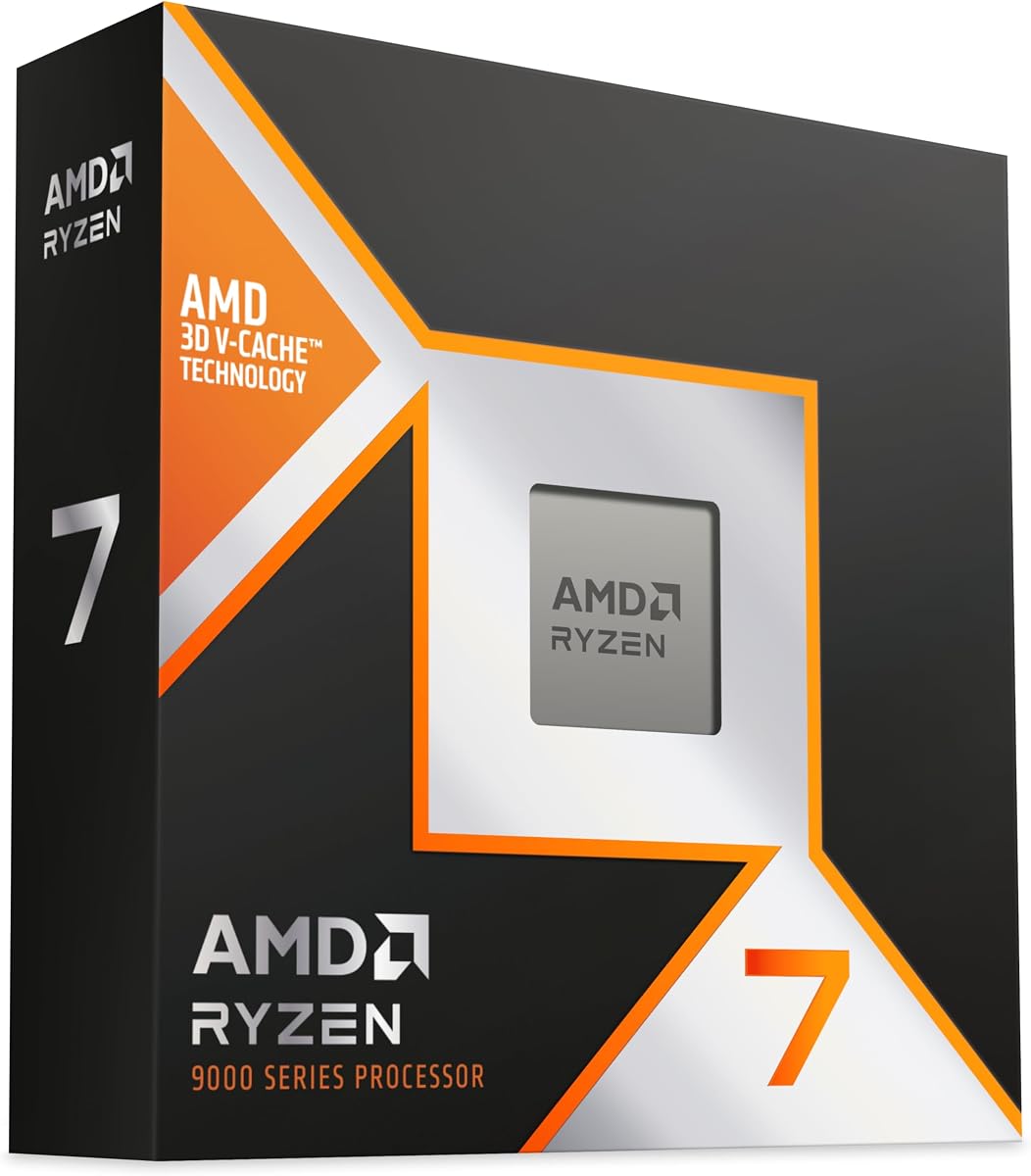
The AMD Ryzen 7 7800X3D is a dependable choice for efficient local AI inference. Its 4.8 rating reflects consistent performance for tasks that do not require massive core counts.
We may earn a commission when you buy through this link, at no additional cost to you.
The 96MB L3 cache is its standout feature. It provides excellent hit rates for data accessed repeatedly, significantly speeding up model execution without needing expensive RAM.
Built on 5nm process technology, it delivers reliable performance with maximum productivity. Integrated graphics offer basic display capabilities if a dedicated GPU is not present.
This CPU is ideal for developers focused on inference rather than training. It provides a cost-effective platform for validating models and running services locally.
Benefit from the massive 96MB L3 cache which significantly reduces latency for frequently accessed model parameters.
Enjoy dependable and fast execution with maximum efficiency thanks to advanced 5nm process technology.
We may earn a commission when you buy through this link, at no additional cost to you.
The AMD Ryzen AI Halo is purpose-built for local AI development on Linux. A perfect 5.0 rating underscores its capability to handle demanding tasks efficiently on a single desktop.
We may earn a commission when you buy through this link, at no additional cost to you.
Its 128GB unified memory allows sharing between CPU, GPU, and NPU. This facilitates running large models locally without the memory bottlenecks found in traditional setups.
The AMD XDNA 2 NPU offers up to 50 TOPS for AI workloads. This accelerates inference significantly compared to relying solely on CPU or GPU processing.
Developers targeting optimized Linux workflows will find this platform ideal. It comes preloaded with tools and models ready for immediate testing and deployment.
The shared memory pool across CPU, GPU, and NPU supports larger AI models without hitting traditional memory bottlenecks.
Leverage the up to 50 TOPS NPU for dedicated acceleration of inference and local AI model execution.
We may earn a commission when you buy through this link, at no additional cost to you.
The Intel Core i9-14900K offers raw speed that benefits compilation and interactive coding. With a 4.2 rating, it excels in scenarios demanding maximum frequency responsiveness.
We may earn a commission when you buy through this link, at no additional cost to you.
Its max clock speed reaches up to 6.0 GHz. This ensures rapid execution of single-threaded tasks often found in development workflows and testing environments.
With 24 cores and 32 threads, it handles multitasking well. Users can run multiple services locally while maintaining performance for active development tasks.
This processor suits those prioritizing speed over power efficiency. It provides a robust foundation for building high-performance workstations for local machine learning.
Experience leading max clock speed of up to 6.0 GHz for rapid responsiveness in interactive development tasks.
Manage heavy multitasking with 24 cores and 32 threads to keep your desktop responsive during complex workflows.
We may earn a commission when you buy through this link, at no additional cost to you.
The AMD Ryzen 7 9850X3D continues the legacy of high-performance desktop computing. With a 4.8 rating, it is recognized for reliable execution across various workloads.
We may earn a commission when you buy through this link, at no additional cost to you.
It features advanced 3D V-Cache technology to improve data access speeds. This architecture helps in maintaining high efficiency even when running complex tasks locally.
Built on Zen 5, this processor offers significant IPC improvements. Users benefit from better thermal performance and higher clock speeds compared to previous generations.
This CPU is a solid choice for developers needing a balanced system. It supports both professional tasks and heavy local experimentation effectively.
Advanced 3D V-Cache technology improves data access speeds for maintaining high efficiency during complex local tasks.
Built on Zen 5 for significant IPC improvements and better thermal performance compared to older generations.
We may earn a commission when you buy through this link, at no additional cost to you.
The NVIDIA DGX Spark brings supercomputer performance directly to a desktop. With a 4.4 rating, it offers enterprise-scale AI capabilities suitable for serious local development.
We may earn a commission when you buy through this link, at no additional cost to you.
It features the Grace Blackwell architecture with up to 1 petaFLOP of AI performance. This accelerates model fine-tuning and analytics significantly for faster time-to-solution.
The unified memory allows running large models locally up to 200 billion parameters. It provides a secure setting for rapid testing without external cloud dependencies.
Ideal for innovators needing freedom to experiment faster, this desktop delivers exceptional ROI. It integrates seamlessly with NVIDIA software for flexible deployment anywhere.
Experience enterprise-scale AI and high-performance computing directly on your desk for rapid prototyping.
Unlock new ideas and experiment with large models directly on your desktop with extensive unified memory.
We may earn a commission when you buy through this link, at no additional cost to you.
Selecting the right CPU requires balancing core count, cache size, and architecture to match your specific local AI development and inference needs effectively.
Higher core counts allow for better multitasking and parallel processing. This is essential when running multiple data preprocessing scripts alongside inference engines.
Prioritize 12 or more cores for serious machine learning workloads to ensure smooth performance across varied tasks.
L3 cache acts as a high-speed storage layer directly on the CPU. Large cache sizes reduce latency when accessing frequently used model parameters and data.
Look for processors with substantial L3 cache to minimize bottlenecks during repetitive inference cycles.
Modern architectures like Zen 5 or Grace Blackwell offer improved Instructions Per Clock and power efficiency. This translates to better performance per watt during long training sessions.
Choose newer architectures to benefit from optimized thermal performance and better overall system responsiveness.
Unified memory pools allow the CPU and GPU to access the same RAM pool. This facilitates loading larger models without exceeding discrete GPU VRAM limits.
If your workflow involves massive models, ensure the system supports high unified memory bandwidth.
Check that the CPU matches your motherboard chipset requirements. AM5 and Socket LGA1851 offer distinct features that must align with your existing hardware.
Verify BIOS support and platform compatibility before purchasing to ensure a smooth installation process.
Some new processors include Neural Processing Units for dedicated AI workloads. These accelerators can offload inference tasks from the main cores for better efficiency.
Consider a CPU with an NPU if you need to run continuous inference tasks without impacting general system performance.
High-performance chips generate significant heat during load. Ensure your cooling solution matches the TDP rating to maintain boost clocks without throttling.
Prioritize robust cooling systems to sustain maximum performance during extended machine learning operations.
Ensure the hardware works seamlessly with your preferred development tools. Full stack support for frameworks like PyTorch or TensorFlow optimizes performance.
Select a platform that integrates well with your existing software stack for easier deployment and maintenance.
Install the latest motherboard BIOS to ensure compatibility with newer processor features and microcode optimizations. This prevents potential crashes during high-load training sessions.
Use high-quality thermal paste and a capable cooling solution to maintain optimal operating temperatures. Regular dusting of heatsinks ensures sustained airflow and prevents thermal throttling.
Monitor CPU usage and temperatures during initial stress tests. Adjust fan curves in your BIOS to balance noise levels with cooling performance based on your specific environment.
A good machine learning CPU should have high core counts for parallel processing and large cache sizes to reduce latency. Efficient architecture ensures sustained performance without excessive heat generation during long training runs.
For local AI, specialized processors with unified memory or NPUs offer significant advantages. However, standard high-performance CPUs with sufficient RAM can also handle many development and inference tasks effectively.
Larger cache sizes store frequently accessed data closer to the CPU cores. This reduces the need to fetch data from slower system RAM, speeding up inference and repetitive calculations.
Yes, modern high-end desktop CPUs can run large models locally if paired with sufficient unified memory. Specialized systems can handle models with up to 200 billion parameters efficiently.
Yes, cooling is crucial because high-performance CPUs generate significant heat under load. Proper cooling maintains boost clocks and prevents throttling during extended machine learning sessions.
Unified memory allows both the CPU and GPU to share the same RAM pool. This reduces bottlenecks when loading large models that exceed the capacity of discrete GPU memory.
Your choice ultimately depends on specific workload requirements and budget. Whether you need a dedicated AI supercomputer or a balanced workstation, the right CPU accelerates your innovation.
Prioritize core count, cache size, and unified memory support to match your model sizes. These factors determine how efficiently you can prototype and run inference locally.
Always verify current specifications and compatibility before purchasing. Availability and pricing fluctuate frequently in the fast-moving processor market.