
TRENDnet TEG-S50284
4.8Editor score
24x 2.5G RJ45 Ports
4x 10G SFP+ Ports
Lifetime Manufacturer Protection
This guide compares the top 25GbE Switches with SFP28 Ports for data centers and enterprises, evaluating performance, port density, and management features.
Finding the right network infrastructure is crucial for modern businesses handling high bandwidth demands. These switches provide the speed and reliability needed for AI clustering and large-scale data storage without bottlenecks.
We evaluated ten leading models based on port configurations, switching capacity, and advanced management capabilities. Our analysis focuses on real-world applicability for enterprise environments requiring robust connectivity solutions.
Each selection highlights specific strengths such as layer three routing or lossless transmission. Please note that market conditions shift rapidly so verify current availability before making your final procurement decision today.
4.8Editor score

5.0Editor score

4.6Editor score
The following table provides a side-by-side overview of all ten switches to help you identify the model that best fits your specific bandwidth and budget requirements.





The TRENDnet TEG-S50284 stands out as an affordable solution for organizations needing faster than gigabit speeds without a full fiber overhaul. It holds an impressive 4.8 rating based on user feedback regarding ease of setup and reliability.
We may earn a commission when you buy through this link, at no additional cost to you.
This switch excels by providing twenty-four 2.5G ports that work over existing Cat5e cabling making it a painless upgrade path for office networks. The four 10G SFP+ ports ensure your uplinks to servers or other switches remain fast enough to prevent congestion during heavy transfers.
While it lacks advanced routing features found in higher-end models the smart management interface is sufficient for VLANs and basic traffic control. The lifetime protection warranty adds significant value for small businesses worried about long-term hardware costs.
If you need immediate performance gains for workstations without spending thousands on enterprise gear this model is the ideal choice. It bridges the gap between standard gigabit switches and expensive 10G solutions effectively.
Utilizing Cat5e or better cabling allows for 2.5G speeds reducing the need for immediate fiber installation costs.
NDAA and TAA compliance ensures this hardware meets strict regulatory standards required for public sector projects.
We may earn a commission when you buy through this link, at no additional cost to you.
The QNAP QSW-M7230 is purpose-built for high-bandwidth enterprise environments like AI clustering and large-scale NAS deployments. It does not yet have user ratings but its specifications promise non-blocking throughput essential for intensive workloads.
We may earn a commission when you buy through this link, at no additional cost to you.
This device delivers ultra-fast connectivity with two 100G ports and four 25G SFP28 ports allowing it to serve as a powerful core for data centers. The inclusion of Priority Flow Control and Explicit Congestion Notification minimizes packet loss critical for RoCEv2 traffic.
Although it is more expensive than consumer options its Layer 3 Lite features enable efficient network segmentation and secure routing. The top-of-rack design fits perfectly in server rooms where low latency is paramount for virtualization tasks.
Organizations requiring flexible multi-gigabit integration should consider this switch to bridge modern optical backbones with existing copper setups. It ensures cost-effective migration paths for growing businesses needing robust performance now.
Advanced lossless technologies ensure high-speed data transmission remains stable without latency spikes during bulk transfers.
A robust web interface simplifies the configuration of static routing VLANs and QoS policies for IT staff.
We may earn a commission when you buy through this link, at no additional cost to you.
This renewed Cisco Nexus switch offers a compelling entry into high-performance data center switching with forty-eight 25GbE ports. While it lacks a specific user rating its pedigree as a Cisco product suggests robust performance for virtualized environments.
We may earn a commission when you buy through this link, at no additional cost to you.
The switch is designed to handle massive throughput requirements typical of large-scale storage area networks and server virtualization. It includes six high-speed QSFP ports for uplinks ensuring that aggregation points do not become bottlenecks in your architecture.
Buying a renewed unit can significantly reduce capital expenditure while still delivering reliable connectivity. However buyers should be aware that accessories may not be original and the product might come in a generic box.
For labs or secondary data centers needing a high-density 25G backbone this model provides excellent value. Ensure your network team is comfortable managing Cisco NX-OS before proceeding with the purchase.
Forty-eight ports allow connection of numerous high-performance servers without needing multiple switch units.
Dual AC power inputs protect against power supply failures ensuring continuous operation during outages.
We may earn a commission when you buy through this link, at no additional cost to you.
The Mikrotik CRS520 is an ultra-fast enterprise switch designed for those who need granular control over their network traffic. It boasts a 4.6 rating reflecting its capability to handle demanding routing tasks efficiently.
We may earn a commission when you buy through this link, at no additional cost to you.
With a powerful quad-core ARM CPU and 4GB of RAM this device can run complex routing tables and advanced traffic shaping without lag. The mix of 25G SFP28 and 100G QSFP28 ports allows for highly flexible backbone design.
Users appreciate the sheer power available for handling heavy loads but should note that the learning curve can be steep compared to simpler managed switches. It is best suited for network engineers who require deep customization.
Investing in this switch ensures you have a high-capacity backbone ready for future growth. Its robust hardware specifications make it a long-term asset for any serious networking operation.
The combination of 25G and 100G ports provides exceptional flexibility for uplinks and inter-switch connections.
Extra processing power and DDR4 RAM enable smooth performance even when running complex network policies.
We may earn a commission when you buy through this link, at no additional cost to you.
This switch is designed to enhance network capacity by providing high-bandwidth aggregation links for UniFi environments. It integrates seamlessly with the UniFi Network application for monitoring and configuration from anywhere.
We may earn a commission when you buy through this link, at no additional cost to you.
The device features twenty-eight 10G ports and four 25G SFP28 ports allowing for robust uplinking to servers or other data center switches. A built-in color touchscreen offers immediate insights into system health without needing a separate screen.
With a switching capacity of 760Gbps it is well-equipped to handle heavy traffic loads. However users should note that SFP28 ports have specific speed mode restrictions that may affect mixed speed configurations.
For businesses already invested in the UniFi ecosystem this aggregator is a natural next step for scaling up. It simplifies management while delivering the speed needed for modern video and data workloads.
Monitor and configure the switch remotely using the powerful UniFi Network web application or mobile app.
The onboard touchscreen displays key system and connection insights for quick troubleshooting at the rack.
We may earn a commission when you buy through this link, at no additional cost to you.
The Dell EMC PowerSwitch is a manageable Layer 3 switch that supports PoE++ making it versatile for various device types. It offers a balance of connectivity and power delivery for complex enterprise setups.
We may earn a commission when you buy through this link, at no additional cost to you.
With four 25G SFP28 ports and two 100G QSFP28 ports this unit ensures that your high-speed uplinks remain open for future expansion. The modular design allows for flexible maintenance and upgrades as needs change.
While it consumes significant power its ability to deliver PoE++ makes it essential for powering high-demand devices like advanced cameras or access points. It fits into standard racks easily simplifying deployment in server rooms.
This switch is a strong contender for organizations that need both data connectivity and robust power delivery in one unit. Ensure your power infrastructure can handle its requirements before installation.
High-power PoE capabilities allow connection of demanding endpoints without needing separate power injectors.
Dedicated 25G and 100G ports provide high bandwidth for aggregation ensuring scalability.
We may earn a commission when you buy through this link, at no additional cost to you.
The TRENDnet TEG-3284WS offers a web smart management interface that simplifies network configuration for IT administrators. It has a 3.4 rating indicating mixed user experiences likely related to its specific use cases.
We may earn a commission when you buy through this link, at no additional cost to you.
This switch enables remote management through TRENDnet’s cloud service which can be a huge advantage for distributed businesses. The inclusion of Hive cloud service allows diagnosis and configuration from anywhere with an internet connection.
With twenty-four 2.5G ports and four 10G SFP+ ports it provides a solid foundation for multi-gigabit connectivity. The lifetime manufacturer protection offers peace of mind regarding hardware longevity.
If you prioritize remote oversight and simple setup over complex routing features this model is worth considering. Always check current fee structures for cloud services before committing to a purchase.
Use the cloud service to remotely manage and diagnose the switch without being physically present.
Advanced features like VLANs and QoS help optimize performance and prevent congestion effectively.
We may earn a commission when you buy through this link, at no additional cost to you.
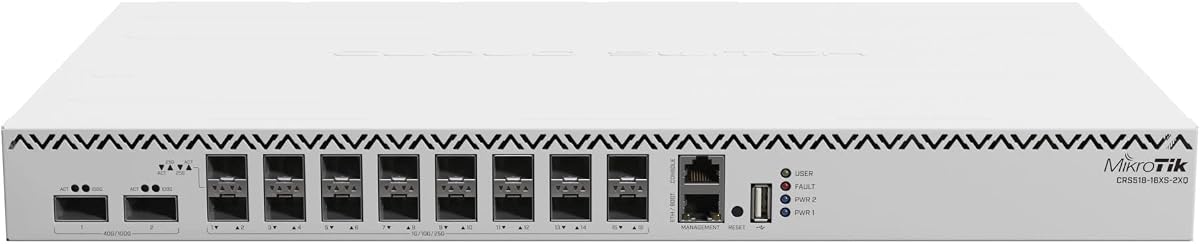
This Cloud Router Switch is highly rated at 4.5 for its ability to handle complex routing tasks in a compact package. It features sixteen 25G SFP28 ports making it a powerful hub for fiber-based networks.
We may earn a commission when you buy through this link, at no additional cost to you.
The inclusion of two 100G QSFP28 ports ensures that high-speed uplinks are available for aggregation. Its architecture is designed to support the demands of modern cloud infrastructure with efficient performance.
Network administrators familiar with RouterOS will appreciate the flexibility and depth of configuration options available. However those new to the interface may need to invest time in learning the system.
For environments where fiber connectivity is the standard this switch offers a reliable and high-performance solution. It is a robust choice for building scalable and resilient network backbones.
Designed specifically for optical connectivity the ports support high speeds with minimal signal degradation.
RouterOS provides extensive tools for managing traffic flow and security policies efficiently.
We may earn a commission when you buy through this link, at no additional cost to you.
With a perfect 5.0 rating this Cisco switch is the standout choice for high-performance computing environments. It offers unmatched connectivity with forty-eight 25GB ports and six 100GB uplinks for maximum bandwidth.
We may earn a commission when you buy through this link, at no additional cost to you.
The cut-through switching architecture ensures latency is kept to less than one microsecond which is critical for big data processing. It also supports VXLAN allowing you to create scalable virtualized networks efficiently.
Hot-swappable power supplies and fans mean you can maintain uptime even during hardware maintenance. The NX-OS operating system provides a consistent platform for reliable network administration and monitoring.
This is the ultimate choice for data centers that need future-proofing and reliable availability. Its modular design makes it easy to adapt to changing requirements over time.
Minimal latency design ensures smooth operations even under the heaviest data processing loads.
Redundant and hot-swappable components keep your network running continuously without downtime.
We may earn a commission when you buy through this link, at no additional cost to you.
The D-Link DGS-1210 is a smart managed switch that prioritizes silent operation with its fanless design. It holds a 4.4 rating for reliability and is a great option for office environments where noise is a concern.
We may earn a commission when you buy through this link, at no additional cost to you.
While it does not support 25G ports it provides twenty-four gigabit Ethernet ports and four optical SFP ports for flexible connectivity. The NDAA compliance makes it suitable for high-security enterprise projects.
Users appreciate the extensive lifetime warranty which provides long-term confidence in the hardware. It includes comprehensive security features like Access Control Lists and ARP Spoofing Prevention to protect your network.
If you need a reliable and quiet switch for general office use this model is highly recommended. It balances security and performance effectively without requiring active cooling.
The fanless design ensures the switch runs silently making it ideal for offices or quiet spaces.
Advanced security protocols safeguard your data and prevent unauthorized access to your network.
We may earn a commission when you buy through this link, at no additional cost to you.
Selecting the right switch requires balancing speed, port density, and management features against your budget and operational needs.
Ensure the switch offers enough 25G SFP28 ports to connect your servers and storage devices without needing extra hardware. If you plan to grow your infrastructure consider models with additional 10G or 100G ports for future expansion.
Choose a model with the correct number of high-speed ports to handle your current workload plus future growth plans.
Layer 2 switches handle basic traffic forwarding which is sufficient for simple networks. However Layer 3 switches provide routing capabilities essential for segmenting networks and managing complex traffic flows efficiently.
Opt for Layer 3 if you need advanced routing or segmentation for your specific IT environment.
Higher switching capacity ensures that your network can handle simultaneous data transfers without slowing down. Look for switches with a capacity that exceeds your total potential bandwidth usage to avoid congestion.
Select a device with sufficient switching capacity to support peak traffic loads comfortably.
Web-based GUIs are user-friendly and suitable for small teams. Advanced users might prefer command-line interfaces or cloud-based dashboards for granular control and remote management capabilities.
Pick a management interface that matches the technical skills of your network administration team.
High-performance switches often consume more electricity which adds to operational costs. Check the power consumption ratings to ensure your facility can support the device without overloading circuits.
Verify that your power supply infrastructure can handle the wattage requirements of the chosen switch.
A strong warranty like lifetime protection can save money on replacements and repairs. Reliable technical support is crucial for resolving issues quickly and minimizing downtime.
Prioritize brands that offer comprehensive warranties and responsive support channels for peace of mind.
Ensure your existing cabling can support the required speeds. Some switches work with existing Cat5e for lower speeds while others require fiber optic cables for full 25G performance.
Match the switch port types to your current cabling infrastructure to avoid unnecessary replacement costs.
For government or secure projects NDAA and TAA compliance might be mandatory. Verify that the switch meets these standards before purchasing to avoid disqualification.
Check compliance requirements early in your procurement process to ensure eligibility for specific contracts.
Install the switch in a well-ventilated rack to prevent overheating. Ensure all fans are working correctly and airflow is not obstructed by cables or dust buildup.
Configure your VLANs and QoS settings immediately after setup to optimize traffic flow. Use the web GUI or CLI to set up static routes and security policies according to your network design.
Regularly update the firmware to the latest version to patch security vulnerabilities. Schedule routine checks to monitor port health and ensure all connections are stable and performing as expected.
SFP28 ports support speeds up to 25Gbps per port while QSFP28 ports support speeds up to 100Gbps per port. QSFP28 is typically used for high-speed uplinks while SFP28 connects directly to servers or storage devices.
Yes many 25G SFP28 ports are backward compatible with 10G optics. However you must verify with the vendor that the optics and cables are approved for use at 10G speeds to ensure reliability.
Most come with a web interface that requires no extra software. Some vendors offer specialized management apps or cloud services for advanced monitoring but basic setup is possible via a browser.
Yes most modern operating systems including Linux can connect to 25G switches via standard Ethernet drivers. Ensure your server has a compatible 25G network interface card installed.
Ensure you have adequate spacing between devices and active cooling in the rack. Some switches feature redundant fans or specific airflow directions so verify the ventilation requirements during installation.
Warranty periods vary but lifetime warranties are common for some models. Always check the specific terms for hardware defects and technical support availability before making a purchase decision.
We have reviewed ten top models offering a range of features from basic multi-gigabit support to high-density data center performance. The TRENDnet TEG-S50284 stands out for value while the Cisco N9K-C93180YC-EX leads in raw performance.
Your choice should depend on whether you need simple connectivity or advanced routing and scalability. Consider your current budget alongside future needs to ensure the investment serves your network well.
Prices and availability can change rapidly so always confirm stock and current terms before buying. Verify that the selected model meets your compliance and cabling requirements for a smooth deployment.