
COOSPO H6 Heart Rate Monitor Chest Strap
4.2Editor score
Dual Bluetooth ANT plus
IP67 sweat proof
Works with Peloton
Discover the top heart rate monitor for Peloton users. This guide compares ten accurate models for chest straps and armbands to optimize your indoor cycling
Choosing the right heart rate monitor for Peloton ensures you track your effort accurately during every ride. A quality device connects seamlessly to the bike and provides reliable data for tracking progress over time.
We evaluated ten top models based on connectivity, comfort, battery life, and accuracy. Each product was assessed for its ability to pair with Peloton and other fitness apps without interruption or lag.
Each pick shows key specs, pros, and cons to help you decide. Note that prices and availability change frequently, so check the latest listings before making your final purchase decision today.
4.2Editor score

4.0Editor score

4.1Editor score
The following table provides a side-by-side comparison of all ten heart rate monitors evaluated for Peloton compatibility. Each entry highlights essential specs to help you quickly identify the model that best fits your training needs.


The POWR LABS Bluetooth ANT+ Heart Rate Monitor is a robust chest strap designed for seamless integration with Peloton and other fitness platforms. It holds a solid rating for its reliability and ease of use across various devices.
We may earn a commission when you buy through this link, at no additional cost to you.
Its standout quality is the dual connectivity that syncs flawlessly to cycling computers and smart watches. The battery life extends over 400 hours, meaning you can train daily for months without worrying about recharging or cables.
While it lacks a rechargeable battery, the replaceable cell ensures you are never stranded mid-workout. The soft fabric prevents chafing during intense sessions, making it a comfortable choice for riders focused on endurance.
Buyers seeking a dependable and budget friendly option for Peloton will find this monitor highly effective. It delivers clinical accuracy without the premium price tag, making it a top recommendation for daily training needs.
The dual ANT plus and Bluetooth ensure stable pairing with your Peloton bike and smartphone apps simultaneously without dropouts.
With 400 hours of battery life, you can go over six months between battery changes, reducing maintenance hassles significantly.
We may earn a commission when you buy through this link, at no additional cost to you.
The Polar H10 is widely recognized as the most accurate heart rate sensor in Polar's history. It delivers top quality measurement for both indoor cycling and outdoor activities with exceptional reliability.
We may earn a commission when you buy through this link, at no additional cost to you.
Its key strengths include internal memory that records workouts even when disconnected from devices. The waterproof design allows for swim training, and the improved electrodes ensure interference free data transmission during intense efforts.
While it comes at a higher price, the precision and durability justify the cost for serious athletes. The strap is comfortable and easy to buckle, though you must ensure the correct battery size is used.
Athletes prioritizing exact data and versatility should choose this model. It connects via Bluetooth and ANT plus simultaneously, offering flexibility for users who track metrics across multiple devices and apps.
Widely recognized by sources for its top precision, the H10 provides clinical level heart rate data you can trust completely.
Fully waterproof capabilities mean you can wear it for swimming or heavy rain sessions without damaging the sensor unit.
We may earn a commission when you buy through this link, at no additional cost to you.
The COOSPO H6 is a budget friendly chest strap that offers professional level performance for indoor cycling. It connects easily to Peloton and other gym equipment via Bluetooth and ANT+ protocols.
We may earn a commission when you buy through this link, at no additional cost to you.
Its key strength is the value it provides with over 300 hours of battery life and a reliable connection to gym equipment. The ±1BPM accuracy ensures you get solid data without spending a fortune on a sensor.
Some users may need to moisten the electrodes in dry conditions to ensure stable transmission. While basic, the sensor is durable and effective for daily rides where cost efficiency is a priority.
This model is ideal for beginners or those on a tight budget who still want accurate tracking. It supports third-party apps well and handles sweat and light rain with its IP67 protection rating.
Works directly with Peloton bike and Nordic treadmills so you do not need extra dongles to track your heart rate.
Offers ±1BPM accuracy at a fraction of the cost of premium models, making it perfect for entry level athletes.
We may earn a commission when you buy through this link, at no additional cost to you.
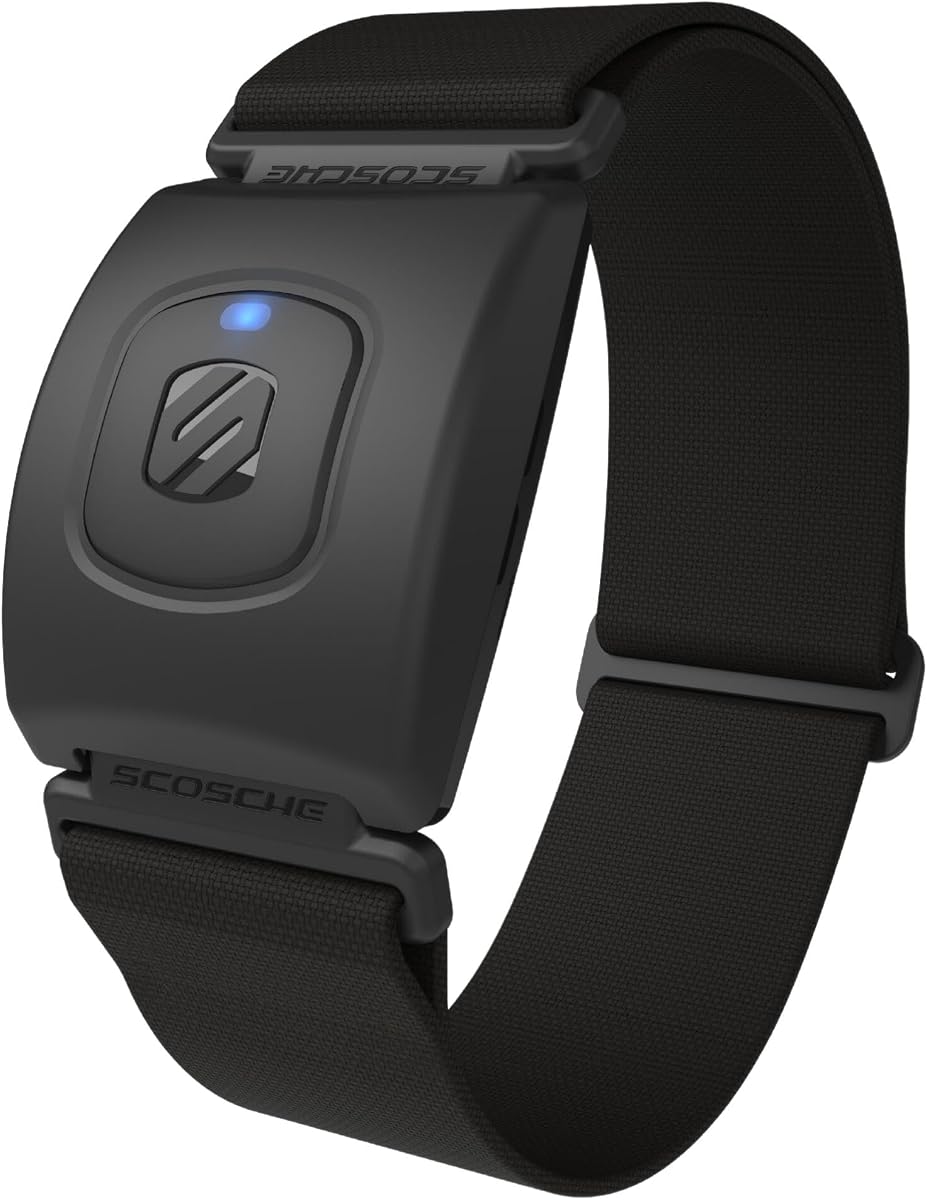
The Scosche Rhythm Armband offers a comfortable alternative to chest straps for Peloton riders who dislike the tight fit. It uses optical technology to track heart rate with stable connections throughout training sessions.
We may earn a commission when you buy through this link, at no additional cost to you.
Its key strength is the recovery insights feature that captures precise RR interval data for deeper training analysis. The IP68 waterproof rating ensures durability, and the lightweight strap adjusts securely to your forearm.
While optical sensors can lag slightly during rapid intervals, the battery lasts up to 24 hours. You may need to charge it more often than a chest strap, but the comfort is a major trade-off for many users.
Buyers seeking a strap-free option should consider this armband. It streams data to popular HRV apps and pairs with Peloton and Wahoo, providing reliable real-time tracking for indoor and outdoor workouts.
HRV mode captures precise RR interval data giving you deeper insight into training sleep quality and daily stress levels.
A lightweight breathable strap adjusts securely to your forearm and stays put during intense workouts without chafing.
We may earn a commission when you buy through this link, at no additional cost to you.
The Garmin HRM 600 is a versatile chest strap designed to send accurate heart rate and dynamics data to compatible devices. It supports a variety of metrics that help improve form and performance during activities.
We may earn a commission when you buy through this link, at no additional cost to you.
Its key strengths include running dynamics like stride length and ground contact time. The comfortable machine-washable strap and 2 month battery life make it practical for daily wear across multiple sport types.
While it requires a compatible smartwatch for advanced metrics, the memory feature records data even when offline. This ensures you never lose your workout data when syncing to the Connect app later.
Athletes who cycle and run should consider this model. It handles swim activities and syncs pace to watches, offering a unified experience for triathletes or multisport enthusiasts looking for detailed feedback.
Track step speed loss and vertical oscillation to improve your running form with additional metrics beyond just heart rate.
Records the workout directly to the app if you cannot wear a watch so you never miss training data.
We may earn a commission when you buy through this link, at no additional cost to you.
The COOSPO Armband uses patented optical sensor technology for accurate measurements during exercise. It supports real-time tracking and connects via Bluetooth and ANT+ to Peloton and other fitness equipment.
We may earn a commission when you buy through this link, at no additional cost to you.
Its key strength is the rechargeable battery offering over 25 hours of runtime on a single charge. The comfortable fabric strap allows for distraction-free riding, and the IP67 rating handles rain and sweat well.
While not designed for swimming, it is sturdy enough for indoor and outdoor sports. The LED indicator helps you know when the heart rate is found, and the vibration alert confirms activation or power off.
Buyers looking for a cost-effective optical option will appreciate this model. It works with popular apps like Strava and offers technical support, ensuring you get reliable data without daily battery swaps.
Battery allows you to work out up to 25 hours with a single charge eliminating the need for replacement cells.
The fabric strap paired with the sensor lets you ride without distraction and includes extra straps for daily replacement use.
We may earn a commission when you buy through this link, at no additional cost to you.
The COOSPO HW9 Armband features a 5-color LED indicator light for heart rate zone training. It delivers accurate data and allows you to optimize intensity levels at the right time during sessions.
We may earn a commission when you buy through this link, at no additional cost to you.
Its key strength is the ability to customize your max heart rate and receive vibration warnings when you exceed safe limits. This safety feature helps guard your training, and the rechargeable battery lasts up to 35 hours.
While it works well for running and cycling, it is not recommended for swimming. The LED lights provide quick feedback without needing to check your phone, making it intuitive for interval training.
Athletes focused on zone training will find this model highly beneficial. It connects via Bluetooth 5.0 and supports over 200 apps, ensuring compatibility with your preferred fitness tracking ecosystem.
The 5-color LED indicator shows your heart rate zone at a glance so you can optimize intensity levels quickly.
Vibration warning when heart rate is higher than your custom value helps you avoid overexertion during hard efforts.
We may earn a commission when you buy through this link, at no additional cost to you.
The COOSPO HW807 Armband monitors HR zones with different color LED lights to let you see your exercise status intuitively. It tracks heart rate with high accuracy and connects to Peloton and fitness equipment.
We may earn a commission when you buy through this link, at no additional cost to you.
Its key strength is the LED feedback that helps you monitor intensity without looking at a screen. The Bluetooth 5.0 and ANT+ connectivity ensures stable pairing with smartphones and GPS computers during rides.
While the battery lasts 20 hours which is decent, it may require frequent charging for heavy users. The waterproof construction handles sweat and rain, though it is not recommended for swimming activities.
Buyers seeking visual cues for zone training should consider this model. It supports a wide range of apps and offers free replacement cable service within 12 months, adding value to the purchase.
Different color LED lights allow you to see your exercise status more intuitively without needing a screen.
Bluetooth 5.0 and ANT+ guarantee you can connect with GPS bike computers and fitness devices reliably.
We may earn a commission when you buy through this link, at no additional cost to you.
The Garmin HRM 200 is a durable heart rate monitor that transmits accurate real-time data to compatible Garmin smartwatches. It is built to last and offers reliable performance across daily training sessions.
We may earn a commission when you buy through this link, at no additional cost to you.
Its key strength is the impressive battery life of up to 1 year with a user-replaceable battery. The comfortable strap comes in two sizes, and the 3 ATM water rating ensures durability against sweat and water.
While it lacks advanced running metrics, it is a solid choice for basic heart rate tracking. The machine-washable strap makes maintenance easy, and the data syncs directly to the Connect app.
Users who prefer low maintenance and long battery life should choose this model. It provides accurate heart rate and variability data without the complexity of premium sports, making it ideal for casual riders.
Up to 1 year of battery life with a user-replaceable battery ensures you spend more time riding and less time charging.
Durable build with a 3 ATM water rating and machine washable strap makes it easy to keep clean and ready.
We may earn a commission when you buy through this link, at no additional cost to you.
This Rechargeable Heart Rate Armband features intelligent sensors that detect skin contact and automatically activate. It connects to up to 3 devices at once via dual Bluetooth ANT+ for seamless data flow.
We may earn a commission when you buy through this link, at no additional cost to you.
Its key strength is the auto-wear detection that eliminates power buttons and pairing rituals. The soft medical-grade silicone strap is comfortable and ultralight, ensuring you forget you are wearing it during high-intensity movement.
While it has a lower rating than premium models, it delivers consistent precision for zone training. The optical sensor works well across major apps and avoids proprietary lock-in, making it accessible for all users.
Buyers who want a simple plug-and-play experience will appreciate this design. It offers professional-grade connectivity at an honest price, fitting well with Peloton, Wahoo, and Strava for daily tracking.
Intelligent sensors detect when the armband touches your skin and automatically activate so you save warm-up minutes.
Ultralight design with medical-grade silicone sits flush against your arm without bouncing or sliding during movement.
We may earn a commission when you buy through this link, at no additional cost to you.
Selecting the right heart rate monitor for Peloton depends on factors like connectivity, comfort, and battery life. This guide breaks down the essential elements to consider before buying a chest strap or armband.
Ensure the monitor supports Bluetooth and ANT+ to connect with your Peloton bike and smartphone apps. Dual band support allows you to stream data to multiple devices simultaneously without dropouts.
Look for models that pair easily with fitness apps like Zwift or Strava for a seamless ecosystem experience.
Chest straps generally offer higher accuracy than optical armbands due to direct ECG measurement. If precision is critical for intervals, prioritize a chest strap with medical grade certification.
Armbands provide good accuracy for casual training but may lag slightly during rapid heart rate changes.
Choose a strap with soft fabric or silicone dots to prevent chafing during long rides. Adjustable sizing ensures a snug fit that stays in place when you sweat heavily.
Test the strap tension to ensure it does not slip but remains comfortable for extended periods of use.
Consider whether you prefer rechargeable lithium batteries or replaceable coin cells. Longer battery life reduces maintenance, especially if you train daily for months.
Check the rated hours per charge and whether the battery is easy to access for replacements.
Look for IP67 or IP68 ratings to ensure the device withstands sweat and rain. Waterproof models allow for use in humid environments without risk of damage.
Avoid using non-waterproof sensors in heavy rain or while swimming to prevent electrical failure.
Some monitors offer HRV tracking or zone indicators to help optimize your training intensity. Advanced features like vibration alerts can prevent overexertion during hard sessions.
Decide if you need these extras or if basic heart rate tracking is sufficient for your fitness goals.
Verify the device works with your specific smartwatch or fitness app ecosystem. Compatibility with Garmin, Apple, or Google Health ensures you can sync data across platforms.
Choose a model that supports open standards like Bluetooth 5.0 for broader compatibility with new devices.
Balance the cost against the features you need. Budget models may lack advanced metrics but still provide accurate heart rate data for daily rides.
Invest in higher-end models if you require durability, extended battery life, and precision for competitive training.
Before your ride, ensure the monitor is charged or has a fresh battery. If using a chest strap, moisten the electrodes slightly to improve conductivity and data accuracy.
Pair the device with your Peloton app or bike before starting your workout. Check the connection indicator light or app status to confirm the sensor is transmitting data properly.
After use, remove the sensor from the strap and wash it with mild soap. Store the strap in a dry place to prevent corrosion and extend the life of the electronics.
Yes, chest straps generally offer better accuracy and connectivity stability because they measure electrical signals directly from the heart. Armbands are more comfortable but can sometimes lag during rapid intensity changes. If precision is a priority, a chest strap is recommended.
Go to the settings menu on your Peloton screen and select Heart Rate Monitor. Turn on your device and wait for it to appear in the available devices list. Click to connect and confirm the signal is active before starting your ride.
Only waterproof models rated IP67 or higher can be used for swimming. Check the specific product details to ensure it is rated for submersion. Standard models may fail if exposed to water beyond sweat resistance.
Bluetooth connects wirelessly to phones and tablets, while ANT+ is optimized for fitness equipment and sensors. Devices supporting both protocols ensure compatibility with a wider range of apps and bikes for seamless data tracking.
Battery life varies by model. Rechargeable units offer 20 to 35 hours, while non-rechargeable models can last months with replaceable cells. Always check the specific rating for the device you are considering.
Incorrect readings can result from poor skin contact, dry electrodes, or loose straps. Moisten the sensors and tighten the strap to ensure a snug fit. Moving your arm excessively can also interfere with optical sensors.
Our top picks include the COOSPO H6 for budget buyers, the POWR LABS for connectivity, and the Polar H10 for premium accuracy. Each model offers unique benefits tailored to different rider needs.
Prioritize connectivity protocols and comfort to ensure you can track every ride without frustration. A reliable monitor helps you stay consistent and reach your fitness goals faster.
Remember that prices and availability change frequently. Check the latest listings and read current reviews before making your final purchase decision today.