
Pyle Premium Direct Injection Audio Box
4.5Editor score
Passive DI unit hum eliminator
Input attenuator for signal control
Balanced and unbalanced XLR output
Finding the right Bass Direct Box is crucial for any musician aiming to deliver clear, noise-free sound to a PA system or recording interface. These devices convert high-impedance instrument signals into low-impedance balanced signals, ensuring compatibility with professional audio equipment and eliminating unwanted hum.
To compile this list, we evaluated ten highly-rated models based on build quality, signal integrity, connectivity options, and user feedback. Each product offers unique features ranging from passive simplicity to active versatility, catering to different budgets and performance needs in both live and studio environments.
Each pick below showcases specific strengths, ideal use cases, and key technical specifications to help you make an informed decision. Please note that product prices and availability are subject to change, so verify current details on the retailer's site before purchasing your next essential audio tool.
4.5Editor score

4.7Editor score
4.8Editor score
As an Amazon Associate we earn from qualifying purchases.
This side-by-side comparison highlights the key specifications and features of all ten selected Bass Direct Box models. By reviewing these details, you can quickly identify which device aligns best with your specific audio requirements and performance environment.




This Pyle Premium Direct Injection Audio Box stands out as an accessible entry point for musicians needing reliable signal conversion. With a solid rating, it delivers clean audio by converting unbalanced signals to balanced XLR outputs effectively. Its passive design ensures simplicity without the need for external power sources.
We may earn a commission when you buy through this link, at no additional cost to you.
Key strengths include its ability to handle various instruments like guitars, basses, and keyboards seamlessly. The built-in hum eliminator and input attenuator provide essential control over signal levels and noise reduction. This makes it highly useful for connecting unbalanced devices to main PA systems or recording mixers.
Honest trade-offs involve its lighter construction compared to premium steel units, which may feel less robust for heavy touring. However, the price point justifies this for home studios or occasional live use. It fulfills the core function of impedance matching without unnecessary complexity or cost.
Budget-conscious buyers and home studio enthusiasts should consider this unit for its value proposition. It provides the essential features needed for clean sound transmission at a fraction of the cost of professional gear. For those seeking basic functionality without breaking the bank, this is a strong recommendation.
This unit offers a cost-effective solution for converting high-impedance instrument signals to low-impedance balanced signals without compromising core audio quality.
Its design supports a wide range of devices including keyboards, guitars, and external processors, making it a flexible tool for diverse audio setups.
We may earn a commission when you buy through this link, at no additional cost to you.
The Pyle PDC21 offers a similar core functionality to its sibling models but emphasizes durability through its all-steel chassis construction. This design choice aims to extend the lifespan of the unit under regular use. Users appreciate its ability to provide clean audio by managing impedance and eliminating hum.
We may earn a commission when you buy through this link, at no additional cost to you.
Key strengths lie in its robust build quality which promises longevity for frequent connections and disconnections. The included input attenuator and hum eliminator allow for precise signal management whether connecting keyboards or basses. It ensures pure clean audio for live sound and recording applications efficiently.
Honest trade-offs include the lack of advanced features like a ground lift switch which some users might find missing. However, the steel construction adds significant value over plastic alternatives in the same price tier. It balances cost and durability effectively for intermediate users.
Musicians needing a reliable yet affordable DI box should look at this model for its steel build and essential features. It handles signal conversion well and withstands the rigors of regular practice sessions. For those prioritizing physical durability on a budget, this is a practical choice.
The all-steel chassis provides enhanced durability ensuring the unit can withstand frequent transport and use in various environments without damage.
Built-in hum elimination and attenuation capabilities help maintain signal integrity and prevent overload when connecting sensitive audio equipment.
We may earn a commission when you buy through this link, at no additional cost to you.
The Radial Pro DI Passive Direct Box is widely recognized as a professional standard for passive signal conversion. Its high rating reflects exceptional performance in maintaining tone while eliminating noise. The custom transformer ensures that your instrument's natural sound is preserved during the conversion process.
We may earn a commission when you buy through this link, at no additional cost to you.
Key strengths include its rugged I-beam construction which provides superior structural integrity against physical impacts. This build quality makes it suitable for touring musicians who demand reliability from their gear. The passive design ensures consistent performance without needing battery power or external phantom power.
Honest trade-offs involve a higher price point compared to basic DIY or generic units. Additionally it offers only a single channel which may not suit stereo instrument setups directly. However, the superior sound quality and durability justify the investment for serious applications.
Professionals and audiophiles seeking reliable passive direct boxes should prioritize this model for its proven track record. It delivers clean transparent signals essential for high-quality recording and live sound. For those willing to invest in lasting audio tools, this is a top recommendation.
The custom transformer is engineered to minimize signal loss and coloration ensuring your instrument's tone remains pure and authentic through the DI.
Its rugged I-beam construction ensures the unit can withstand the demands of frequent travel and heavy use without sustaining damage.
We may earn a commission when you buy through this link, at no additional cost to you.
The Whirlwind IMP 2 delivers fantastic sound quality at an economical price making it a value leader in its category. With a high rating users consistently praise its clear signal conversion capabilities. It serves as an in-line transformer that effectively converts unbalanced signals to balanced mic level outputs.
We may earn a commission when you buy through this link, at no additional cost to you.
Key strengths include its TRHL transformer which is riveted to the chassis rather than glued. This design choice enhances durability and stability reducing the risk of internal component shifting. Its fantastic footprint allows it to sit neatly on pedalboards or tables without taking up excessive space.
Honest trade-offs are that it lacks advanced features like attenuation pads or ground switches. It is a straightforward solution focused purely on impedance matching and noise reduction. For users needing basic professional quality this simplicity is often a benefit rather than a drawback.
Guitarists and bassists seeking an affordable yet professional direct box should consider this IMP 2 model. It provides the reliability and sound integrity needed for recording or live performance without the extra cost. For value-focused buyers this is an excellent option to explore.
The riveted TRHL transformer ensures secure mounting and consistent performance preventing loose connections that could degrade audio quality over time.
Its compact footprint makes it ideal for tight pedalboard setups or small mixing areas where space is at a premium.
We may earn a commission when you buy through this link, at no additional cost to you.
The PYLE-PRO Premium Direct Injection Audio Box distinguishes itself by offering 2 channels in a compact unit. This feature provides flexibility for users needing to connect multiple sources without additional gear. It maintains the core benefits of impedance conversion and hum elimination found in its sibling models.
We may earn a commission when you buy through this link, at no additional cost to you.
Key strengths include its durable steel chassis which ensures the unit can withstand regular handling. The built-in hum eliminator and input attenuator help manage signal levels effectively. This makes it suitable for connecting keyboards, guitars, and basses to main PA systems easily.
Honest trade-offs include a slightly lower rating compared to premium brands which may indicate minor build variances. It remains a practical choice for those prioritizing channel count over brand prestige. The price point keeps it accessible for budget-conscious users needing extra inputs.
Users requiring dual inputs on a budget should consider this model for its versatility and solid construction. It provides a reliable solution for converting signals while offering extra connection options. For home studios needing more flexibility this is a strong contender to evaluate.
Having two channels allows musicians to connect two instruments simultaneously without needing separate units or complex cable setups.
The inclusion of hum elimination and attenuation helps maintain audio quality by reducing noise and preventing signal overload effectively.
We may earn a commission when you buy through this link, at no additional cost to you.
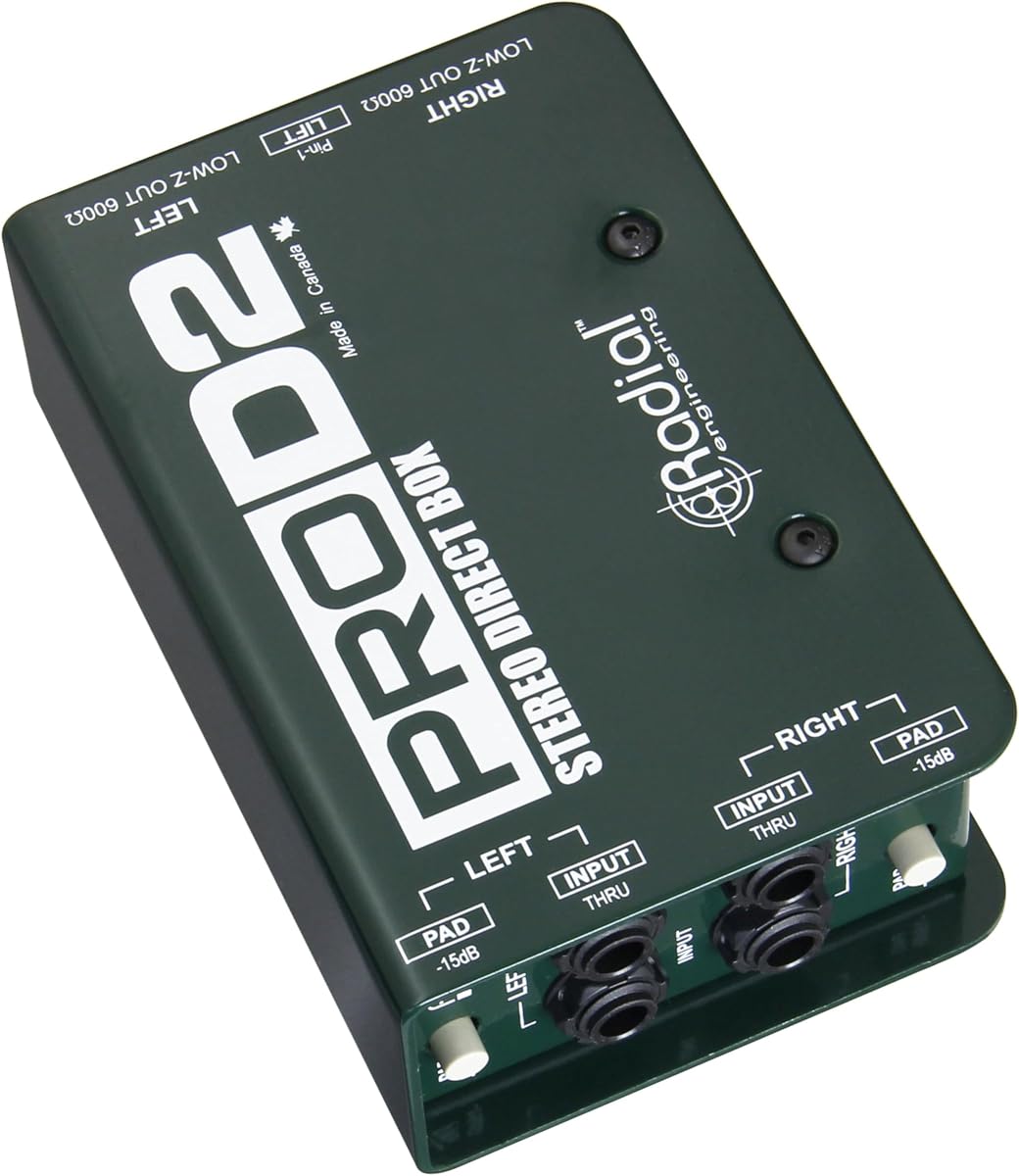
The Radial ProD2 offers professional-grade passive stereo performance with high user ratings confirming its reliability. It features dual channels allowing for balanced stereo imaging essential for keyboards and synths. The passive design ensures consistent quality without needing external power or batteries for operation.
We may earn a commission when you buy through this link, at no additional cost to you.
Key strengths include an isolation transformer that significantly reduces noise and ground loops. The ground lift switch and 15dB pad provide precise control over signal levels and interference. These features make it ideal for high-end studio or live sound applications where audio purity is paramount.
Honest trade-offs include the higher price which may be steep for beginners or casual users. It also lacks active circuitry so it relies entirely on source signal strength. However the build quality and feature set justify the cost for professional setups.
Stereo keyboard players and professional engineers should prioritize this model for its dual channel capabilities. It delivers clean isolated signals perfect for complex arrangements needing width and separation. For those investing in premium gear this is a top choice.
Dual channels preserve stereo width and separation ensuring your keyboard or synth sounds natural and full in the mix.
The isolation transformer and ground lift switch eliminate hum and noise ensuring a clean signal even in electrically noisy environments.
We may earn a commission when you buy through this link, at no additional cost to you.
The Bolanle DB2 Passive 2-Channel DI Box offers versatile functionality for electric guitars and basses. Its design focuses on converting high-impedance signals to low-impedance XLR outputs effectively. This ensures clear and accurate sound for live performances and studio mixing without external power.
We may earn a commission when you buy through this link, at no additional cost to you.
Key strengths include a ground lift switch that effectively eliminates ground loop hum and interference. The signal attenuation switch with multiple settings helps prevent signal overload during recording or live use. Its durable scratch-resistant design ensures reliability for frequent touring or studio sessions.
Honest trade-offs are that it is a passive model which may not boost weak signals. However the build quality and features offer good value for its price range. It balances performance and durability well for general musicians.
Musicians needing dual inputs and noise reduction should consider this Bolanle unit for its robust features. It provides reliable conversion and control for live and studio environments effectively. For those looking for a solid mid-tier option this is a strong choice.
With two channels you can connect multiple instruments simultaneously allowing for flexible setup configurations without extra gear.
Ground lift and attenuation switches help you manage noise and signal levels ensuring clear audio in any environment.
We may earn a commission when you buy through this link, at no additional cost to you.
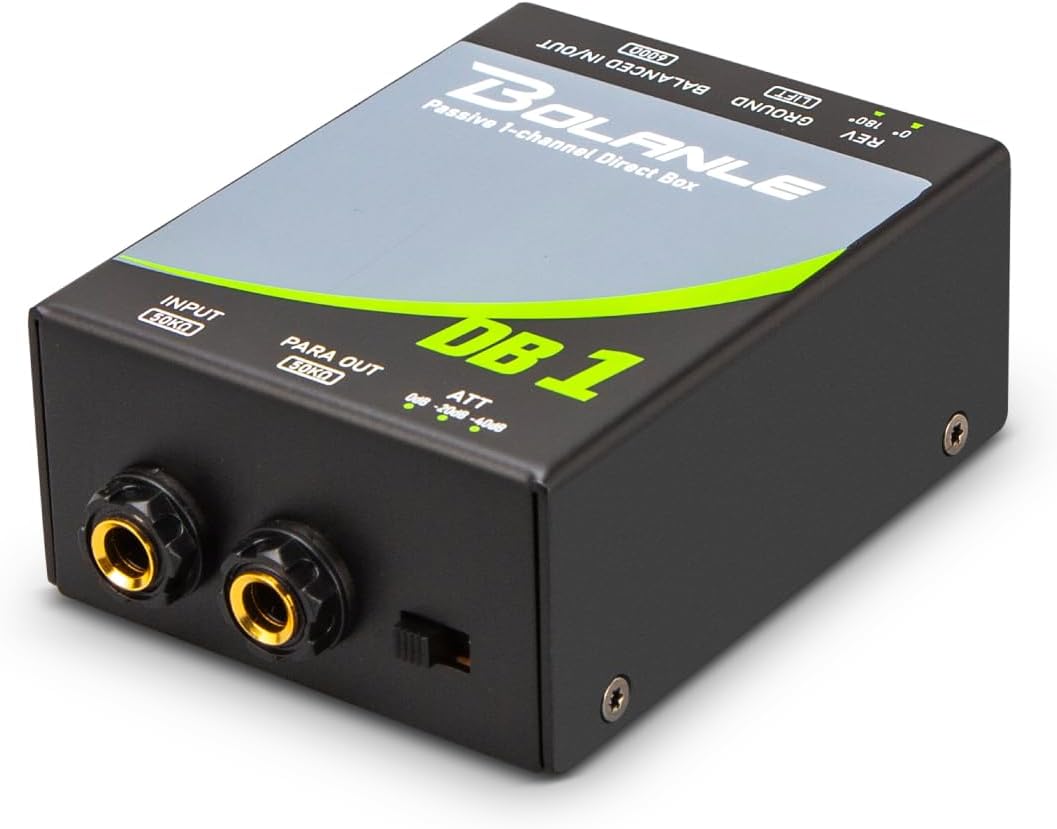
The Bolanle DB1 Passive 1-Channel DI Box provides pure signal conversion without requiring external power. Its design ensures high-fidelity and interference-free signal conversion for guitars and basses. This simplicity makes it perfect for live performances and studio recordings where sound integrity is paramount.
We may earn a commission when you buy through this link, at no additional cost to you.
Key strengths include built-in feedback and hum eliminators that keep recordings clear and professional. Dual mode and attenuation options allow you to adjust signal levels preventing overload effectively. Its balanced XLR and parallel output options offer versatile connection possibilities for different setups.
Honest trade-offs are that it offers only a mono channel limiting stereo imaging options. However for solo players or simple setups this does not impact functionality. The durable road-ready design ensures it can withstand frequent travel and use.
Solo performers and home recorders needing a simple passive solution should consider this unit. It offers essential noise control and signal integrity at an accessible price point. For those prioritizing ease of use this is a reliable option.
Operating without external power ensures reliability and simplicity allowing you to focus on your sound without worrying about batteries.
Dual mode and attenuation features give you precise control over your output ensuring optimal levels for any scenario.
We may earn a commission when you buy through this link, at no additional cost to you.
The Bolanle J22 Direct Active Stereo DI Box offers exceptional versatility with three distinct power options. This ensures you never get stuck without power during live performances or studio sessions. It allows for stereo setups with full separation making it ideal for keyboardists needing accuracy.
We may earn a commission when you buy through this link, at no additional cost to you.
Key strengths include its ground lift switch that breaks ground loops at the source to eliminate interference. The metal housing provides durability against drops and daily wear. Dual XLR outputs maintain stereo integrity without mono-summing issues ensuring your sound remains as programmed.
Honest trade-offs involve the need for power which adds complexity compared to passive units. However the 48V phantom power or battery options make this manageable. The active design ensures consistent signal levels even with passive instruments.
Active keyboard players and performers needing reliable stereo separation should prioritize this model. It delivers studio-accurate sound on stage with flexible power options. For those needing active performance on a budget this is a top choice.
With 48V phantom power battery and USB options you can always ensure your DI has power regardless of venue limitations.
Dual balanced XLR outputs maintain full stereo separation preserving the width and depth of your keyboard or synth sound.
We may earn a commission when you buy through this link, at no additional cost to you.
The Radial Pro48 Active 48-Volt Compact Direct Box delivers high-resolution signal conversion in a compact form. Its phantom-powered active design ensures consistent performance for instruments with low output levels. This makes it highly suitable for professional recording and live sound applications needing clarity.
We may earn a commission when you buy through this link, at no additional cost to you.
Key strengths include an included 15dB pad allowing for precise signal management before the signal hits the interface. Its compact design fits easily on racks or crowded tables without taking up excessive space. The build quality ensures it withstands regular use and travel effectively.
Honest trade-offs are that it requires phantom power which may not be available on all mixers. However the reliability and sound quality justify this requirement for professionals. It offers a streamlined solution for active signal conversion.
Professionals needing a compact and reliable active DI should consider this Pro48 model for its high resolution. It provides the necessary tools for managing signal levels and maintaining clarity. For those prioritizing professional standards this is an excellent choice.
The active circuitry boosts signal levels ensuring clean and clear audio even when using passive instruments or long cable runs.
Its compact design allows for easy integration into existing rack setups or pedalboards without sacrificing functionality or durability.
We may earn a commission when you buy through this link, at no additional cost to you.
Selecting the right Bass Direct Box requires understanding your specific audio needs and the technical features available. This guide outlines essential factors to help you narrow down options based on performance and usability.
Passive direct boxes use transformers to convert signals without external power making them simple and reliable. Active models use internal circuits powered by batteries or phantom power to boost signal levels for passive instruments.
Determine if you need a mono or stereo interface based on your instrument. Single channel units suit guitars and basses while dual channel units support stereo keyboards and synths.
Look for durable housings such as steel or aluminum that withstand regular use. Rugged construction ensures longevity especially for touring musicians transporting gear frequently.
Ensure the unit offers appropriate inputs and outputs such as 1/4 inch and XLR connectors. Additional features like parallel outputs can provide greater flexibility for your setup.
Features like ground lift switches and attenuation pads help manage noise and signal levels effectively. These tools prevent overload and eliminate hum for cleaner audio performance.
Compact units are easier to store and transport for gigs and rehearsals. Consider the physical footprint to ensure it fits comfortably on your pedalboard or mixing desk.
Balance the cost with the features offered to find the best value for your needs. Premium brands often offer better durability but budget models can suffice for home studios.
Choose brands with established reputations for audio reliability and customer support. Reading user reviews helps confirm performance claims and long-term satisfaction rates.
To start using your direct box connect your instrument to the 1/4 inch input using a standard instrument cable. Plug an XLR cable into the balanced output and connect it to your mixing console or audio interface input.
Engage the ground lift switch if you hear unwanted hum or buzz in your signal. Use the attenuation pad if your signal is too hot to prevent clipping or distortion during recording.
Store your device in a protective case when not in use to prevent dust accumulation and physical damage. Regularly inspect cables and connections for wear and clean the chassis with a dry cloth.
A Bass Direct Box converts high-impedance unbalanced instrument signals into low-impedance balanced signals. This allows instruments like bass and guitars to connect directly to mixing consoles or PA systems without signal loss or noise.
You need a direct box when connecting passive instruments like electric basses or acoustic guitars directly to audio interfaces or mixers. It ensures compatibility and prevents interference that typically occurs over long cable runs.
Passive DI boxes rely on transformers and do not require external power while active models use internal circuits powered by batteries or phantom power. Active boxes can boost weak signals making them suitable for passive instruments with low output.
To eliminate ground loop hum engage the ground lift switch on your direct box if available. This disconnects the ground connection at the source breaking the loop causing the interference in your audio signal.
Yes especially stereo direct boxes are designed to handle keyboards and synthesizers with dual channels. They maintain left and right channel separation allowing for full stereo imaging in your mix.
Active direct boxes require power to function and usually accept 48V phantom power from mixers. Some models also support batteries or USB power options for flexibility in different power environments.
We have reviewed ten top-rated models ranging from budget-friendly options to professional-grade units. Each offers unique features tailored to different performance needs and instrument types for musicians.
Prioritize factors like build quality, channel count, and power requirements when making your decision. Choose a device that aligns with your typical setup to ensure reliable performance.
Always verify current prices and availability on the retailer's website before purchasing. Product details and offers change frequently so checking the latest information ensures you get the best deal available.