
SUNLU Filament Dryer Box 2026 New Upgrade S1 Plus
4.3Editor score
Fast drying with fan design
Visual display for settings
High compatibility with materials
This guide compares the top filament dryer for 3D printing to help you choose the best moisture control solution for your spools and prints.
Finding the right filament dryer for 3D printing is essential for consistent results. Moisture ruins prints by causing bubbles and poor layer adhesion. A good dryer maintains optimal conditions for your spools before and during printing to ensure quality.
We evaluated ten top-rated dryers based on heating speed, capacity, sealing quality, and user controls. Each model offers unique features like touch screens, multiple spool support, and humidity monitoring to meet different workshop needs and budgets.
Each pick shows key specs and performance highlights to help you decide quickly. Prices and availability change often so check the current listings before buying. Read our detailed analysis to find the perfect fit for your 3D printing setup.
4.3Editor score

4.6Editor score

4.5Editor score
This side-by-side comparison reviews all ten filament dryers to highlight their capacity, heating power, and unique features for your printing workflow.



This Creality dryer stands out as the top choice for high-volume users. With a 4.6 rating, it combines large capacity with powerful dual heating chambers. The touch UI provides precise control for advanced materials.
We may earn a commission when you buy through this link, at no additional cost to you.
The dual 200W chambers heat up to 85°C which is 30 percent faster than single dryers. This setup eliminates bubbling and stringing quickly. The illuminated window lets you monitor spools without breaking the humidity seal during long prints.
While it costs more than basic dryers the efficiency gain justifies the investment. The large size might not fit small desks but the four spool capacity reduces restocking trips. It is ideal for users who print ABS or PC regularly.
Buy this if you need professional speed and capacity for your workshop. It extends filament shelf life and ensures consistent prints every time. The sealed design protects your materials between jobs effectively.
Independent heaters speed up moisture removal significantly so you can print sooner without waiting days for drying cycles.
The silicone-sealed enclosure keeps humidity low 24 7 so spools stay dry even when the dryer is paused between prints.
We may earn a commission when you buy through this link, at no additional cost to you.
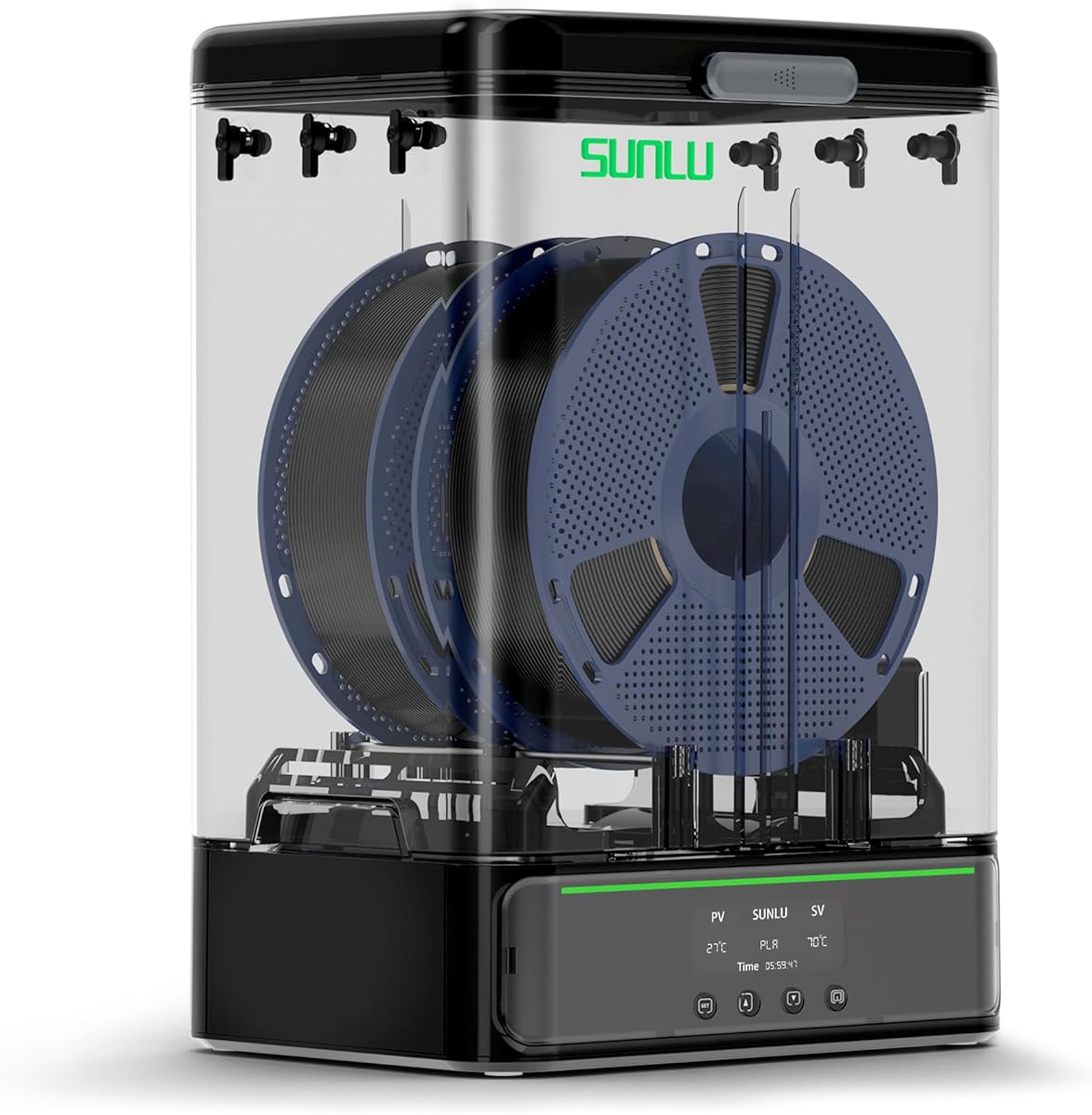
The SUNLU S1 Plus delivers impressive performance for its price. It features an upgraded fan that helps expel excess moisture faster. The visual display shows temperature and humidity clearly for easy monitoring.
We may earn a commission when you buy through this link, at no additional cost to you.
This unit heats between 35 and 55°C which suits common materials like PLA and PETG well. The fan circulation helps avoid cold spots so drying is more even. It fits 210x89mm spools comfortably including 2.85mm variants.
Budget buyers will appreciate the cost savings without sacrificing core drying functions. It lacks the high heat for PC or ABS but handles everyday plastics effectively. The compact design saves space on your desk.
Choose this if you need reliable drying for standard prints on a budget. It solves stringing and clogging issues reliably. The simple controls make it easy for beginners to manage.
The internal fan pushes air through the chamber so moisture leaves faster than passive heat alone allows.
Hold the left or right button to adjust time or temp while the screen shows real time values clearly.
We may earn a commission when you buy through this link, at no additional cost to you.
The SUNLU S4 is a powerhouse for multi-printer setups. With 4.5 stars users praise its 350W heater and circulation fans. It supports four 1kg spools and has eight exit holes for diverse loading.
We may earn a commission when you buy through this link, at no additional cost to you.
The 360 surround heating ensures every spool dries evenly without cold spots. You can set temps up to 70C and timers up to 99 hours. The design allows for DIY mods to fit 3kg rolls if needed.
Its size is a consideration as it weighs 4kg and has large external dimensions. But the capacity and power make it worth the space. Users can modify it for shoe drying or larger rolls with guides.
Buy this if you run multiple printers or need bulk drying. It improves print quality across all materials like Nylon and PC. The fan circulation makes a clear difference in drying consistency.
Three fans circulate air inside so the entire volume reaches the set temp for uniform drying.
Eight holes let you route filament at different angles so multiple printers can draw from one box.
We may earn a commission when you buy through this link, at no additional cost to you.
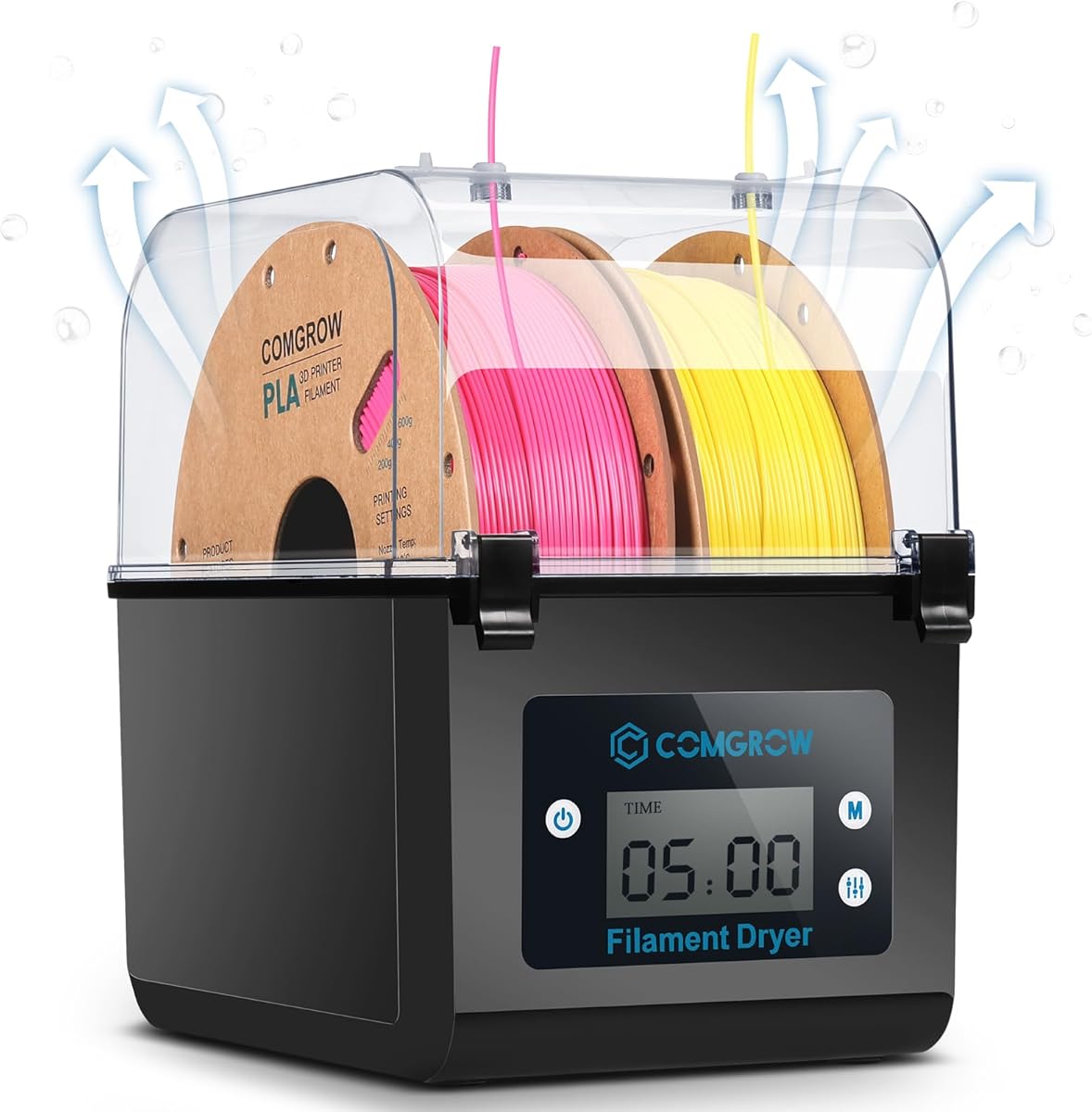
The Comgrow SH01 box offers solid storage and drying combined. It holds two 1kg spools and has a 2-inch LCD screen. The silicone cable sheath keeps the exit smooth and sealed.
We may earn a commission when you buy through this link, at no additional cost to you.
You can set temps from 40 to 50°C and timers from 6 to 12 hours. The snap button cover seals well when not in use. It works with PLA PETG and ABS materials effectively.
Note that the board auto shuts down after three minutes if work mode is not displayed. This requires attention during setup. The limited max temp may not suit higher heat materials like PC.
Choose this for a straightforward solution for standard filaments. It prevents entanglement and clogging during prints. The seal keeps moisture out between drying sessions.
The silicone sheath and Teflon tube seal the exit so moisture does not enter when plugged.
Hold the function button to change time and temp while the screen shows real time data.
We may earn a commission when you buy through this link, at no additional cost to you.
This Creality dryer offers one-key presets for 12 filament types. It uses a 360 hot air fan for even heating. The touch screen lets you toggle between Celsius and Fahrenheit easily.
We may earn a commission when you buy through this link, at no additional cost to you.
Temps range from 45 to 70°C with a 48 hour timer. The PTC heater is durable and energy efficient. It handles common and composite filaments like PLA CF and PA CF well.
The 3.7-inch screen is clear and responsive to touches. It saves you time by auto setting temps for your material. However it holds only two spools which limits high volume users.
Pick this if you want easy presets for different materials. It ensures consistent prints by removing moisture effectively. The humidity monitor helps you track conditions during prints.
Select a preset for PLA or PA and the screen auto sets the right temp to save you manual tuning.
The built-in fan circulates hot air evenly so the spool dries uniformly from all sides.
We may earn a commission when you buy through this link, at no additional cost to you.
The Polymaker Polydryer connects drying and storage seamlessly. It promotes even airflow and controlled heating. The built-in hygrometer helps track filament status without guesswork.
We may earn a commission when you buy through this link, at no additional cost to you.
You can move from drying to sealed storage without breaking the seal. This keeps filament ready for the next job. It works with PA Nylon PLA and TPU materials effectively.
The integrated approach uses heat plus desiccant for ongoing defense. It reduces stringing and layer inconsistency well. Some users might prefer a visible temp display for more control.
Buy this if you value a complete moisture control routine. It extends filament life and improves print quality. The sealed feed keeps ambient moisture out during use.
The dock lets you feed directly into your printer so you do not expose dry filament to air.
Track humidity levels to judge when filament is dry and ready to use without opening the box.
We may earn a commission when you buy through this link, at no additional cost to you.
The Creality Space PI SE heats up quickly with 360 hot air. It reaches 65°C within 15 minutes. The insulation keeps the inner warm and protects hands from burns.
We may earn a commission when you buy through this link, at no additional cost to you.
Display and knob controls make it easy to operate. Real time humidity and countdown timers help you track drying. It fits most 1kg spools and standard diameters well.
Pairing with Teflon tubes makes filament feeding smoother. It solves drawing and clogging problems effectively. The max temp of 65°C suits most plastics and ABS.
Choose this for fast reliable drying with good build quality. The sealed storage helps keep spools dry after cycles. It is a solid mid-range option for many workshops.
The cotton on inner walls keeps heat inside and prevents the box from getting too hot to touch.
Use it right out of the box with no setup steps to get drying started immediately.
We may earn a commission when you buy through this link, at no additional cost to you.
This SUNLU S4 variant is rated 4.6 stars by users. It uses three fans for 360 heating so drying is consistent. The 350W heater is 50 percent higher than S2.
We may earn a commission when you buy through this link, at no additional cost to you.
It supports four 1kg spools and allows multiple loading angles. You can adjust temps up to 70C and timers up to 99 hours. It works with Nylon PC and PETG well.
DIY mods let you dry 3kg rolls or use it as a shoe dryer. The eight exit holes suit multi-printer setups. The unit weighs 4kg so it needs a sturdy surface.
Pick this for heavy-duty drying with high capacity. The efficiency boost cuts drying times significantly. The fan system ensures uniform results across all spools.
The 350W PTC heater delivers more power than smaller dryers so it reaches target temps faster.
Eight holes let you route filament at different angles so multiple printers can feed from one box.
We may earn a commission when you buy through this link, at no additional cost to you.
The SUNLU SP2 holds up to a 3kg spool easily. It heats to 70°C in 15 minutes with 250W PTC. The lid has sliding latches for a tight seal.
We may earn a commission when you buy through this link, at no additional cost to you.
It is detachable from the base for storage after drying. The rollers hold various spool sizes including paper ones. The HD LCD shows temp time and humidity clearly.
The included hygrometer and desiccant containers help monitor conditions. It solves brittleness and threading issues well. The box design is compact for 3KG but still takes space.
Buy this if you need to dry larger spool rolls. The fast heating makes prep quick for large prints. The seal keeps moisture out between print jobs.
Lift the dryer box off the base to store filament without exposing it to room air.
The rollers hold 3KG spools or smaller paper spools so you can feed them easily.
We may earn a commission when you buy through this link, at no additional cost to you.
The SUNLU S2 uses a spindle to rotate spools for even drying. The touch screen lets you set temps and times easily. It holds spools up to 3.00mm diameters.
We may earn a commission when you buy through this link, at no additional cost to you.
It dries filament during printing to improve quality. The translucent lid lets you check progress without opening. It works well for humid locations like basements.
You can customize time from 0 to 99 hours. It is user-friendly and quick to set up. It lacks humidity sensors so you must estimate time based on prints.
Choose this for a simple and effective drying solution. The spindle reduces manual effort during drying. It is a solid choice for standard filament needs.
The built-in spindle spins the spool so heat reaches every part of the filament evenly.
Check on filament progress without opening the lid to keep moisture from entering.
We may earn a commission when you buy through this link, at no additional cost to you.
Use these factors to match a dryer to your spool types and print volume needs.
Look for PTC heaters that reach at least 65 to 70 degrees Celsius for ABS and nylon. Higher wattage helps speed up the drying cycle and reduces wait time.
Aim for units with precise controls to avoid overheating PLA which can warp during drying.
Select a box that fits your standard spool weight such as 1kg or 3kg. If you use multiple printers look for models with multiple exit holes.
Consider the external footprint to ensure it fits on your workbench without crowding.
Fans help circulate hot air so all parts of the spool dry evenly. Models without fans rely on passive heat which can leave cold spots.
Good airflow is essential for large spools or high moisture content filaments.
A tight seal keeps ambient humidity out during storage or pauses. Silicone gaskets or sliding latches improve seal quality.
Without a good seal your filament may reabsorb moisture as soon as you open the lid.
Touch screens or knobs make setting temp and timer easier. Some units offer presets for common materials to save setup time.
Clear displays showing humidity help you verify the drying condition before you print.
Fans and heaters add noise so consider silent operation if you work nearby. PTC heaters are more energy efficient than coil heaters.
Quiet dryers are better for home studios or shared workspaces.
Check build quality of the lid and hinges since these parts open frequently. Brands with support teams resolve issues faster.
A solid warranty protects your investment if the unit fails or has defects.
Ensure the dryer supports your materials like PLA PETG or Nylon. Some units include desiccants or hygroscopic aids for sensitive filaments.
Matching the dryer to your common materials prevents printing failures.
Start by placing the spool on the roller or holder and feed the end through the exit tube. Seal the lid or plug the exit if you are not printing during the cycle.
Set the temperature and time according to your filament type and humidity level. Monitor the display to ensure the unit reaches the target temp before loading into the printer.
After drying keep the lid closed to maintain low humidity until you are ready to print. Clean the interior regularly and replace desiccants if your model supports them.
Most models dry PLA or PETG in 4 to 6 hours while ABS or Nylon may take 8 to 12 hours. Higher temps reduce time but check your material datasheet for safe limits.
Yes units with four spool capacity allow multiple rolls but ensure they fit and airflow is even. Smaller boxes hold two spools and some support large 3KG rolls.
Damp filament causes bubbles popping and poor layer adhesion during printing. A dryer removes moisture so your prints have consistent quality.
Most dryers have exit tubes so you can feed directly into the printer while drying. Keep the seal tight to avoid moisture entry during the print.
A fan ensures even air circulation which speeds up drying and reduces cold spots. Units without fans may need longer cycles to reach the same dryness.
Keep the lid sealed or transfer to a vacuum bag with desiccant to maintain low humidity. Avoid leaving spools exposed to room air for long periods.
Some users modify dryers to dry shoe gear or other items but check the heater safety first. Stick to filament drying unless the unit supports other use cases.
A hygrometer helps you verify humidity levels so you know when filament is dry enough. It reduces guesswork and improves consistency between batches.
The top picks include the SUNLU S4 for bulk drying and the SUNLU S1 Plus for budget friendly value. The Creality Space PI X4 is the premium choice for high volume work.
Prioritize capacity and heating power that match your printing habits. If you print daily choose a model with fast heat up and durable seals.
Always verify current listings before buying to ensure availability. Prices and stock change often so check details before placing your order.