
Entina Tina2C
4.4Editor score
Start in 8 minutes
App & WiFi control
3000+ Model library
This guide compares the top 3D Printer for Educational Use in 2026, focusing on safety, speed, ease of use, and features that help students learn STEM skills
Choosing the right 3D Printer for Educational Use can transform how students engage with STEM subjects. These machines allow learners to turn digital designs into tangible objects, fostering creativity and problem-solving skills in classrooms and homes.
We evaluated ten top-rated models based on reliability, ease of setup, safety features, and print quality. Our comparison highlights devices that minimize frustration while maximizing learning opportunities for beginners and young inventors alike.
Each pick includes detailed specs, pros, and cons to help you decide quickly. Prices and availability may change over time, so check current listings before purchasing to ensure you get the best value for your educational needs.
4.4Editor score

4.7Editor score

4.5Editor score
The following table provides a side-by-side comparison of all ten models. It highlights key specifications like print speed, build volume, and special features to help you find the best 3D Printer for Educational Use for your specific environment.




The Bambu Lab A1 stands out as the top choice for schools and homes. Its high-speed precision and full-auto calibration mean students spend more time designing than troubleshooting setup issues.
We may earn a commission when you buy through this link, at no additional cost to you.
With acceleration up to 10,000 mm/s², this printer finishes projects quickly. Active flow rate compensation ensures every print is smooth. The quiet motor noise canceling allows it to run in classrooms without disrupting lessons.
While the base model is single color, you can add the AMS lite for multi-color projects. The price is higher than basic units, but the time saved on maintenance and failed prints justifies the investment.
Buy this if you want a reliable machine that handles complex designs effortlessly. It is ideal for advanced high school tech programs or STEM clubs needing consistent results.
The A1 delivers high-speed precision while maintaining accuracy, making it perfect for rapid prototyping and detailed educational projects.
Full-auto calibration eliminates manual hassles, so beginners can start printing immediately after unboxing.
We may earn a commission when you buy through this link, at no additional cost to you.
The Entina Tina2C is designed specifically for first-time users. Its fully assembled design means kids can start printing within eight minutes. The Poloprint Cloud app guides them through every step.
We may earn a commission when you buy through this link, at no additional cost to you.
A massive library of over 3,000 models keeps creativity flowing. WiFi and offline modes give flexibility for different classroom internet setups. Safe quiet operation makes it suitable for shared spaces.
The small build volume limits large projects, but for educational models and toys, it is plenty. The price is very competitive, making it easy to buy multiple units for a classroom.
This is the best budget option for elementary or middle schools. Focus on fun and creativity without worrying about complex setup or high costs.
Interactive tools and STEM learning courses in the app turn printing into an engaging educational experience.
Its small footprint fits easily on desks, allowing multiple students to work side by side.
We may earn a commission when you buy through this link, at no additional cost to you.
The Snapmaker U1 offers a 4-Toolhead system with a 5-second tool changer. This allows true multi-color printing without purging, which saves material and teaches advanced engineering concepts.
We may earn a commission when you buy through this link, at no additional cost to you.
Rigid CoreXY motion ensures stability at high speeds. It supports mixed-material printing for functional parts. The built-in model library helps users get started quickly with various projects.
This printer is expensive and may be overkill for young children. However, for high school robotics labs or university programs, the capabilities are unmatched. It prepares students for professional workflows.
Invest in this if you need industrial-grade features in an educational setting. It is excellent for teaching complex design and material science concepts.
True multi-material printing lets students combine rigid and flexible parts in one print.
Reduced waste and faster tool changes mean more productive time in the classroom.
We may earn a commission when you buy through this link, at no additional cost to you.
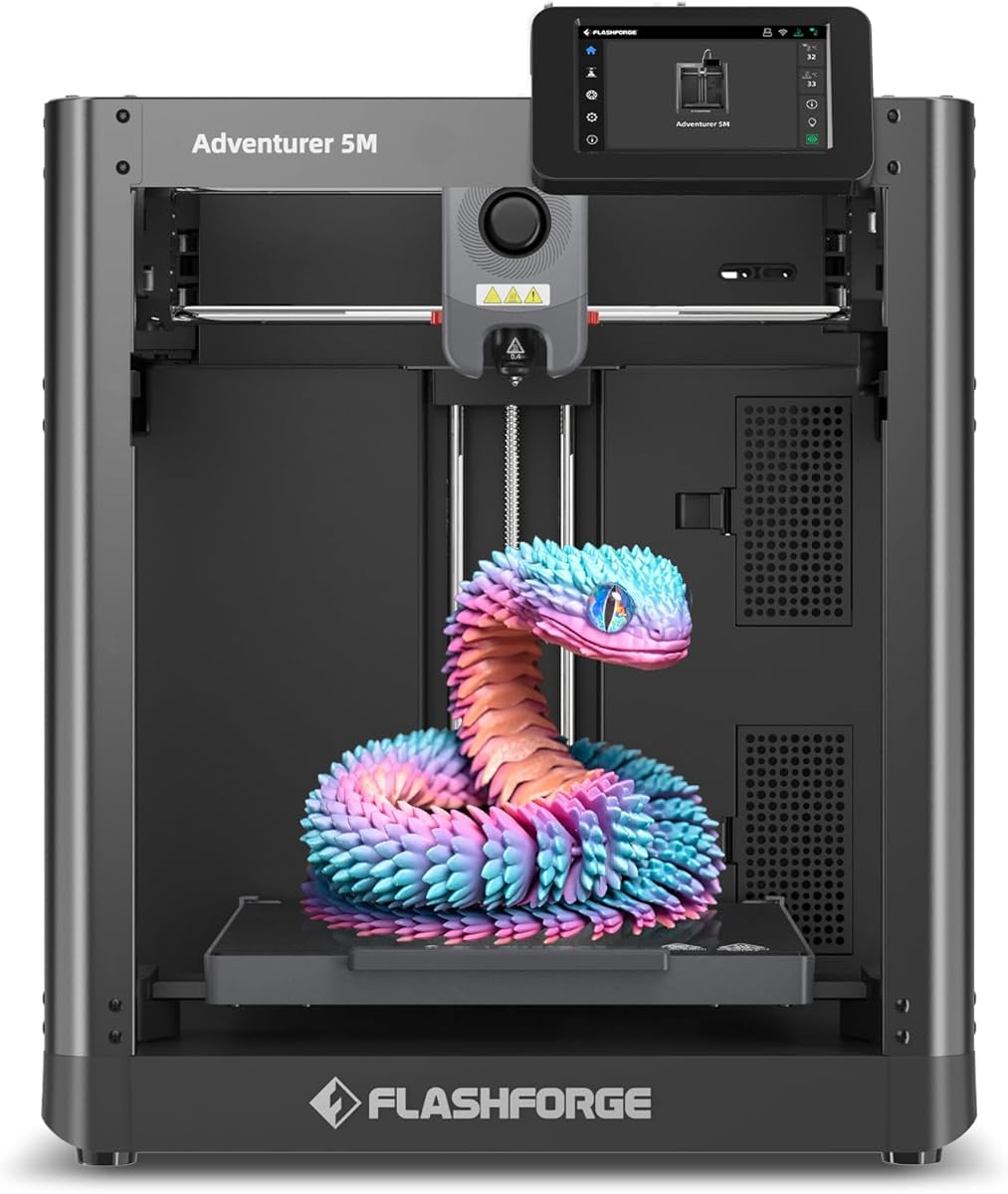
The Adventurer 5M brings high speed to education with CoreXY all metal structure. Fully auto leveling ensures consistent results for students. Real-time app monitoring helps teachers track progress remotely.
We may earn a commission when you buy through this link, at no additional cost to you.
Nozzle changes happen in three seconds. This quick maintenance feature means less downtime during class projects. The 280°C direct extruder supports a variety of filaments for different lessons.
User reviews note inconsistent experiences, but the hardware potential is high. Open frame means it needs ventilation. For schools needing fast prototyping, it offers good value if managed well.
Pick this if you need speed and durability for frequent use. It is better for supervised environments where open frame safety is managed.
12X ultra fast printing reduces wait times for students waiting for their prototypes.
Smart mobile control ensures a seamless, effortless printing experience anytime, anywhere.
We may earn a commission when you buy through this link, at no additional cost to you.
The P1S is a ready-to-use FDM printer that features an enclosed design. This enclosure improves performance and safety by containing heat and preventing access to moving parts.
We may earn a commission when you buy through this link, at no additional cost to you.
With 500mm/s speed, it handles standard and advanced filaments well. Automatic bed leveling ensures high-quality prints. Setup takes only 15 minutes, allowing students to start projects quickly.
You can add AMS for up to 16 colors, expanding creative possibilities. While pricier, the reliability and safety features make it a strong contender for schools focused on durability.
Consider this for high school workshops needing safer operation. The speed and enclosure are excellent for technical training and advanced prototyping.
The fully enclosed body improves print performance for advanced filaments and keeps hands safe.
User-friendly design ensures a hassle-free assembly experience for all skill levels.
We may earn a commission when you buy through this link, at no additional cost to you.
The AD5M combines new technology and superior craftsmanship for reliable prints. One-click auto leveling measures distances accurately. Power loss recovery saves work during outages.
We may earn a commission when you buy through this link, at no additional cost to you.
The Orca-flashforge slicer allows network monitoring. Patents on nozzle changes make maintenance quick. Dual-sided PEI plate helps remove prints easily without tools.
This unit is robust and suitable for frequent classroom use. It handles different nozzles and filaments well. While open, it performs well with proper supervision.
Choose this if you need a durable workhorse for a maker space. The network features help manage multiple devices efficiently.
If the electricity shuts down, it saves the ongoing layer and resumes from that point when power is restored.
The Flash Maker APP allows you to manage devices and monitor prints remotely.
We may earn a commission when you buy through this link, at no additional cost to you.
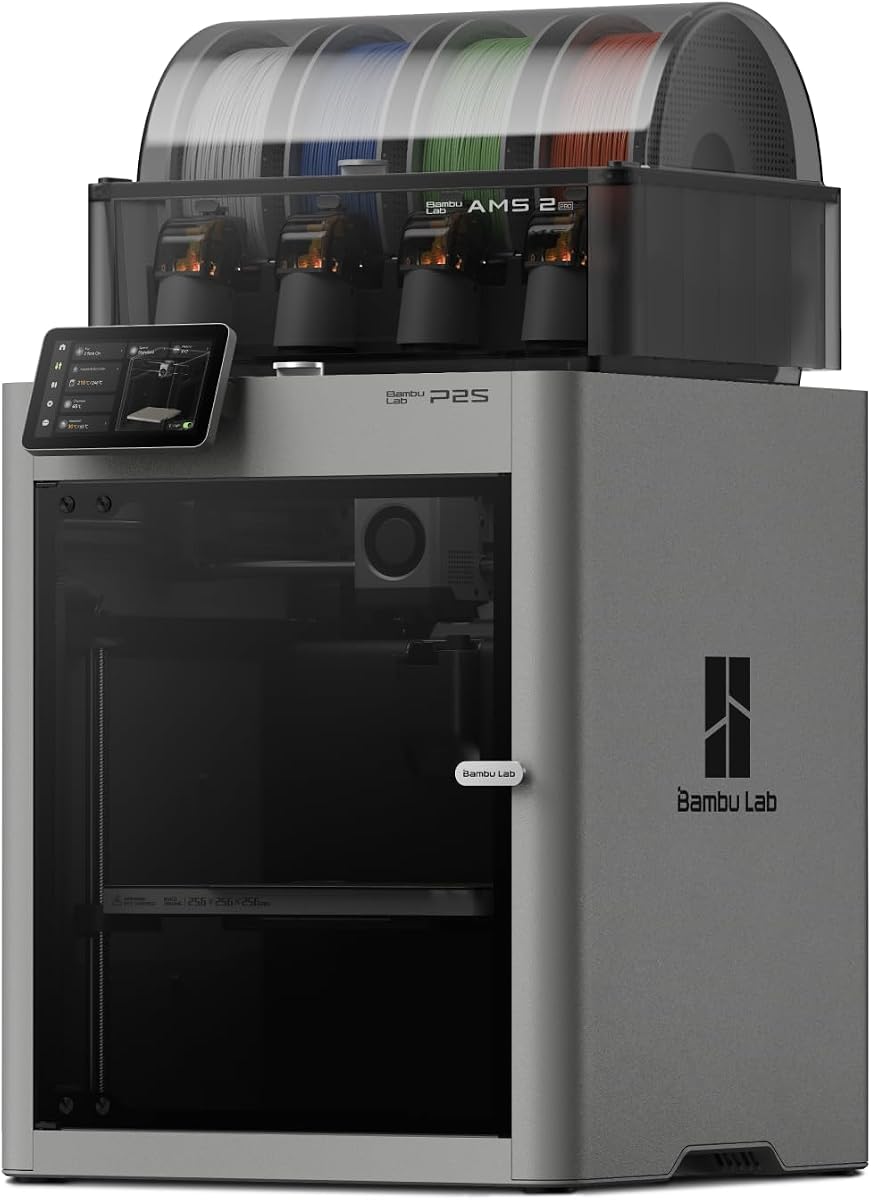
This combo offers multi-color printing right out of the box. AMS 2 Pro dries filament to ensure quality. The adaptive airflow system balances cooling for different materials.
We may earn a commission when you buy through this link, at no additional cost to you.
With 600mm/s speed, prints finish quickly. AI failure detection and auto calibration simplify use. It is designed to be ready in 15 minutes for immediate project work.
The cost is significant but worth it for schools wanting multi-color output. It supports various engineering materials, making it suitable for technical classes.
Ideal for advanced STEM courses needing colorful prototypes. The integrated workflow ensures high-quality results with minimal user input.
Effortless multi-color printing brings creativity to life with vibrant and reliable results.
Adaptive Airflow System balances cooling and heat retention for overhangs and engineering-grade materials.
We may earn a commission when you buy through this link, at no additional cost to you.
The Ugee Funbox is built specifically for kids with full safety certification. It has UL GREENGUARD certification and HEPA filtration for clean air in rooms. Zero calibration means it works instantly.
We may earn a commission when you buy through this link, at no additional cost to you.
Over 12,000 pre-tested toys are available. AI engines turn photos into prints. The camera creates time-lapse videos, which adds a fun sharing element for students.
It is safe for bedrooms and classrooms. The price is fair for the safety features. While single color, it encourages assembly of parts, which is a great learning step.
Buy this for elementary schools or home use where safety is paramount. It turns screen time into hands-on making without complex setup.
Built-in fan paired with H12 HEPA filters captures up to 99.5% of ultrafine particles.
AI engines turn text, photos, and voice into printable models instantly, needing no skills.
We may earn a commission when you buy through this link, at no additional cost to you.
This model focuses on vibration compensation to eliminate ghosting. Dual-sided PEI coating supports multiple materials. 50w heating power ensures 200°C in just 35 seconds.
We may earn a commission when you buy through this link, at no additional cost to you.
Power loss recovery protects projects. Filament run-out sensor changes material when empty. This allows students to keep working even if a spool runs out.
While open, it is fast and reliable for many projects. The quick nozzle detach feature reduces maintenance time. It is good for classes that need speed.
Consider this for general education where high throughput is needed. The reliability features reduce frustration for beginners.
Vibration compensation eliminates ghosting in prints for higher quality educational outputs.
Filament Run-out Sensor lets you change filament when empty and resume printing easily.
We may earn a commission when you buy through this link, at no additional cost to you.
The A1 Mini Combo combines a compact printer with the AMS lite system. It offers multi-color printing in a small footprint. Full-auto calibration works perfectly for its size.
We may earn a commission when you buy through this link, at no additional cost to you.
Setup for the first print takes about 20 minutes. Quiet motor noise cancellation keeps the environment peaceful. Active flow rate compensation ensures smooth layers.
The build volume is small, limiting large projects. However, for small prototypes and individual projects, it is efficient. The combo makes color printing accessible.
Pick this for spaces with limited desk space needing multi-color output. It is great for individual student workstations or home study rooms.
A1 mini 3D printer offers easy printing with a user-friendly interface and simplified touchscreen.
The combo makes multi-color printing accessible and reliable for everyone, bringing designs to life.
We may earn a commission when you buy through this link, at no additional cost to you.
Selecting the right educational 3D printer requires balancing safety, ease of use, and capability. We break down the essential factors to consider before you buy.
Safety is the top priority for schools and homes. Look for enclosed designs or models with UL certification. HEPA filters and non-toxic materials reduce risks from fumes.
Always check for safe exterior surfaces and auto-shutoff mechanisms to prevent accidents.
Educational printers should minimize calibration struggles. Auto-bed leveling and one-click setup save time for teachers and students. Fully assembled units get you started faster.
Choose devices with intuitive software that does not require complex coding.
Consider the size of the projects you plan to print. Larger volumes allow for big models but require more space. Compact units fit better in crowded classrooms.
Match the build size to the typical student project requirements.
Different filaments offer different properties. PLA is best for beginners. Support for engineering materials like PETG or ABS is needed for advanced labs. Check the maximum extruder temperature.
Ensure the machine can handle the types of filament needed for your curriculum.
Wi-Fi and app control allow teachers to monitor prints remotely. Power loss recovery is essential for long prints. Look for cloud libraries to access pre-made models.
Remote monitoring features save time during class hours.
High-speed printers allow for more projects in less time. Look for CoreXY structures for stability. Faster printers reduce waiting periods for students eager to see results.
Balance speed with noise levels for classroom comfort.
Budget is key for schools. Entry models are cheap but may lack support. Invest in machines with warranties and good customer service to protect your investment.
Consider total cost of ownership including maintenance.
Some printers come with STEM curricula or model libraries. These resources help teachers integrate printing into lessons. Look for AI or guided design features to aid beginners.
Rich content libraries enhance the educational value of the hardware.
Start by assembling the unit if not pre-built. Calibrate the bed according to instructions. Ensure the environment is well-ventilated before first use.
Load filament carefully and check for jams. Slice your designs in software to ensure proper supports. Monitor the first few layers closely for adhesion.
Clean the build plate regularly. Replace nozzles when worn. Store filament dry to prevent moisture issues. Follow manufacturer maintenance schedules for best results.
Yes, when used with supervision. Look for models with enclosed frames and certification like UL. Ensure the area has proper ventilation and keep hands away from moving parts.
Time depends on size and complexity. Small models can take 30 minutes. Larger items may take hours. High-speed models reduce this time significantly for classroom use.
PLA is the best choice because it is easy to print and low odor. It is biodegradable and non-toxic. Avoid ABS in small classrooms due to fumes.
Yes, they can use tools like Tinkercad or Fusion 360. Many printers support these formats. Teachers can guide students from concept to physical object.
Not strictly. Many work with SD cards. However, WiFi allows monitoring and updates. It is useful for managing multiple devices in a classroom.
Regular cleaning and lubrication are key. Check belts and nozzles monthly. High usage rates may require more frequent checks to avoid downtime.
A 200mm cube is standard. It fits most student projects. Smaller units work for basics. Larger units are for advanced programs with big designs.
Most use slicing software on a PC or cloud. Some allow direct USB. Modern apps enable phone control. It varies by model.
We selected the Bambu Lab A1 as the top choice for its speed and ease of use. It balances performance and reliability for most learning environments.
Focus on safety and setup time when deciding. A printer that works smoothly keeps students engaged and teachers focused on instruction.
Prices change often so check current listings before buying. Invest in a unit that grows with your educational needs for the long term.