
400 Watt Solar Panels 12V
4.4Editor score
Up to 25 percent efficiency
IP68 waterproof certification
High-quality oxygen-free copper wire
Discover the top 400 Watt Solar Panels for Rvs compared for efficiency, durability, and ease of installation in this comprehensive expert guide.
Finding reliable power for your recreational vehicle is essential for modern off-grid adventures. A high-quality solar setup ensures you can run appliances, charge devices, and maintain comfort without relying on noisy generators. The right panel makes all the difference in your daily energy independence.
We evaluated ten leading models based on efficiency ratings, build quality, and real-world performance claims. Each product offers unique features like bifacial designs, portable folding mechanisms, or rigid mounting options. Our analysis focuses on what matters most to RV owners seeking consistent power.
This guide highlights the strengths and weaknesses of each option to help you choose wisely. You will see detailed specs, pros, cons, and expert recommendations for every model listed. Keep in mind that availability and pricing fluctuate regularly on major retail platforms.
4.4Editor score

4.6Editor score

4.8Editor score
The following table provides a side-by-side overview of the top ten models evaluated in this guide. It highlights key specifications and unique selling points to help you quickly identify which option aligns with your specific RV power needs and installation preferences.



The DOKIO 400W Monocrystalline Solar Panel offers a substantial power boost for larger RV electrical systems. It claims a lab rating of 400 watts under standard test conditions which is impressive for a single unit. Many users appreciate the longer leads that simplify installation without extra connectors.
We may earn a commission when you buy through this link, at no additional cost to you.
This panel is designed to replace four smaller 100-watt units reducing hardware clutter on your roof. The weather-resistant construction includes tempered glass and an aluminum frame suitable for outdoor exposure. Pre-drilled holes align with common mounting brackets making setup straightforward for DIY enthusiasts.
Keep in mind that real-world output depends heavily on sunlight quality and temperature conditions. The product notes that MPPT controllers are recommended for optimal performance especially with higher voltage inputs. Ensure you have adequate wiring gauges to minimize losses over long cable runs.
Overall this is a solid choice for RV owners needing significant power in a compact footprint. It works well for off-grid camping or remote living where reliable charging matters. Check delivery carefully for damage as the manufacturer offers fast resolution for shipping issues.
The 3-meter leads reach farther than many panels often eliminating add-on extensions and extra connectors.
Sealed junction boxes and aluminum frames make this unit resistant to rain and splashes.
We may earn a commission when you buy through this link, at no additional cost to you.
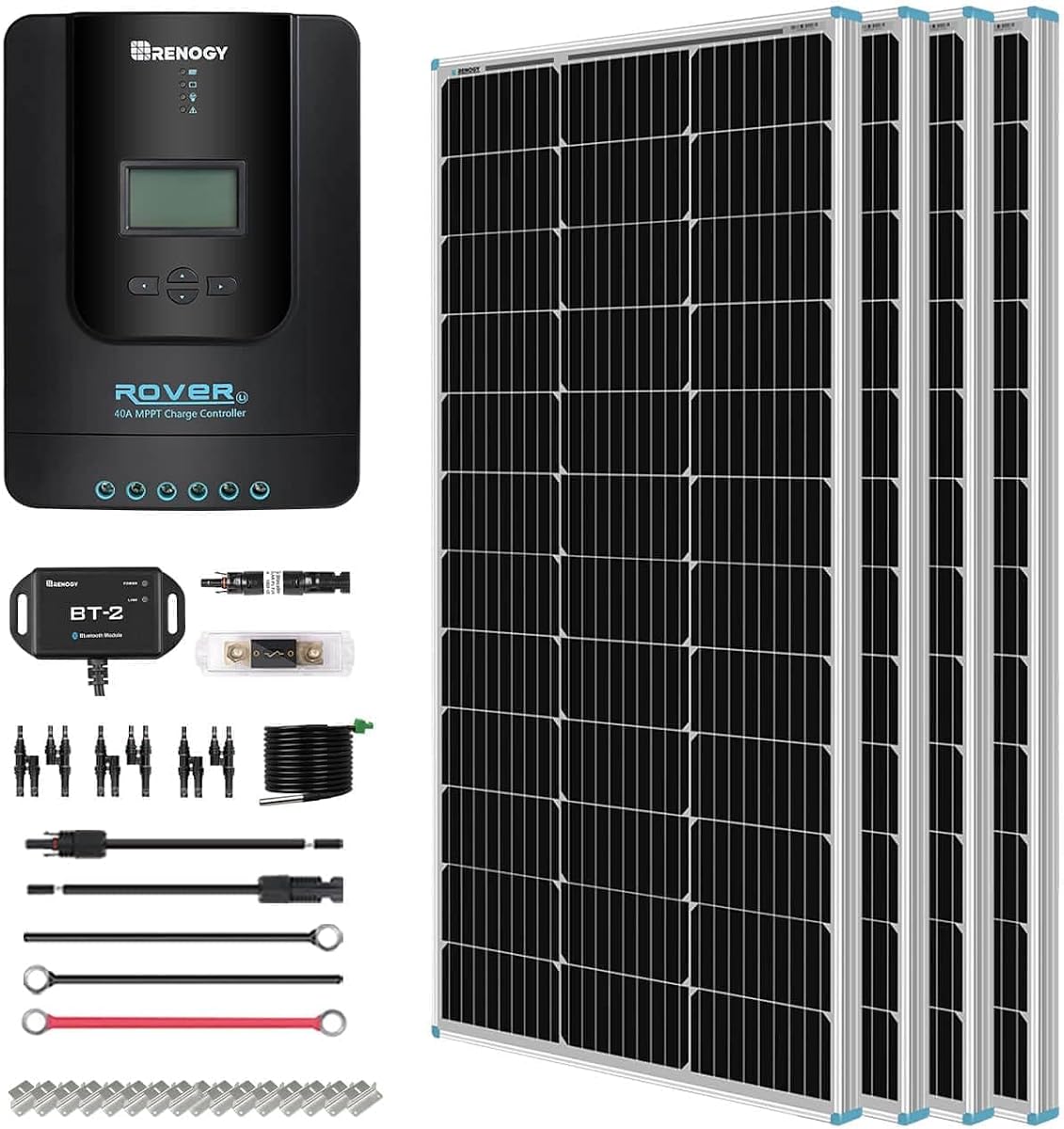
The Renogy 400Watt Premium Solar Kit provides everything you need to upgrade your RV power station quickly. It comes with a 40A MPPT charge controller which is essential for maximizing energy harvest from the panels. This all-in-one approach saves time on sourcing compatible parts separately.
We may earn a commission when you buy through this link, at no additional cost to you.
Renogy is a well-known brand in the RV community known for reliable components and support. The kit simplifies the decision process since the panels and controller are pre-matched for optimal performance. Installation guides are typically clear to help you set up the system safely.
Be aware that the maximum battery voltage is capped at 32V which might limit flexibility for larger setups. While the initial cost is higher than buying panels alone you gain the value of a ready-to-use controller. It is an excellent starting point for first-time solar users.
This kit is ideal for those who want a turnkey solution without technical guesswork. It ensures your batteries receive proper charging profiles based on their chemistry. Review the voltage requirements of your specific battery bank before ordering to avoid compatibility issues.
The package includes both panels and a controller reducing the need for separate purchases.
MPPT controllers adjust voltage and current to extract maximum power from the array.
We may earn a commission when you buy through this link, at no additional cost to you.
The JJN 400W Bifacial Solar Panel stands out for its ability to capture sunlight from both front and rear surfaces. This design can deliver up to 30 percent gain on reflective surfaces like white RV roofs or light gravel. It combines two 200-watt modules for a total of 400 watts in one package.
We may earn a commission when you buy through this link, at no additional cost to you.
Each module is designed with a slim footprint that fits easily into tight spaces on vehicles or boats. The high-efficiency cells convert more sunlight into electricity which means you need less area for the same output. This is particularly useful when roof space is limited on smaller Class B vans.
Installation considerations include ensuring the backside receives adequate light to maximize the bifacial benefit. The IP65 junction box offers solid protection against dust and water splashes for outdoor use. The panels also handle wind and snow loads well making them suitable for various climates.
We recommend this panel for RV owners who want maximum energy yield from every square foot. It balances portability and performance well for those who travel often. Check your mounting surface to ensure it reflects light if you want to leverage the bifacial advantage fully.
Bifacial technology captures rear-side reflected light increasing total power output significantly.
Slim dimensions allow easy transport and setup in constrained RV rooftop areas.
We may earn a commission when you buy through this link, at no additional cost to you.
This 400W Portable Solar Panel is designed for users who value flexibility and mobility in their power setup. Its foldable design allows you to pack it into a suitcase or trunk and set it up quickly at campsites. It targets popular power stations making it a versatile companion for outdoor adventures.
We may earn a commission when you buy through this link, at no additional cost to you.
The high-efficiency cells ensure you get the most energy possible even when time at a site is limited. Built-in intelligence handles charging safety with protections against over-voltage and short circuits. The waterproof materials keep it protected during light rain or dust exposure.
While portable it does require some setup time to adjust the kickstand for optimal sun angle. It is not meant to be permanently mounted on a roof like rigid panels. This makes it best for ground setups near tents or parked vehicles where you can move it as needed.
Consider this option if you use a portable power station frequently for camping or emergencies. It offers a good balance of output and convenience for mobile users. Ensure your power station accepts the input voltage and connectors provided by the panel kit.
The lightweight foldable frame makes transportation and storage easier than rigid units.
Intelligent chips protect connected devices from electrical issues during operation.
We may earn a commission when you buy through this link, at no additional cost to you.
The Greenmagic Portable 400 Watt Solar Panel boasts impressive conversion rates between 21.5 and 23.5 percent. This efficiency helps you charge your battery banks faster when sunlight is available. It features built-in adjustable kickstands that let you angle the panel precisely for maximum sun exposure.
We may earn a commission when you buy through this link, at no additional cost to you.
Designed with compatibility in mind it works with most major portable power stations like Jackery and Ecoflow. The panel includes hanging loops for versatile mounting options including side mounting on an RV. The rubber handle makes carrying it around feel like moving a briefcase.
Be careful to note that the junction box is not waterproof so avoid leaving it in heavy rain. While the surface is water-resistant the internal electronics need protection from soaking. The Oxford cloth outer layer adds durability but the overall weight requires effort to move frequently.
This is a strong choice for those who need a reliable portable charging solution for various devices. It supports both series and parallel wiring for flexibility with larger setups. Use it to keep your power station topped up during weekend trips or longer off-grid stays.
Built-in loops allow hanging or ground placement depending on your setup needs.
Compatibility with major brands simplifies matching with your existing power gear.
We may earn a commission when you buy through this link, at no additional cost to you.
This portable solar charger features an exceptional 23.5 percent efficiency rate thanks to advanced ETFE coating. It includes a variety of connectors for Anderson XT60 DC5521 DC7909 outputs fitting most power stations easily. The IP67 rating provides strong waterproof protection against dust and water immersion.
We may earn a commission when you buy through this link, at no additional cost to you.
The kickstands allow for adjustable angles to capture sunlight effectively during different times of day. An accessory pouch keeps cables organized during travel which is a nice practical touch. The fiberglass structure adds strength to withstand rugged outdoor conditions over time.
While durable it is not the lightest option available for hiking or backpacking trips. You will need a relatively flat surface to place it safely on the ground. The multi-port capability means you can charge multiple devices or systems simultaneously if needed.
Ideal for van life or basecamp scenarios where you can set it down securely and charge up. The warranty support adds peace of mind for long-term ownership. Ensure you have the correct adapter cables for your specific power station model before heading out.
IP67 certification ensures the panel survives rain and dust better than many rivals.
Multiple port adapters make it versatile for different power station brands.
We may earn a commission when you buy through this link, at no additional cost to you.
The 400 Watt Solar Panels offer an attractive combination of N-Type technology and high efficiency at a competitive price point. Using advanced Grade A+ cells it reaches up to 25 percent conversion which is impressive for this class of product. It includes robust wiring and connectors to minimize electrical losses.
We may earn a commission when you buy through this link, at no additional cost to you.
The junction box carries an IP68 rating providing superior protection against dust and water ingress compared to standard boxes. The frame is made from corrosion-resistant aluminum ensuring longevity in outdoor environments. Anti-corrosion coating on components helps the panel withstand harsh weather conditions.
Installation requires standard mounting hardware and careful attention to wiring polarity. The product ships with reinforced foam corners to prevent damage during transit which shows care in packaging. It is a great option for buyers who want high performance without paying premium brand markups.
Select this panel if you need a reliable power source for RVs or off-grid cabins on a budget. The technical specs rival more expensive models making it a smart value choice. Always verify the physical dimensions fit your roof space before purchasing to avoid fit issues.
N-Type cells provide better performance and longevity than traditional P-type alternatives.
IP68 sealing ensures internal electronics stay dry in demanding weather.
We may earn a commission when you buy through this link, at no additional cost to you.
The Callsun N-Type 400W Bifacial Solar Panel brings premium features like TwinCell anti-shade technology. This design splits the panel into two independent halves so shaded sections do not reduce output from the entire unit. It delivers up to 30 percent more power with light reflection on reflective surfaces.
We may earn a commission when you buy through this link, at no additional cost to you.
Built for extreme durability it uses 3.2mm tempered glass and an aluminum frame to withstand wind and snow loads. The low temperature coefficient means it performs better in hot climates where other panels might lose efficiency. A 25-year performance warranty guarantees at least 84.5 percent output over time.
Installation is straightforward with pre-drilled holes and Z-bracket compatibility for RVs. The compact dimensions make it suitable for tighter roof spaces like Class B vans. It is an investment in long-term reliability with strong support from the manufacturer.
This model is perfect for owners who prioritize efficiency and protection against partial shading. While the upfront cost is higher the long-term yield can justify the expense. Consider your roof layout to ensure you can leverage the bifacial benefits effectively.
TwinCell technology ensures partial shading does not kill power from the whole panel.
Low temp coefficient maintains efficiency even during hot summer afternoons.
We may earn a commission when you buy through this link, at no additional cost to you.
This 400 Watt Solar Panel package contains four individual 100W panels allowing for flexible roof layout. N-Type technology ensures high conversion efficiency while the 16BB busbars reduce hotspots for better longevity. Each unit is compact and lightweight making them easier to handle than one big panel.
We may earn a commission when you buy through this link, at no additional cost to you.
The reinforced corner guards protect the glass during transport and installation from accidental impacts. It is designed for tight roof spaces with pre-drilled holes for standard rail mounts. The low temperature coefficient helps maintain power output even in high-temperature summer conditions.
Managing four separate units means more wiring and mounting steps than a single integrated panel. However the flexibility allows you to work around vents or other obstacles on your RV roof. It is a smart choice for complex layouts where one large panel would not fit.
Choose this set if you need to customize your solar array to fit irregular spaces. The technical performance matches larger premium panels with added installation versatility. Review your roof measurements carefully to plan the spacing before you begin drilling.
Four smaller units let you arrange power around roof vents and obstacles easily.
N-Type cells maintain efficiency better in heat than standard panels.
We may earn a commission when you buy through this link, at no additional cost to you.
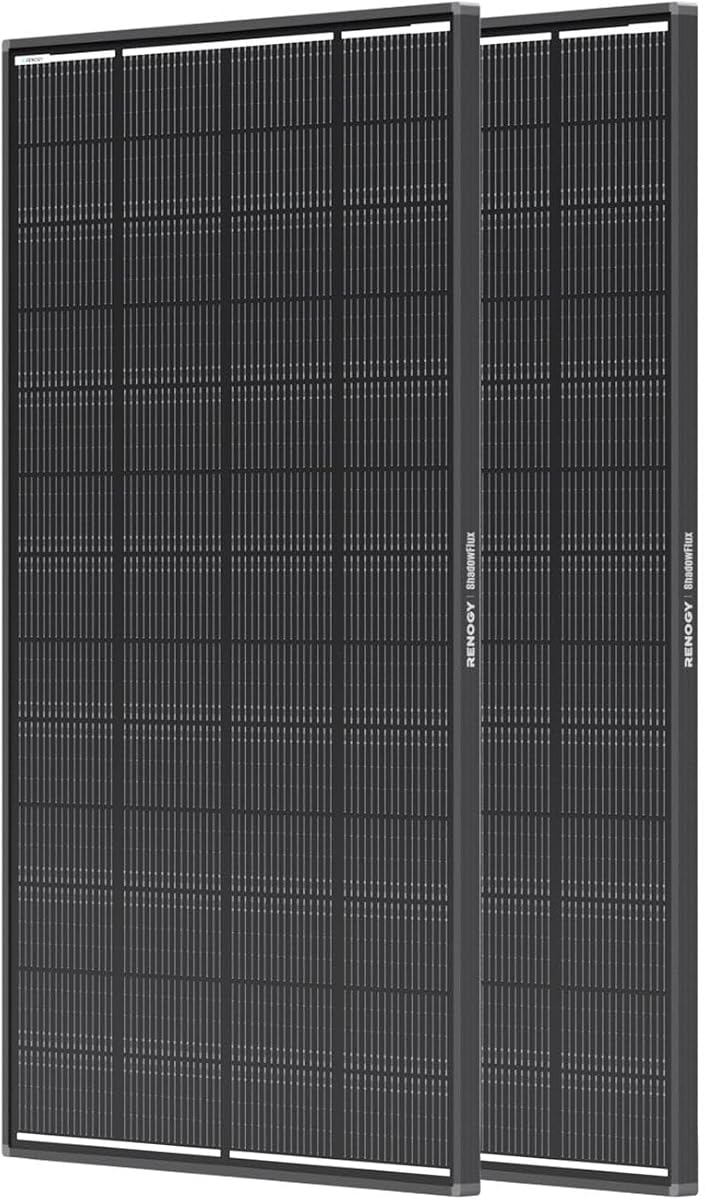
The Renogy ShadowFlux Solar Panel features advanced technology to maintain power output in shaded conditions. Using N-Type cells it achieves 25 percent efficiency which is among the highest available. The compact design is 7 percent smaller than PERC panels saving valuable roof space on your vehicle.
We may earn a commission when you buy through this link, at no additional cost to you.
With an IP67 rating it resists water vapor and dust ensuring long-term durability in harsh weather. The shadowflux tech reduces hot-spot risks caused by buildings or plants nearby. This reliability is crucial for travelers who cannot always control their parking location fully.
Renogy offers strong support and warranty coverage for materials and output over the long term. It is built to endure snow rain and hail without degradation of performance. The lightweight design makes it easier to install on older roofs with weight limits.
Pick this panel if shade tolerance is a top priority for your travel style. It is a premium option that delivers consistent energy even in imperfect sunlight. Check the system requirements to ensure it pairs well with your existing charge controller.
Advanced tech ensures you still get power when parts of the panel are shaded.
Smaller footprint than standard panels saves space on crowded RV roofs.
We may earn a commission when you buy through this link, at no additional cost to you.
Selecting the right solar panel for your RV involves understanding several technical and practical factors. This guide explains the key considerations to help you match a product with your energy needs and budget effectively.
Efficiency ratings like 23% or 25% indicate how much sunlight converts to electricity. Higher efficiency means more power from less surface area which is valuable on small roofs. Look for N-Type cells as they generally offer better temperature performance than older P-Type designs.
Prioritize panels with higher efficiency ratings to maximize your limited roof space.
Decide whether you need a rigid panel for permanent roof mounting or a portable foldable one. Rigid panels save effort once installed while portable ones allow you to set up on the ground near your campsite. Check weight specifications to ensure your roof can handle the load safely.
Choose rigid models for permanent setups and foldable ones for flexibility and ground use.
Ensure the panel connectors match your charge controller or power station inputs. MC4 connectors are standard for roof systems but portable units often use DC or Anderson plugs. If mismatched you may need adapters which add cost and potential failure points to your setup.
Verify connector types before buying to avoid expensive adapter purchases later.
Look for IP ratings on junction boxes to gauge water resistance during rain or dust. Panels rated IP65 or higher are safer for outdoor exposure. Wind and snow load ratings also matter if you travel in areas with severe weather conditions.
Select units with IP65 or IP67 ratings for reliable weather resistance.
Bifacial panels capture light from both sides increasing output if mounted over reflective surfaces. Monofacial panels only use light from the front which is simpler and often cheaper. Bifacial gains depend heavily on how well your roof reflects light to the back of the panel.
Use bifacial panels only if you can ensure good reflectivity from your mounting surface.
Reputable brands offer 25-year performance warranties guaranteeing output retention over time. Check for shorter product warranties covering defects in materials or workmanship. Support availability ensures you can get help if issues arise years after purchase.
Look for 25-year output warranties and strong customer support records.
Longer built-in leads simplify installation by reaching further to your charge controller. Short leads might require extra extension cables which introduce resistance and potential connection issues. Measure the distance from your mounting spot to your electrical center before selecting a panel.
Choose panels with long leads to minimize the need for extra cables.
Cost varies based on technology and brand reputation. While cheaper options save money upfront they may lack efficiency or durability features. Consider total cost of ownership including potential controller upgrades and maintenance over the product life.
Balance upfront cost with long-term efficiency gains to find true value.
Proper installation ensures your solar panels perform safely and efficiently. Mount rigid panels securely using Z-brackets or rails to prevent wind damage during travel. For portable panels place them on level ground and angle them toward the sun for maximum absorption.
Regular cleaning keeps efficiency high because dust and debris block sunlight. Use water and a soft cloth to wipe the glass surface occasionally. Avoid harsh chemicals that might damage the anti-reflective coating or frame.
Inspect junction boxes and wiring connections periodically for signs of wear. Ensure cables are protected from sharp edges and exposed heat sources. Replace any damaged connectors immediately to maintain safe electrical performance.
Yes many RV owners install these panels themselves using basic tools like drills and wrenches. However ensure you understand wiring safety and local regulations before drilling. If unsure consult a professional to avoid damaging your vehicle or creating electrical hazards.
You should use an MPPT controller rated for at least 400 watts to handle the power safely. PWM controllers work too but are less efficient with higher wattage panels. Check the voltage input limits of your controller to match the panel specs.
In ideal conditions you might get 400 watts of power but real-world output is often 70 to 80 percent due to heat and angle. Expect around 1600 to 1800 watt hours per day with full sun depending on your location and season.
Most panels in this list have IP65 or IP67 ratings making them suitable for rain and dust. Portable panels may have less waterproof internal components so cover them during heavy storms. Always check specific ratings before exposure to harsh elements.
Yes you can connect panels in series if your charge controller accepts higher input voltage. This reduces current and wire loss but requires matching voltage specs. Parallel wiring is safer for standard 12V systems to keep voltage lower.
Quality panels last 25 years or more with gradual efficiency decline. Manufacturers guarantee output retention over this period. Proper maintenance like cleaning and secure mounting helps extend their functional life on your RV.
A fridge uses significant power so one panel may not suffice without batteries. You likely need a battery bank to store energy for night time use. Check your fridge wattage and daily usage to determine if 400 watts is enough.
Use lukewarm water and a soft sponge or cloth to wipe dirt off the glass. Clean early in the morning when panels are cool to prevent cracking. Rinse thoroughly to remove soap residue that could reduce light transmission.
We reviewed ten top models ranging from flexible kits to rigid panels with advanced N-Type tech. The JJN bifacial model offers high efficiency for those with limited space while the Callsun premium option delivers robust shade protection. Budget buyers can rely on the affordable Watt panels with strong specs.
Focus on efficiency and durability first since these impact long-term energy savings significantly. Portable options provide flexibility for changing camp sites whereas roof mounts offer convenience and set-and-forget operation. Match the connector types to your existing gear to avoid extra adapter costs.
Prices and stock levels change often so verify current details before finalizing your order. Check customer reviews for the latest real-world feedback on performance and support. Your ideal panel depends on your specific travel style and energy demands.