
Clarity P300 Landline Phone
4.0Editor score
Amplifies sounds up to 26 dB
Adjustable ringer pitch and volume
Simple big button corded design
This guide compares ten top amplified phones for hard of hearing users, evaluating volume boost, captioning, and accessibility features to help you choose the
Finding the right communication device is essential for those with hearing loss. Amplified phones offer enhanced sound clarity and visual alerts to ensure you never miss an important call. These devices are designed to meet specific auditory needs while maintaining ease of use.
We have analyzed ten leading models based on volume amplification, user interface, and additional accessibility features. Our comparison covers corded, cordless, and captioned options to provide a comprehensive overview of the current market offerings for seniors and hard of hearing individuals.
Each product review highlights key specifications, pros, and cons to help you make an informed decision. Please note that availability and pricing may fluctuate over time, so we recommend checking current listings before making your final purchase decision for your home.
4.0Editor score
4.3Editor score

4.3Editor score
The following table provides a side-by-side comparison of all ten selected models, highlighting their primary specifications and unique capabilities to assist in your selection process.


The Panasonic KX-TGM420W stands out as a top choice for users seeking reliable amplification. It offers a 40 dB volume boost ensuring voices are heard clearly even in noisy environments. The design prioritizes clarity and ease of use for everyone.
We may earn a commission when you buy through this link, at no additional cost to you.
Key strengths include the noise reduction feature which suppresses background interference. The Slow Talk function helps users understand fast speakers by slowing down speech in real time. Large buttons and a backlit LCD make dialing straightforward for those with vision challenges.
While the phone requires a power source, it includes power backup features. The setup involves programming settings which might be slightly complex initially but yields better results. These minor trade-offs are acceptable given the high level of audio customization.
This phone is ideal for seniors needing robust features without complexity. It balances amplification with usability making it a strong recommendation. We suggest this model for households wanting a comprehensive cordless solution.
The volume boost and noise reduction work together to isolate speech from environmental noise.
Bright LED ringers and large text on the display ensure users never miss a call visually.
We may earn a commission when you buy through this link, at no additional cost to you.
The Hamilton CapTel 2400iSPNBT is a specialized device designed for those who need visual confirmation of conversations. It displays real-time captions on a large touchscreen allowing users to read and listen simultaneously. This dual sensory approach significantly reduces missed words.
We may earn a commission when you buy through this link, at no additional cost to you.
Its main strength lies in the captioning service which is free and available around the clock. The phone allows customization of caption size and tone to match personal comfort levels. It supports both auto and assisted captions with live operator help.
Users must have high-speed internet access and telephone service to utilize the captioning feature. This requirement might limit use in areas with poor connectivity. However for eligible users the clarity provided is unmatched in the category.
Ideal for moderate to severe hearing loss this phone bridges the communication gap effectively. It is highly recommended for users who prioritize text feedback. The device transforms daily calls into confident interactions.
Real-time captions ensure that every word is captured visually for complete understanding.
The large touchscreen simplifies navigation and allows easy adjustment of settings.
We may earn a commission when you buy through this link, at no additional cost to you.
The Clarity P300 offers an entry-level solution for those with mild to moderate hearing loss. It amplifies incoming sounds up to 26 dB making calls louder and easier to hear. The design focuses on simplicity and reliability for everyday use.
We may earn a commission when you buy through this link, at no additional cost to you.
Its strength is the customizable settings which allow users to adjust ringer pitch and volume. The large buttons are easy to press even for those with limited dexterity. Being a wired phone it eliminates the need for battery charging.
The amplification may not be sufficient for severe hearing loss requiring higher decibel levels. The lack of wireless features means it relies on a fixed location. Despite these limitations it provides solid value for basic needs.
This model is perfect for users seeking a no-fuss affordable device. It works well for those who prefer traditional landlines. We recommend it as a reliable secondary or primary line.
The straightforward design ensures anyone can operate it without technical assistance.
Wired connection ensures consistent performance without signal interference.
We may earn a commission when you buy through this link, at no additional cost to you.
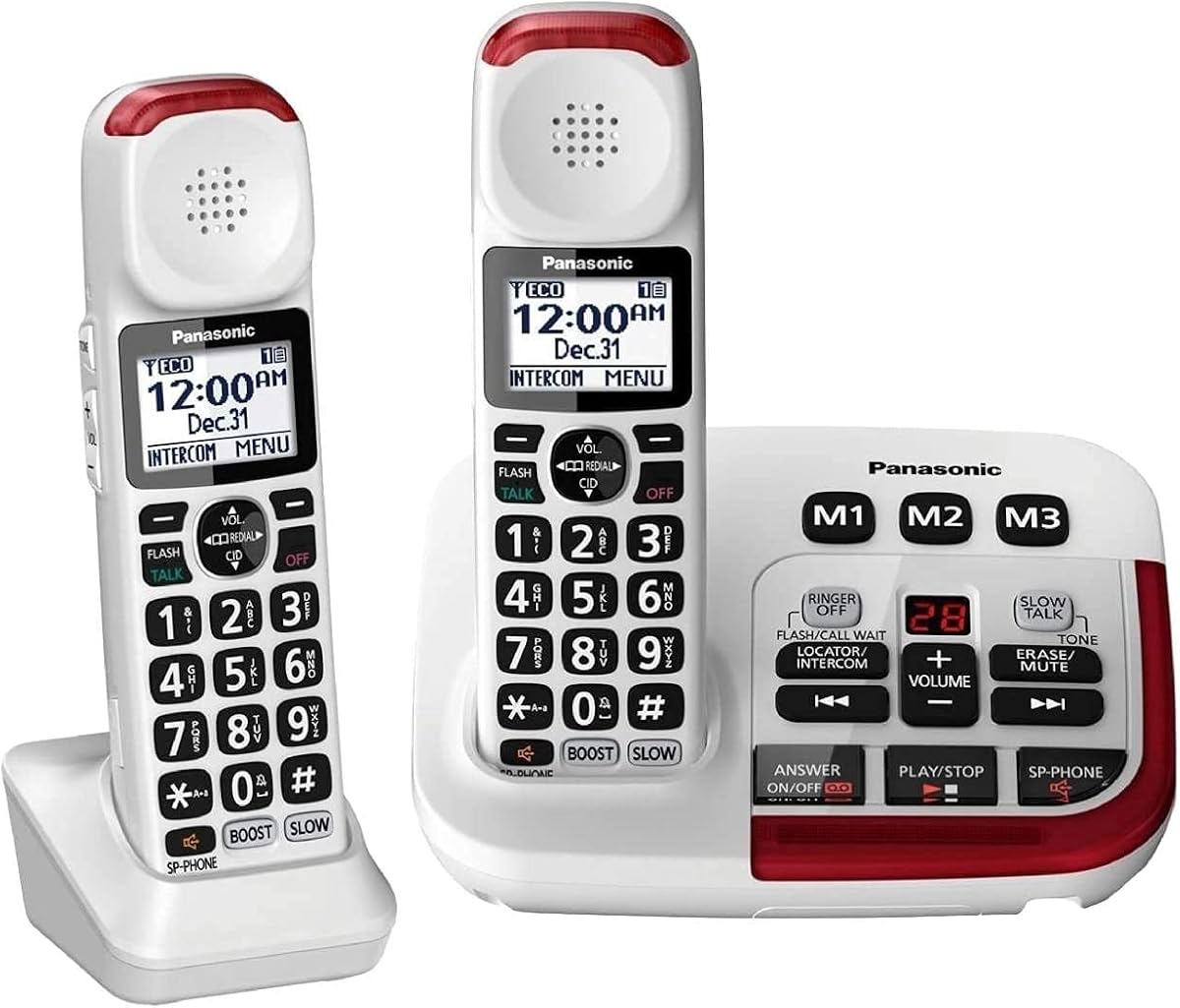
This package includes two cordless handsets providing immediate coverage for multiple rooms. It retains all the audio enhancements of the standard model including 40 dB volume boost. This makes it ideal for families or larger homes needing multiple access points.
We may earn a commission when you buy through this link, at no additional cost to you.
The system allows expansion to six handsets offering significant flexibility for growing needs. Visual ringers on both base and handset ensure calls are noticed anywhere in the house. The answering machine supports remote access for added convenience.
Managing two handsets requires charging both devices regularly which can be slightly inconvenient. The cost is higher than single unit models but offers better value per handset. This trade-off is justified for multi-user environments.
Best for households with multiple users who need amplified phone access. It reduces the need for additional base units and simplifies management. We recommend this for families seeking comprehensive coverage.
Two handsets ensure that calls can be answered in different areas of the home.
The ability to add up to four more handsets allows for future expansion.
We may earn a commission when you buy through this link, at no additional cost to you.
The Panasonic KX-TGM450S provides the highest volume boost among the models compared at 50 dB. This feature is particularly beneficial for users with significant hearing loss requiring extra loudness. The visual ringer is exceptionally loud ensuring calls are never missed.
We may earn a commission when you buy through this link, at no additional cost to you.
It includes Slow Talk and hearing aid compatibility making it versatile for different needs. The large screen and backlit keypad support users with visual impairments. Speakerphone quality is also enhanced for hands-free clarity.
The device is somewhat heavier due to the robust internal components. It also carries a higher price tag reflecting its advanced capabilities. These factors are minor compared to the benefits of superior audio output.
This phone is best for those who need maximum volume. It is highly suitable for severe hearing loss. We recommend it for users prioritizing sound power above all else.
With 50 dB boost, it ensures voices are audible even for severe hearing loss.
A 112dB visual ringer guarantees attention is drawn to incoming calls.
We may earn a commission when you buy through this link, at no additional cost to you.
The VTech SN5147 offers a hybrid system combining a reliable corded base with a cordless handset. This ensures connectivity even during power outages which is vital for emergency communication. It provides a balance of stability and mobility.
We may earn a commission when you buy through this link, at no additional cost to you.
Features include photo dial slots and call blocking for enhanced safety and ease. The visual ringer indicator is very loud and helps alert users effectively. Slow playback on the answering machine aids in understanding messages.
The setup is more complex than standard phones due to the hybrid nature. Some users might find the visual alert too bright for quiet environments. These issues are manageable with simple adjustments.
This model is great for seniors who want both mobility and security. It is ideal for those living alone needing reliability. We recommend it for comprehensive home security.
The corded base ensures you can make calls during electrical outages.
Photo dial slots allow quick access to loved ones via images.
We may earn a commission when you buy through this link, at no additional cost to you.
The Clarity XLC3.4+ focuses on connectivity stability with DECT 6.0 technology. It offers extended battery life ensuring the handset remains functional for longer periods. The large buttons and talking caller ID support users with vision issues.
We may earn a commission when you buy through this link, at no additional cost to you.
Its main advantage is the interference-free range which is useful in larger homes. Digital Clarity Power Technology optimizes sound quality. It is designed for reliability over many years of use.
User ratings are lower suggesting some variability in performance or durability. The cost is higher which might not fit every budget. These points are worth considering before purchase.
Best for users prioritizing battery reliability and range. It suits those needing consistent service. We recommend it for large homes with connectivity needs.
Extended battery life reduces the frequency of recharging.
Interference-free technology ensures clear connection throughout the property.
We may earn a commission when you buy through this link, at no additional cost to you.
The ClearSounds CLS-CSC500 is a dedicated device for seniors with amplified capabilities. It is recognized for clear sound quality and easy use. The design simplifies interaction for users with vision or dexterity challenges.
We may earn a commission when you buy through this link, at no additional cost to you.
Its strength lies in high user ratings indicating strong reliability. The ClearSound technology ensures voices are crisp. It is designed to reduce frustration during daily calls.
Specific technical specs are limited compared to other models. It lacks advanced features like captioning or photo dial. However simplicity often outweighs complexity for elderly users.
This phone is best for seniors wanting simplicity. It is highly suitable for basic needs. We recommend it for users needing minimal setup.
The intuitive layout minimizes confusion for elderly users.
ClearSound technology filters noise for a better listening experience.
We may earn a commission when you buy through this link, at no additional cost to you.
The Clarity AltoPlus offers advanced features including up to 53dB amplification. It is certified by TIA ensuring it meets strict standards. A neckloop jack allows connection to assistive listening devices.
We may earn a commission when you buy through this link, at no additional cost to you.
Key strengths include outgoing speech amplification helping callers hear your voice. The ringer is loud with a visual indicator. It supports battery backup to maintain function during power loss.
The device is expensive and lacks current user ratings. Setup for neckloop connections might require technical knowledge. These factors may deter casual buyers.
This phone is ideal for severe hearing loss needing assistive tech. It suits medical compatibility needs. We recommend it for users requiring high-end assistive features.
The neckloop jack allows connection to telecoil hearing aids.
TIA certification guarantees compliance with hearing loss standards.
We may earn a commission when you buy through this link, at no additional cost to you.
The SWISSVOICE 3355 features photo memory buttons allowing visual identification of contacts. This is helpful for those with memory or vision challenges. It includes a cordless handset and loud ringer for convenience.
We may earn a commission when you buy through this link, at no additional cost to you.
Strengths include the SOS button for emergencies and large dialing keys. The adjustable ringer volume reaches 90 dB ensuring alerts are heard. Call block helps prevent unwanted contacts.
Users must program photos which requires time and care. Ratings indicate some variability in user satisfaction. These minor issues are manageable with support.
This phone is best for those relying on visual cues. It is suitable for families wanting emergency access. We recommend it for visual accessibility.
Photo buttons help users identify contacts without reading numbers.
SOS button allows quick access to emergency contacts.
We may earn a commission when you buy through this link, at no additional cost to you.
Selecting the right phone involves evaluating volume needs visual aids and connectivity options. Below are key factors to consider when choosing a device.
Different users require different decibel boosts ranging from 26 dB to 53 dB. Higher amplification is crucial for those with severe loss while lower levels may suffice for mild loss. Assess your hearing needs before purchasing to ensure clarity.
Choose a model that matches your specific hearing profile.
Visual ringers and flashing lights alert users to calls when audio is missed. Brightness and frequency of these alerts can vary by model. Consider if you need both loud audio and visual cues.
Prioritize devices with strong visual signals for reliability.
Captioned phones display text of conversations for users needing reading support. These require internet service and are available in the US only. Check eligibility and service requirements before buying.
Captioning is ideal for moderate to severe loss needing visual text.
Phones may be corded, cordless, or hybrid. Corded units work during power outages while cordless offer mobility. Decide which balance suits your home layout.
Choose a hybrid system for both mobility and reliability.
Many models feature TIA certification ensuring they work with hearing aids. This prevents interference and feedback during calls. Check for neckloop or headset jacks for additional connectivity.
Ensure the phone is compatible with your existing assistive devices.
Large buttons help users with vision or dexterity issues dial more easily. Backlit displays improve visibility in low light. Ergonomic design reduces strain during use.
Opt for oversized controls and backlit screens.
Some systems support multiple handsets for larger households. This allows users in different rooms to answer calls. Check how many units can be added.
Select expandable models for multi-room coverage.
Advanced models include noise cancellation to filter background sound. This improves clarity in busy environments. Look for dedicated noise reduction settings.
Noise reduction is valuable for clarity in noisy areas.
Begin by plugging the base unit into a power outlet and telephone jack. Ensure the handset is charged if it is cordless. Follow the manual to set volume and ringer levels to your preference.
Clean the device regularly using a soft dry cloth to remove dust and oils. Avoid liquid cleaners that could damage electronic components. Store extra batteries properly if your model uses them.
Periodically check settings to ensure volume and alert levels remain appropriate. Update firmware or settings if your model supports connectivity. Proper maintenance extends the lifespan of the device.
Most standard amplified phones do not require internet as they use traditional telephone lines. Only captioned models need high-speed internet for real-time captions. Ensure your plan matches the phone type.
Many models are hearing aid compatible and may include neckloop jacks. Check for TIA certification on the product details. Using the right connection ensures no interference during calls.
Visual ringers typically include bright LEDs or loud alerts designed to be noticeable. They are especially helpful if audio is lowered. Adjust the intensity if your model supports it.
Photo dial requires inserting photos or using digital images stored on the device. Follow instructions in the manual to map images to contacts. This feature helps users identify numbers visually.
Corded bases usually work during outages while cordless handsets may not. Consider hybrid models if you need reliability. Check if your model has battery backup.
Captioning services are often free nationwide but require registration. Some providers may require specific telephone service plans. Verify current policies before purchasing.
Choosing the right phone ensures clear communication and peace of mind. The top picks offer various features for different needs and budgets.
Prioritize volume needs and visual alerts to match your specific hearing profile. Consider connectivity options to suit your lifestyle.
Always verify current availability and pricing before purchase. We hope this guide helps you find the ideal device.