
ESP32-S3-Nano Microcontroller Board
5.0Editor score
8MB PSRAM for complex tasks
HID support for keyboards
Arduino IoT Cloud compatibility
This guide compares the top Arduino Nano ESP32 boards and compatible ESP32 S3 development boards for IoT, wireless projects, and embedded systems in October
The Arduino Nano ESP32 represents a significant leap in embedded development. It combines powerful processing with modern connectivity options. This guide helps you find the right board for your specific project needs.
We compared ten top-rated microcontroller boards based on performance, connectivity, and ease of use. Each product offers unique strengths for makers, engineers, and hobbyists looking to build robust IoT solutions.
Every pick highlights key features and real-world applications to help you decide. Remember that product availability and pricing can change frequently. Always check the latest details before making your final purchase.
5.0Editor score

4.6Editor score

4.8Editor score
This table provides a side-by-side overview of the top ten microcontroller boards. It highlights key specifications like processor type, memory capacity, and wireless features to help you compare options quickly.


The Arduino Nano ESP32 stands out as the top choice for modern embedded projects. It earns a solid 4.6 rating from users who value its balance of performance and ease of use. The board is designed to make wireless development simple and reliable.
We may earn a commission when you buy through this link, at no additional cost to you.
Its powerful ESP32-S3 microcontroller runs at up to 240 MHz. This allows for fast data processing and efficient management of wireless connections. The support for Wi-Fi and Bluetooth 5.0 ensures seamless communication with other devices and cloud services.
While the price is slightly higher than generic boards, the quality justifies the cost. The USB-C port provides stable power and faster programming. HID support adds unique capabilities for creating custom keyboards or controllers without extra hardware.
This board is ideal for developers who need robust performance and official support. It works well for smart home systems, wearables, and industrial IoT applications. The MicroPython compatibility makes it accessible for beginners too.
The dual-mode wireless connectivity ensures stable connections even in crowded environments.
MicroPython support allows rapid prototyping without complex C++ compilation steps.
We may earn a commission when you buy through this link, at no additional cost to you.
This development board offers exceptional value for hobbyists on a budget. With a perfect 5.0 rating, it proves that low cost does not mean low quality. The board includes powerful features often found in more expensive models.
We may earn a commission when you buy through this link, at no additional cost to you.
The onboard ESP32-S3R8 chip provides substantial memory resources. You get 8MB PSRAM and 16MB Flash memory. This capacity allows you to run complex applications and store large datasets directly on the device without external storage.
HID support is a standout feature at this price point. You can easily emulate keyboards or mice via USB. This makes the board versatile for creative input projects like macro pads or specialized gaming controllers.
Buyers should note the lack of official support but the board works well with Arduino IDE. It is a great choice for cost-sensitive projects that still need high performance and connectivity options.
The 8MB PSRAM enables smooth operation of memory-intensive applications.
Dual-mode wireless ensures flexible connection to local networks and devices.
We may earn a commission when you buy through this link, at no additional cost to you.
This board represents the premium end of the microcontroller market. It earns a 4.8 rating for its advanced capabilities in image processing and industrial applications. The board is designed for users with specific high-performance needs.
We may earn a commission when you buy through this link, at no additional cost to you.
The RISC-V architecture offers high efficiency and flexibility. It is paired with dedicated interfaces for displays and cameras. This makes it perfect for projects requiring video input or output without external breakout boards.
Security is a major focus on this board. Secure Boot and Flash Encryption protect your firmware from unauthorized access. Hardware protection mechanisms help manage access permissions for complex multi-threaded applications.
Buyers should consider the complexity of setup. While powerful, it may require more technical knowledge than standard Arduino boards. It is best suited for industrial or advanced custom applications.
Built-in hardware accelerators handle complex visual tasks efficiently.
Ethernet support enables reliable long-distance communication in factories.
We may earn a commission when you buy through this link, at no additional cost to you.
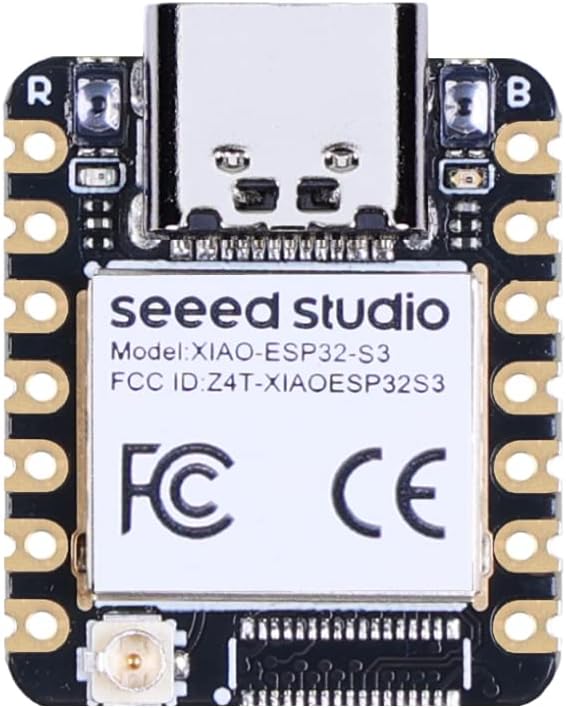
The Seeed Studio XIAO is designed for space-constrained projects. It maintains a high 4.7 rating by delivering strong performance in a tiny package. This board is perfect for wearables and portable devices.
We may earn a commission when you buy through this link, at no additional cost to you.
Its compact form factor allows integration into small enclosures. Despite its size, it supports 2.4GHz Wi-Fi and BLE 5.0. The range is impressive for such a small board, making it reliable for remote sensors.
Power management is a key feature. The board supports battery charging and offers deep sleep modes. You can run projects on a single battery for months. This efficiency is critical for remote monitoring applications.
This board is ideal for makers building portable tech. It is compatible with Arduino and MicroPython. However, users might need to solder connectors for breadboard use.
Deep sleep modes reduce consumption to as low as 14μA.
U.FL antenna support allows for remote communication over 100 meters.
We may earn a commission when you buy through this link, at no additional cost to you.
This three-pack of development boards offers great value for prototyping. Users appreciate the ability to test multiple nodes simultaneously. The boards feature a powerful ESP32-S3 processor for reliable wireless tasks.
We may earn a commission when you buy through this link, at no additional cost to you.
The castellated module design makes it easy to mount the board. You can solder it directly onto a carrier board for custom PCBs. This feature is highly valued by engineers building production-ready devices.
Power supply independence allows for flexible configurations. You can set clock speeds and voltage levels based on needs. This helps optimize performance and battery life for specific applications.
The multi-pack is excellent for distributed sensor networks. You can place several boards in different locations without buying multiple kits. It is a cost-effective solution for industrial monitoring projects.
Castellated edges simplify direct soldering onto custom printed circuit boards.
Independent power supply settings help extend battery life in remote units.
We may earn a commission when you buy through this link, at no additional cost to you.
This kit is perfect for beginners entering the world of electronics. It includes over 35 modules to explore sensors, displays, and motors. The kit focuses on hands-on learning to build real-world skills quickly.
We may earn a commission when you buy through this link, at no additional cost to you.
Detailed online tutorials guide you through every project. You get code examples and circuit diagrams for each step. This structured approach helps you understand the basics of IoT development effectively.
The kit includes everything needed for smart home and robotics projects. You can build weather stations or remote-controlled devices immediately. It is designed to support growth from basic circuits to advanced applications.
This is the best choice for students and hobbyists. While the learning curve is steeper, the resources provided make it manageable. It is a complete solution for learning embedded systems.
Over 30 projects with clear instructions help accelerate your learning.
Sensors, displays, and motors allow for diverse project possibilities.
We may earn a commission when you buy through this link, at no additional cost to you.
This board prioritizes security for IoT deployments. It maintains a strong 4.5 rating by offering hardware-level encryption. The Secure Element ensures your cloud communications are protected from unauthorized access.
We may earn a commission when you buy through this link, at no additional cost to you.
The board includes built-in sensors for motion and temperature. This simplifies the design of environmental monitoring projects. You can start collecting data without needing external components for basic readings.
Official Arduino support ensures compatibility with existing libraries. You can use the Arduino IDE for easy programming and deployment. This reliability is crucial for industrial applications where stability is key.
Buyers should note the older processor architecture. It lacks the raw speed of newer ESP32 boards. However, for secure and stable connectivity, it remains a top choice for trusted projects.
Hardware encryption keeps your data safe during transmission to the cloud.
Full compatibility with Arduino IDE simplifies development and debugging.
We may earn a commission when you buy through this link, at no additional cost to you.
This is the classic workhorse of IoT development. It earns a 4.4 rating for reliability and stability. The board supports standard protocols that ensure compatibility with many existing systems.
We may earn a commission when you buy through this link, at no additional cost to you.
The integrated RF amplifier improves signal strength. This allows for better communication in noisy environments. Dual-mode support enables connection to both WiFi and Bluetooth networks efficiently.
Low power consumption modes extend battery life significantly. You can configure the board to sleep when not in use. This helps reduce energy costs in large sensor networks.
Buyers looking for a stable and proven solution should choose this board. It is not the newest but it is reliable. It remains a popular choice for industrial prototypes.
Integrated RF filtering ensures stable connections in complex environments.
Support for FreeRTOS and LWIP simplifies networking tasks.
We may earn a commission when you buy through this link, at no additional cost to you.
This multi-pack offers high value for distributed IoT projects. It achieves a 4.7 rating for ease of use and reliable performance. The USB-C port simplifies connections and power delivery significantly.
We may earn a commission when you buy through this link, at no additional cost to you.
Over-the-air updates make maintenance easy. You can update firmware remotely without physical access. This is a critical feature for large sensor networks deployed in remote locations.
The dual-core processor handles multiple tasks efficiently. It runs sensor processing and communication logic smoothly. You can manage complex projects without slowing down the system.
This is a great choice for networked sensor applications. The boards are reliable and easy to use. While Bluetooth is older, the WiFi performance is solid for most tasks.
OTA functionality allows you to update firmware remotely without physical access.
USB-C ports ensure modern and stable connections for all boards.
We may earn a commission when you buy through this link, at no additional cost to you.
This board combines dual processing power with unique features. It holds a 4.7 rating for its versatility in industrial and creative projects. The design bridges the gap between classic Arduino and modern connectivity.
We may earn a commission when you buy through this link, at no additional cost to you.
The built-in 12×8 LED Matrix provides instant visual feedback. You can display messages or status indicators without extra hardware. This makes it perfect for prototypes that need immediate user interaction.
CAN bus support enables robust communication in automotive systems. This allows you to connect to industrial or vehicle networks directly. Combined with Qwiic connectors, it simplifies complex wiring significantly.
This board is ideal for advanced projects. The unique features justify the cost for specific applications. It offers a powerful combination of legacy support and modern capabilities.
The LED matrix allows real-time status displays without extra components.
CAN bus support enables reliable communication in vehicle and factory systems.
We may earn a commission when you buy through this link, at no additional cost to you.
Choosing the right board depends on your project needs and technical skills. This section outlines key factors to consider before making your purchase decision.
Most modern boards use the ESP32-S3 chip which offers dual-core performance. This ensures you can handle complex tasks like image processing or voice recognition. Look for at least 240MHz clock speed for smooth operation.
Prioritize a dual-core processor for multitasking. It allows you to run communication protocols and logic tasks simultaneously without slowing down the system.
Memory capacity is crucial for storing code and data. The ESP32-S3 often includes 8MB of PSRAM which helps with large applications. Check the flash memory size to ensure your sketches fit comfortably.
Choose a board with at least 4MB Flash and 8MB PSRAM for advanced tasks. This prevents storage issues during complex data collection.
Wi-Fi and Bluetooth are standard for IoT projects. Ensure the board supports Bluetooth 5.0 for better range and efficiency. Some boards also offer Ethernet or CAN bus for industrial needs.
Verify that the wireless standards match your deployment environment. Bluetooth 5.0 is superior for low-energy connections compared to older versions.
Modern USB-C ports provide stable power and faster programming. Avoid older micro-USB ports if you want future-proofing. Check if the board supports battery charging for portable projects.
Select a board with USB-C for reliability. It ensures consistent power delivery even under heavy load.
Support for Arduino IDE is essential for ease of use. Many boards also support MicroPython for faster development. Check which languages are supported before buying to match your workflow.
Choose a board compatible with your preferred language. MicroPython support helps beginners start projects quickly without C++ complexity.
Consider the physical size of the board. Compact designs like XIAO are better for wearables. Standard nano or uno sizes are easier to use on breadboards.
Pick a size that fits your enclosure. Tiny boards save space but may be harder to solder without tools.
For commercial or secure applications look for Secure Elements. Some boards have hardware-level encryption to protect data. This prevents unauthorized access to your device.
Always prioritize security for public deployments. Hardware encryption ensures your data remains safe during transmission.
Price varies significantly between official boards and clones. Clones offer great value but may lack support. Consider the cost of accessories like cables or adapters when budgeting.
Balance price with quality needs. For learning, cheaper options work well; for production, choose reliable official boards.
Connect the board to your computer using a high-quality USB-C cable. Install the necessary drivers if you are using Windows. Mac users usually have automatic detection. This ensures the board is recognized by your IDE.
Keep the board away from water and extreme heat. Dust accumulation can damage pins over time. Use a static-safe mat when handling components to prevent electrical damage.
Always verify your code before uploading to avoid overheating. Use external power sources for high-current projects to prevent voltage drops. Regular updates to your IDE will keep your development smooth.
Yes, the Arduino Nano ESP32 supports MicroPython. This allows you to write code in Python instead of C++. It is great for beginners and rapid prototyping. The board includes a specific bootloader for this mode.
The ESP32-S3 focuses on general IoT and AI at the edge. The ESP32-P4 is designed for high-performance image processing and video. P4 has specific interfaces for displays and cameras that S3 lacks.
While the board itself does not have a battery charger, you can power it with a battery pack. Ensure your power supply matches the voltage requirements. Some compatible boards like XIAO do include charging circuits.
Use the Arduino IDE to upload sketches. Select the correct board port in the tools menu. Ensure the drivers are installed on your computer. The USB-C port simplifies this process compared to older boards.
It is mostly compatible with standard Arduino libraries. However, some specific legacy code might need adjustments. It supports the same core functions but uses a different processor architecture for better performance.
It supports Bluetooth 5.0. This version offers longer range and higher speed compared to older versions. It is ideal for low-energy applications like sensors and wearable devices.
The Arduino Nano ESP32 and its alternatives offer powerful tools for developers. From budget options to premium industrial boards there is a solution for every project. Choose based on your specific performance needs.
Prioritize connectivity and memory when making your decision. A board with strong wireless support and ample storage will serve you better. Avoid cheap clones that compromise on power delivery.
Remember that technology evolves quickly. Always check current prices and availability before buying. This ensures you get the best deal and the latest firmware support for your new development board.