
LAFVIN R3 Camera Smart Robot Car
4.5Editor score
Affordable price point
ESP32-S3 Wi-Fi module
Five operation modes
This guide compares the top Arduino robot kits for STEM learning, covering features, assembly difficulty, and coding capabilities to help you choose the
Arduino robot kits offer an engaging way to learn electronics, coding, and engineering through hands-on projects. These kits provide everything needed to build and program functional robots, making them ideal for students, hobbyists, and families interested in STEM education.
We compared ten leading kits based on build quality, programming flexibility, sensor variety, and educational value. Each product was evaluated for ease of assembly, available tutorials, and the ability to expand or customize the robot for advanced projects and learning goals.
Each pick highlights key strengths, target audience, and unique capabilities to help you find the right match. Note that availability and specifications may change, so checking current details before purchasing ensures you get the latest version of your chosen kit.
4.5Editor score

4.5Editor score

4.3Editor score
This comparison table highlights the core specifications and capabilities of each kit to help you quickly identify the best fit for your skill level and project goals.


The ELEGOO UNO R3 Smart Robot Car Kit V4 stands out as a top choice for beginners seeking a comprehensive robot building experience. With a high rating and thoughtful design, it offers a seamless introduction to robotics and coding through hands-on assembly and programming.
We may earn a commission when you buy through this link, at no additional cost to you.
Its standout feature is the integration of FPV video streaming via an ESP32 camera module, allowing real-time control and exploration. The keyed connectors simplify wiring significantly, while example programs and tutorials guide users from assembly to advanced custom code in the Arduino IDE.
While the kit requires adult supervision for first-time builders, this ensures safety and proper learning. Assembly time varies based on experience, but the step-by-step illustrated tutorials minimize confusion. These trade-offs are acceptable given the educational depth and robust component quality provided.
This kit is ideal for families, students, and hobbyists wanting to explore robotics without overwhelming complexity. Its combination of accessible hardware, engaging features like obstacle avoidance and line tracking, and expandability makes it a highly recommended choice for meaningful STEM learning.
Keyed XH2.54 connectors reduce wiring mistakes, ensuring the build process is smooth and educational without requiring soldering skills.
Explore FPV video, line tracking, and obstacle avoidance modes that encourage creativity and deeper understanding of sensor integration and control logic.
We may earn a commission when you buy through this link, at no additional cost to you.
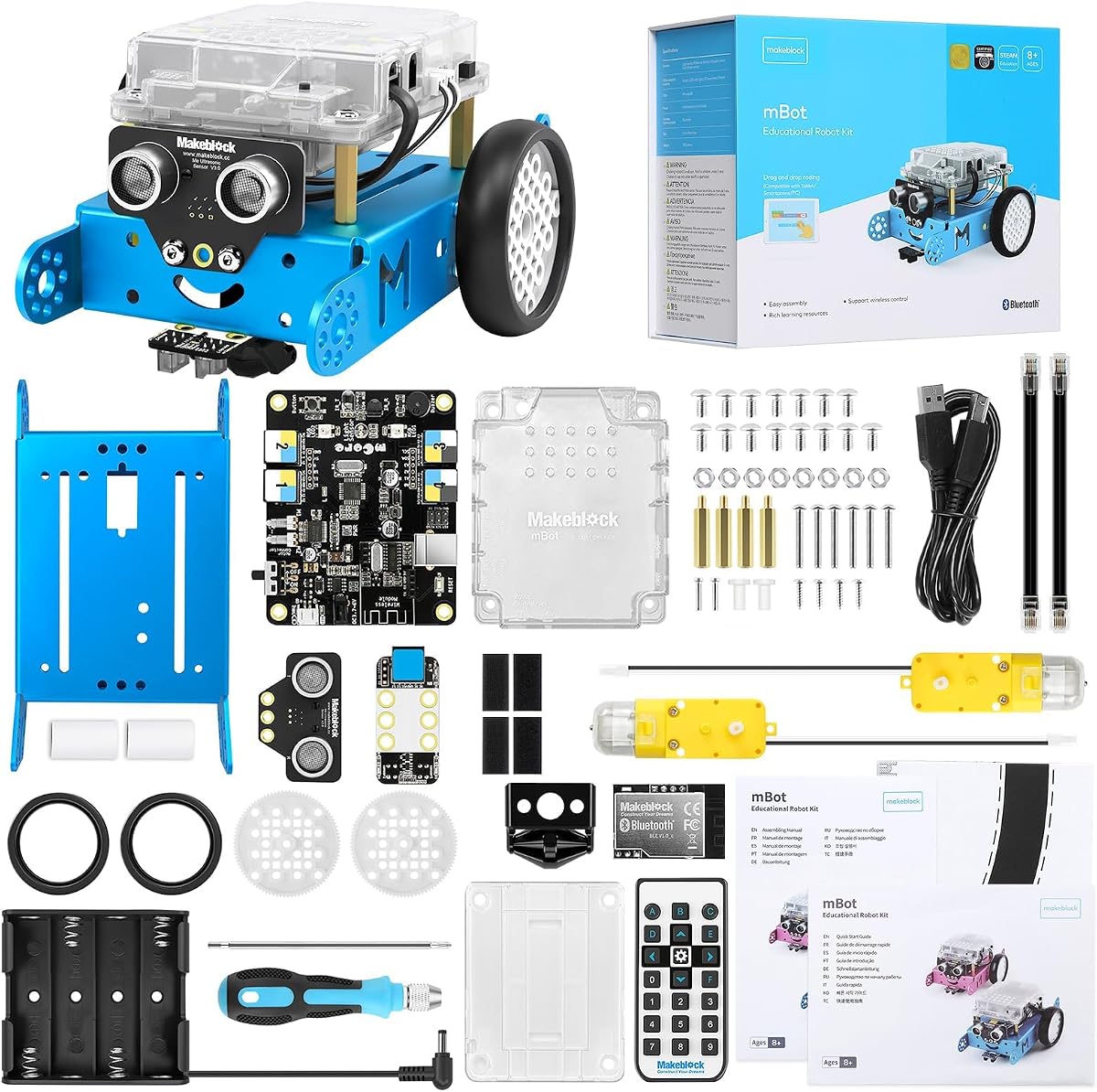
The Makeblock mBot is an excellent entry-level kit designed for children aged 8 to 12, offering a fun path into robotics. With clear instructions and block-based coding options, it simplifies the learning curve while maintaining educational depth for young learners.
We may earn a commission when you buy through this link, at no additional cost to you.
Its ease of build stands out, with assembly taking around 15 minutes. The progression from Scratch to Arduino IDE allows kids to grow their coding skills gradually. The metal chassis ensures durability, and compatibility with LEGO parts expands creative possibilities significantly.
However, users need to purchase batteries separately, which may be an oversight for gift givers. The sensor set is basic compared to advanced kits, limiting complex projects without add-ons. These are minor drawbacks considering the kit's primary focus on accessibility and fun.
Ideal for parents and educators looking for a simple yet effective STEM toy, the mBot sparks interest in electronics and programming. Its engaging design and supportive app ecosystem make it a reliable starting point for young minds eager to explore robotics.
Transition smoothly from drag-and-drop Scratch blocks to text-based Arduino coding as skills advance, ensuring sustained engagement and educational growth.
Connect with 100+ electronic modules and LEGO-compatible parts, allowing users to customize the mBot for unique and more complex robotics projects.
We may earn a commission when you buy through this link, at no additional cost to you.
The ELEGOO Conqueror Robot Tank Kit offers a distinct experience with its tracked design, perfect for all-terrain exploration and STEM projects. With a metal chassis and comprehensive sensors, it provides a robust platform for learning robotics and navigation principles.
We may earn a commission when you buy through this link, at no additional cost to you.
Its adjustable servo-mounted camera allows users to change viewing angles during operation, enhancing FPV experiences. The kit includes five interactive modes, from line tracking to auto-follow, catering to various skill levels. The build process is straightforward with no soldering required.
The tank design is heavier than wheel-based kits, which may affect portability. Battery setup requires attention, but the included 7.4V rechargeable battery ensures sustained operation. These factors are acceptable given the kit's durability and advanced navigation capabilities.
This kit is ideal for users interested in rugged robotics and advanced navigation. Its combination of metal construction, live FPV, and versatile programming options makes it a compelling choice for both classroom and home STEM learning environments.
Stainless-steel tracks and suspension enable movement over varied surfaces, offering a realistic tank experience suitable for outdoor and indoor navigation challenges.
The adjustable camera mount provides flexible FPV views, allowing precise control and inspection of the robot's environment during autonomous or remote operations.
We may earn a commission when you buy through this link, at no additional cost to you.
The ELEGOO Tumbller Kit introduces a fascinating self-balancing robot experience, teaching users about motion sensing and real-time control. It transforms a classic engineering challenge into an engaging project that combines physics and coding in a unique way.
We may earn a commission when you buy through this link, at no additional cost to you.
Its six interactive modes, including bounce and auto-follow, keep users engaged. The illustrated tutorial reduces guesswork, while compatible Arduino IDE code allows for custom adjustments. The LED effects add visual feedback, enhancing the interactive experience.
Balancing robots can be sensitive to assembly precision, which may frustrate beginners. However, the kit's design and documentation minimize these risks. This trade-off is worth the deep understanding of control systems gained from building and tuning a self-balancing robot.
This kit is perfect for those ready to move beyond basic cars to dynamic robotics. It is ideal for STEM classrooms or hobbyists seeking a challenging yet rewarding project that demonstrates core principles of feedback loops and robotics stability.
Build and tune a balancing robot to understand gyroscopic sensors, motor control, and real-time feedback in a practical, engaging manner.
Use reserved I/O pins to connect additional sensors or modules, expanding the Tumbller's capabilities for custom projects and advanced learning.
We may earn a commission when you buy through this link, at no additional cost to you.
The ACEBOTT Smart Robot Car Kit features unique omnidirectional Mecanum wheels, allowing 360-degree movement and advanced navigation. With an ESP32 controller and support for voice recognition, it offers a modern and versatile platform for robotics enthusiasts.
We may earn a commission when you buy through this link, at no additional cost to you.
Its rich set of expansion packs, including camera and robotic arm options, allows users to customize the robot extensively. The 16 story-rich tutorials guide learners through programming principles, while app and IR controls provide flexible interaction methods for diverse scenarios.
Mechanical complexity may challenge absolute beginners, and batteries are not included. However, these are minor issues given the kit's advanced capabilities and educational depth. The Mecanum wheels provide a distinct advantage for precise and agile motion control.
This kit suits users seeking advanced features and customization potential. Its combination of unique movement, voice recognition, and expandability makes it an excellent choice for older kids and teens interested in exploring more sophisticated robotics concepts.
Mecanum wheels enable lateral and diagonal movement, offering unparalleled mobility for navigating tight spaces and performing complex maneuvers.
Choose from camera, robotic arm, or solar expansion packs to tailor the robot to specific project needs and learning objectives.
We may earn a commission when you buy through this link, at no additional cost to you.
The LAFVIN R3 Camera Smart Robot Car delivers impressive FPV capabilities at a budget-friendly price point. With real-time video streaming and an ESP32-S3 module, it provides a practical introduction to wireless robotics and remote control without breaking the bank.
We may earn a commission when you buy through this link, at no additional cost to you.
Its five operation modes, including obstacle avoidance and object following, ensure versatile learning. Sensors feature easy-to-connect interfaces, simplifying the assembly process. The open-source ecosystem offers ample free tutorials and code to support continued learning and experimentation.
The chassis is basic compared to premium kits, and assembly requires more attention. However, these trade-offs align with its budget positioning. The FPV streaming and control features make it a strong contender for value-focused buyers seeking modern robotics experiences.
This kit is ideal for beginners and students looking for an affordable entry into robotics. Its combination of Wi-Fi control, clear documentation, and open-source support makes it a cost-effective choice for hands-on STEM projects and coding practice.
Stream live video to mobile devices for immersive remote operation, combining video feedback with precise control of movement and camera angles.
Benefit from free learning resources and community code sharing, enabling continuous improvement and expansion of projects without additional costs.
We may earn a commission when you buy through this link, at no additional cost to you.
The ACEBOTT 4 in 1 Smart Robot Arm kit enables users to build multiple robot configurations, combining a robotic arm, tank, and car into one versatile system. It caters to teens and enthusiasts seeking depth in robotics with advanced mechanical and programming features.
We may earn a commission when you buy through this link, at no additional cost to you.
Its 5DOF robotic arm and tank tracks offer diverse functionalities for grabbing objects or navigating rough terrain. The kit includes 16 guided tutorials and HD videos, ensuring step-by-step support. ESP32 controller compatibility with Arduino and Scratch allows flexible coding options.
Assembly complexity is higher due to multiple build paths, and the price reflects the advanced components. However, the modular nature and educational depth justify the investment. Users gain extensive hands-on experience in mechanics, coding, and problem-solving.
This kit is perfect for older students and teens wanting a comprehensive robotics challenge. Its adaptability and robust construction make it suitable for science fair projects, advanced STEM programs, and long-term hobbyist exploration into robotics engineering.
Build a robotic arm, tank, or combined system, providing varied experiences that teach different aspects of mechanics and autonomous behavior.
Use app and IR remote control to operate robots easily, enhancing accessibility and making interactive learning fun for independent users.
We may earn a commission when you buy through this link, at no additional cost to you.
The SunFounder Ultimate Starter Kit is a comprehensive package that spans basics, smart cars, and IoT projects. With 192 items and 87 projects, it offers extensive opportunities to learn electronics and coding through a structured progression from simple to complex tasks.
We may earn a commission when you buy through this link, at no additional cost to you.
Its partnership with Circuit Basics provides expert-designed video courses and online tutorials, ensuring quality education. The kit supports a progressive learning journey, making it suitable for ages 8 and up. Community forums and technical help add to the supportive learning ecosystem.
While it is less focused on a single robot model, this breadth allows broader exploration. Users may find IoT concepts initially challenging, but the guided approach mitigates this. The wide component variety ensures versatility across multiple project types and learning stages.
This kit is ideal for users wanting a complete electronics foundation. Its mix of hardware, video instruction, and diverse projects makes it a valuable resource for beginners and those seeking to expand into IoT and smart home technologies alongside robotics.
Progress from LED blinking to advanced IoT applications with structured video courses that cater to different skill levels and learning paces.
Access a wide range of sensors and actuators to experiment with various project ideas, fostering creativity and practical electronics knowledge.
We may earn a commission when you buy through this link, at no additional cost to you.
The Makeblock mBot Ultimate 10 in 1 kit delivers a professional-grade robotics experience with its aluminum alloy construction and MegaPi controller. Designed for teens and adults, it supports building ten unique models, offering deep engagement in engineering and programming principles.
We may earn a commission when you buy through this link, at no additional cost to you.
Its compatibility with Scratch, Arduino, and even Python via Raspberry Pi ensures flexibility for all skill levels. The precision mechanical parts and industry-standard components make assembly intuitive yet robust. Users gain hands-on experience with complex robotics and sensor integration.
The price is higher than entry-level kits, and batteries are not included. These factors reflect its premium quality and extensive capabilities. The industrial-grade build ensures long-term use, making it a worthwhile investment for serious learners and STEM educators.
This kit suits those seeking advanced robotics with durable materials. Its extensive model variety and coding options make it ideal for science fairs, maker projects, and fostering long-term interest in engineering and programming among older students.
Use high-strength aluminum and precision mechanical parts to build reliable and complex models that withstand rigorous testing and extended use.
Progress from block-based coding to Python with Raspberry Pi support, enabling sophisticated projects like machine vision and autonomous navigation.
We may earn a commission when you buy through this link, at no additional cost to you.
The Freenove Hexapod Robot Kit offers a distinctive six-legged design that mimics natural movement, providing a unique challenge in robotics. With independent motor control per leg, users can explore complex locomotion patterns like walking, crawling, and twisting through code.
We may earn a commission when you buy through this link, at no additional cost to you.
Its prewritten code library simplifies initial setup, while wireless control via remote, app, or computer enables flexible interaction. The servo-based movement ensures precise and dynamic motion. Detailed tutorials available online guide assembly and programming effectively.
The absence of a paper tutorial may inconvenience some users. Battery requirements also need separate procurement. However, these are minor inconveniences compared to the engaging experience and advanced servo control provided, making it a great choice for robotics enthusiasts.
This kit is perfect for hobbyists interested in biomimetic and complex locomotion robotics. Its cross-platform compatibility and detailed documentation support learning and creativity, making it a standout option for those seeking a unique and challenging robotics project.
Control each leg's three motors independently to replicate natural gait patterns and explore advanced movement algorithms in robotics.
Use remote, app, or computer to control the robot wirelessly, enabling interactive play and remote operation across multiple platforms.
We may earn a commission when you buy through this link, at no additional cost to you.
Selecting the right robot kit depends on your skill level, interests, and educational goals. This guide outlines key factors to consider for a satisfying building experience.
Robot kits range from simple builds for young children to advanced modular systems for adults. Beginners should start with kits that have clear instructions and block-based coding options before moving to text-based programming environments like Arduino IDE.
Match the kit complexity to the user's current knowledge and learning goals for sustained engagement and confidence.
Some kits require soldering or advanced tools, while others use pre-assembled modules and keyed connectors. Beginners benefit from kits that minimize tools and complexity to focus on coding and functionality.
Choose kits that provide illustrated tutorials and pre-tested components to reduce build frustration.
Look for kits supporting multiple programming languages such as Scratch, Arduino C++, or Python. This ensures room to grow skills as the user becomes more comfortable with robotics concepts.
Versatile coding options encourage learning and future project customization.
Kits with diverse sensors like ultrasonic, IR, line tracking, and cameras enable richer interactive experiences. The range of actuators determines movement types and capabilities.
A good variety supports more complex projects and deeper exploration.
Some robots allow add-ons like robotic arms or camera modules. Compatibility with popular platforms or parts, such as LEGO, expands creative potential.
Expandability keeps interest alive and supports long-term experimentation.
High-quality tutorials with videos, examples, and community support make learning smoother. Comprehensive documentation helps troubleshoot issues and inspires ideas.
Strong educational resources enhance the learning curve and success rate.
Material choice affects durability and weight. Plastic is lightweight, while metal offers robustness. Consider the environment and handling needs for long-term use.
Robust materials ensure longevity and safer handling.
Kits may include rechargeable batteries or require disposable ones. Rechargeable options reduce ongoing costs and environmental impact.
Check included power components to avoid unexpected extra purchases.
Start by reading the included instructions and tutorials carefully before assembly. Organize parts and identify components using provided diagrams to ensure correct placement and avoid confusion during building.
Use the recommended programming environment, such as Arduino IDE, to upload code. Begin with example programs provided, then experiment by modifying variables to observe how changes affect robot behavior.
Maintain your robot by keeping it clean and checking connections regularly. Store batteries properly when not in use, and avoid exposing electronics to moisture or extreme temperatures to ensure longevity.
No, many kits offer beginner-friendly tutorials and block-based coding options to help you start learning gradually. As you progress, you can transition to text-based programming like Arduino IDE for more advanced control and customization.
Batteries are often sold separately, so check the product details before purchasing. Some kits include rechargeable batteries with chargers, which can save costs and reduce waste over time.
Yes, many kits support expansion packs or additional modules like cameras and robotic arms. Check for compatibility information to ensure new parts work seamlessly with the base kit and controller.
Most kits support Scratch for beginners and Arduino C++ for more advanced coding. Some also offer Python compatibility through additional boards like Raspberry Pi for complex projects and automation tasks.
Absolutely, many kits are designed with STEM education in mind, featuring guided lessons and curriculum-friendly resources. They promote hands-on learning and are ideal for group activities and project-based learning environments.
Refer to the kit's documentation and online community forums for examples and support. Ensure proper board selection and library installation in your IDE, and test basic code snippets to isolate errors effectively.
This guide highlights ten diverse kits, each offering unique features for different learning stages. From entry-level options to advanced modular systems, there is a perfect match for every interest and skill level in robotics education.
Prioritize factors like tutorial quality, programming flexibility, and component variety to ensure a rewarding experience. Consider future expandability to keep learning exciting and allow room for growth and creativity.
Always verify current availability and specifications before purchasing to ensure you get the latest version. Checking reviews and product pages helps confirm the kit meets your specific needs and expectations.