
Zoom H1 XLR 2-Channel Recorder
4.5Editor score
Two XLR/TRS combo inputs
32-bit float recording at 96kHz
Clear OLED waveform display
This guide compares the top audio field recorders for film to help you find the best device for capturing clear sound on set and in the field.
Capturing high-quality audio is essential for professional film production. The right field recorder ensures dialogue stays clear even in noisy environments.
We evaluated ten top models based on input options, recording formats, timecode support, and portability for real-world filmmaking scenarios.
Each pick highlights key strengths and ideal use cases. Prices and availability may change, so verify current details before purchasing.
4.5Editor score

4.7Editor score
4.6Editor score
This side-by-side comparison outlines the core specifications and strengths of each top audio field recorder to simplify your selection process.



The Zoom F6 is a top-rated 4.7-star device praised for its clip-free 32-bit float recording. It is ideal for filmmakers needing reliable audio in unpredictable environments.
We may earn a commission when you buy through this link, at no additional cost to you.
Its six XLR inputs allow simultaneous microphone connections, while dual AD converters ensure pristine quality from whispers to loud peaks. Timecode I/O keeps audio locked to video frames.
While pricier than entry-level units, the F6 avoids over-engineering. Its portable build balances pro features with travel convenience, making it a robust tool for indie to mid-budget films.
Buyers seeking a balance of power and portability will find this recorder indispensable. It stands out as the best overall field recorder for serious film audio work.
32-bit float recording captures massive dynamics without needing gain adjustments or risking distortion.
Timecode I/O keeps audio perfectly synced with video, ideal for professional filmmaking and broadcast workflows.
We may earn a commission when you buy through this link, at no additional cost to you.
The Zoom F3 offers a 4.6-star rating for its focus on portability and reliability. It is built for real-world recording where there are no second chances.
We may earn a commission when you buy through this link, at no additional cost to you.
32-bit float recording handles sudden peaks without distortion, while ultra-low-noise preamps ensure clean dialogue even in rough environments. Dual locking XLR inputs keep connections secure during movement.
Trade-offs include fewer inputs compared to larger recorders. However, for solo or small teams, its simplicity and resilience make it a powerful choice for location sound.
Recommend this for filmmakers prioritizing mobility and ease of use. It delivers professional results without the bulk of traditional field recorders.
Dual locking XLR inputs keep connections secure when your recorder is mounted out of reach or part of a larger setup.
Flexible power options and standalone or USB workflows keep you recording without interruption on long set days.
We may earn a commission when you buy through this link, at no additional cost to you.
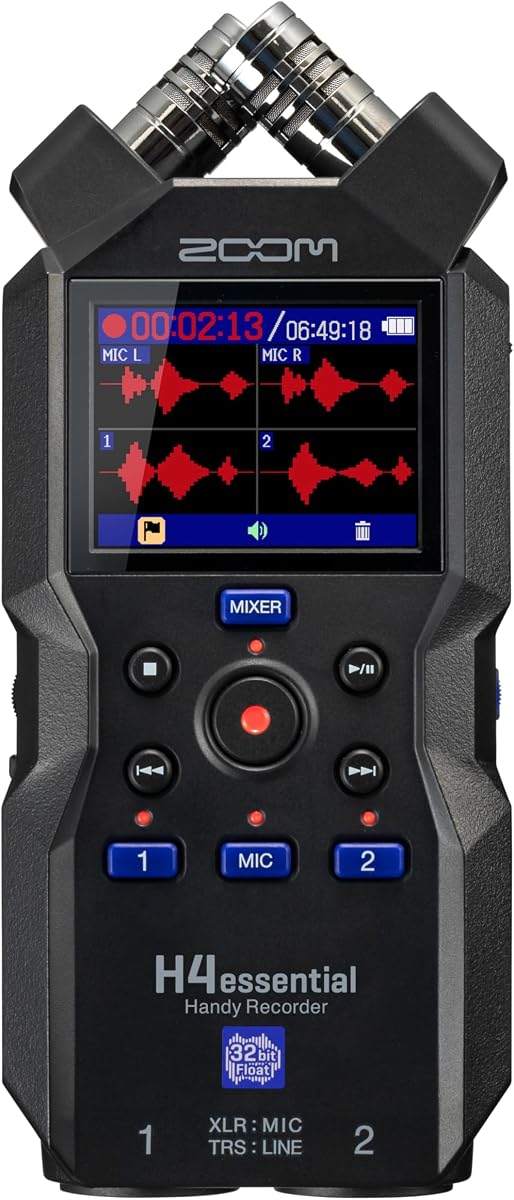
With a 4.4-star rating, the H4 Essential helps creators capture more of the moment without worrying about distorted takes. It supports music, interviews, and video audio.
We may earn a commission when you buy through this link, at no additional cost to you.
Two XLR inputs allow external mic connections, and USB-C enables direct device recording. Spoken menu guidance makes it accessible and easy to navigate for beginners.
It lacks professional timecode features, which may limit sync in complex shoots. Still, its intuitive design and solid sound quality offer great value for entry-level filmmakers.
Choose this for budget-conscious projects needing reliable handheld recording. It strikes a practical balance between simplicity and functionality.
Spoken menu guidance helps make recording more accessible for visually impaired users and easier to navigate.
Connect to your device and save a backup directly to SD card to prevent data loss during critical sessions.
We may earn a commission when you buy through this link, at no additional cost to you.
Rated 4.6 stars, this device captures clip-free audio across the full dynamic range. It suits professional film and field audio workflows with 32-bit float technology.
We may earn a commission when you buy through this link, at no additional cost to you.
Up to 75dB gain ensures pristine audio for quiet dialogue. Dual SD slots with redundant recording protect against card failure. Timecode accuracy reaches 0.2ppm for perfect alignment.
Its bulk makes it less ideal for run-and-gun shoots compared to smaller units. However, for controlled or multi-cam productions, its reliability is unmatched.
Invest in this for productions demanding high fidelity and redundancy. It is a top choice for professional sound teams on larger sets.
Dual SD card slots allow redundant recording to prevent data loss during critical critical.
Industry-leading timecode accuracy at 0.2ppm via TCXO keeps your tracks perfectly aligned with picture.
We may earn a commission when you buy through this link, at no additional cost to you.
The H1 XLR delivers 4.5-star results with pro-quality 32-bit recording at a budget-friendly cost. Perfect for interviews and everyday recording.
We may earn a commission when you buy through this link, at no additional cost to you.
Two XLR/TRS combo inputs connect mics easily. The OLED display makes monitoring levels simple. It supports SDXC cards up to 1TB for extended sessions.
While limited in inputs compared to larger units, it covers essential needs. The value it offers for entry-level creators makes it an outstanding budget option.
Select this if cost is a priority but quality is not. It proves that professional audio can be affordable.
OLED waveform display makes it easy to monitor levels and ensure clean recordings at a glance.
Supports SDXC cards up to 1TB, giving you plenty of space for extended sessions.
We may earn a commission when you buy through this link, at no additional cost to you.
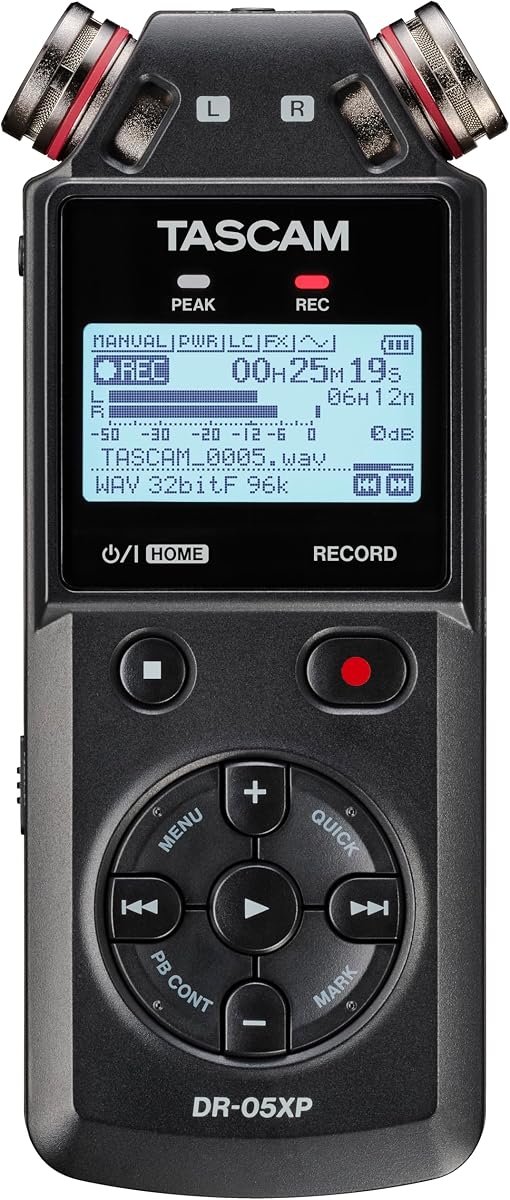
The DR-05XP offers 4.2-star performance for capturing pro-quality audio conveniently. Its omnidirectional mics handle loud sources up to 125dB SPL.
We may earn a commission when you buy through this link, at no additional cost to you.
Flexible recording modes support 32-bit float for dynamic range. It runs up to 17.5 hours on AA batteries. The USB-C interface acts as an audio interface for computers.
Without external inputs, flexibility is reduced. However, for quick voice notes or ambient sound capture, it is highly effective and simple.
Opt for this if portability is key and inputs are unnecessary. It remains a strong portable option for on-the-go creators.
Up to 17.5 hours of operation with 2 x AA alkaline batteries ensures you stay recording through long takes.
Flexible recording modes include 32-bit float for easy management of dynamic sounds.
We may earn a commission when you buy through this link, at no additional cost to you.
The H5 carries a 4.7-star reputation for its interchangeable input capsules. It can be swapped like a camera lens for different recording needs.
We may earn a commission when you buy through this link, at no additional cost to you.
Four-track simultaneous recording offers full flexibility. Includes XYH-5 capsule with extended signal capacity and shock mounting. Two inputs support external mics with phantom power.
While lacking modern 32-bit float in older firmware, its reliability remains strong. It suits content creators needing adaptability without major upgrades.
Choose this if you already own Zoom capsules. Its modular design provides value and convenience for varied audio tasks.
Uses a system of interchangeable input capsules that can be swapped out as easily as the lens of a camera.
Four-track simultaneous recording lets you capture more of the moment without worrying about distorted takes.
We may earn a commission when you buy through this link, at no additional cost to you.
This 4.4-star recorder supports LTC Jam Sync for seamless timecode synchronization ideal for multi-device setups. Capturing superior personal audio has never been easier.
We may earn a commission when you buy through this link, at no additional cost to you.
The TM-10L lav mic delivers clear, lifelike audio even in busy settings. Supports Atomos Wireless Timecode and up to 5 simultaneous recordings via the CONNECT app.
Limitations include single-channel recording and specific adapter requirements. Still, for solo interviews or event coverage, it simplifies post-production.
Use this for streamlined personal audio recording. Its timecode features make it a smart choice for creators needing sync.
Included TM-10L clip-on lavalier microphone is perfectly matched to the DR-10L Pro to deliver clear audio.
Take command of up to 5 simultaneous recordings with the DR-10L Pro CONNECT App.
We may earn a commission when you buy through this link, at no additional cost to you.
The H1 Essential provides 4.0-star results for creating content with better sound. Capture clear stereo audio for videos and reels needing polished sound.
We may earn a commission when you buy through this link, at no additional cost to you.
Record conversations, podcasts, and notes with natural stereo sound. Connect via USB-C to use as a mic for livestreams or remote meetings.
Lacks external inputs and advanced settings. It remains suitable for casual recording where simplicity is preferred over control.
Buy this for quick demos or learning. Its intuitive design helps beginners focus on capturing ideas.
Ready when inspiration hits, record songwriting sessions and jam sessions with detailed sound.
Plug in for streaming and calls, using it as a microphone for livestreams and remote meetings.
We may earn a commission when you buy through this link, at no additional cost to you.
With a 4.0-star rating, the F2 is the smallest 32-bit float recorder you can wear. Captures clip-free audio at any volume level without adjusting gain.
We may earn a commission when you buy through this link, at no additional cost to you.
The LMF-2 lav mic included ensures discreet placement. Runs up to 15 hours on two AAA batteries. Supports up to 512GB microSD cards for long sessions.
Limited to single channel and basic controls. For vlogs or interviews requiring minimal setup, its convenience is a major benefit.
Choose this for discreet audio capture on the go. It delivers high fidelity with unmatched portability.
The smallest 32-bit float recorder you can wear lets you focus entirely on your content.
Runs up to 15 hours on just 2 AAA batteries, making it one of the most power-efficient available.
We may earn a commission when you buy through this link, at no additional cost to you.
Selecting the right field recorder depends on workflow needs, input requirements, and budget. Use these factors to narrow your choices.
Check how many XLR inputs you need. More inputs allow multiple mics for interviews or on-location setups.
For solo shoots, two inputs usually suffice. Teams may require four or more for complex rigs.
32-bit float prevents clipping and simplifies gain management. This is essential for unpredictable environments.
Standard 24-bit files may still suit controlled shoots but lack the same safety margin.
Timecode synchronization ensures audio aligns with video in post. This is vital for multi-camera shoots.
Look for devices with built-in timecode I/O or sync capabilities to avoid manual matching later.
Handheld units work best for run-and-gun or travel. Larger units offer more features but less mobility.
Evaluate the weight and case size if you carry gear for long durations or remote locations.
Support for SDXC cards up to 512GB or 1TB is important for extended shoots. Dual card slots add redundancy.
Choose formats that align with your file management and backup workflow to avoid data loss.
Battery life impacts usability on set. AA or AAA batteries offer flexibility, while USB-C offers continuous power.
Ensure the device can handle full shoot duration or plan for extra power options during location work.
Clear menus and displays reduce setup time. Some models include spoken guidance for accessibility.
Look for tactile controls that work well while recording. Complexity may slow down fast-paced production.
Prices range widely across models. High-end devices offer features that might not be necessary for small projects.
Balance essential features with your financial resources. A mid-range recorder often satisfies most creators.
Always check battery levels and storage space before recording. Format SD cards on the device to ensure compatibility.
Set gain levels carefully, but with 32-bit float, focus on signal clarity rather than precise peaks. Use headphones to monitor in real time.
Keep the device dry and dust-free. Store it in a padded case when not in use to prevent damage to connectors and mics.
32-bit float allows capturing audio with a massive dynamic range without clipping. It eliminates the need to set gain precisely, ensuring clean recordings even when sound levels spike.
Timecode keeps audio synchronized with video frames. This avoids hours of manual syncing in post-production, especially when using multiple cameras or separate recorders.
Not necessarily. Solo interviews or simple scenes may work without timecode. For multi-camera productions, investing in timecode support saves significant editing time.
Two inputs are standard for interviews. Teams with multiple microphones or instruments may need four or six to record independently and mix later.
Many modern recorders connect via USB-C to computers and mobile devices. Always check compatibility with your specific phone model and app ecosystem.
Most support SD, microSD, SDHC, and SDXC cards. Verify maximum capacity support to ensure you can store long takes without needing to swap cards.
Built-in mics are great for quick captures but lack isolation. For professional results, use external XLR mics connected to the recorder.
Use 32-bit float to avoid clipping. If using 24-bit, monitor levels and keep peaks below zero. Proper placement of mics also minimizes unwanted noise.
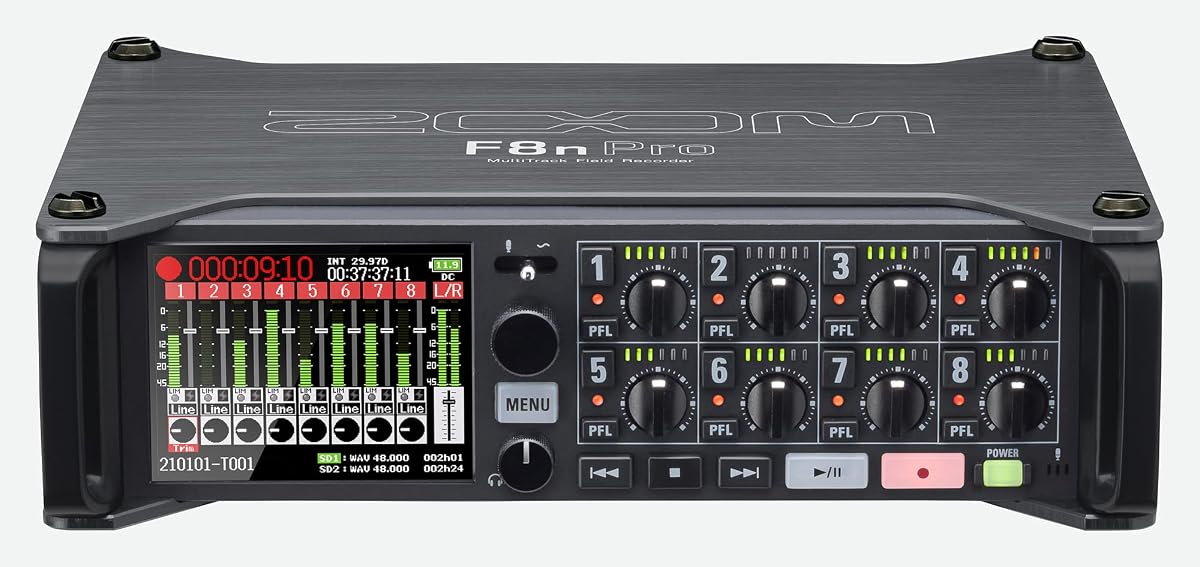
The Zoom F6 stands out as the top overall choice for its dynamic range and input versatility. For budget seekers, the H1 XLR provides professional audio at an accessible price.
Prioritize timecode support and input needs based on your production scale. Portable models like the F3 offer strength without bulk for on-the-go creators.
Prices and models evolve regularly. Check current availability and confirm features match your requirements before purchasing to ensure the best fit.