
BOSS GEB-7
4.6Editor score
Seven-band graphic EQ
Full range response
Versatile level control
This guide compares the top 10 bass equalizer pedal options available in 2026 for tone shaping across genres.
A bass equalizer pedal is essential for sculpting your low-end tone. It helps cut unwanted frequencies or boost presence in a mix.
We evaluated ten models based on frequency range, build quality, and signal integrity. Each unit offers unique slider configurations for precise control.
Each pick highlights key features and ideal use cases. Prices may fluctuate, so check current listings before buying your next pedal.
4.6Editor score
4.8Editor score

4.6Editor score
This table provides a side-by-side comparison of the top ten bass equalizer pedals. Review key specs like band count and boost ranges.


The BOSS GEB-7 is a staple for bassists seeking detailed tone shaping. Its seven-band design covers the full spectrum effectively. It receives top ratings for consistency.
We may earn a commission when you buy through this link, at no additional cost to you.
Its full range response ensures compatibility with five or six-string instruments. The level knob acts as a boost or cut for soloing. This versatility supports many gigging needs.
While reliable, it is pricier than some alternatives. The bands are optimized for bass which limits some flexibility. Still, the quality justifies the investment for professionals.
Buy this if you need a standard workhorse pedal. It fits well in any board. Musicians valuing brand reliability will appreciate this choice.
The pedal supports extended range basses without losing tone definition.
The level knob allows you to boost volume or cut gain as needed.
We may earn a commission when you buy through this link, at no additional cost to you.
The SONICAKE EQ offers ten bands for detailed tone control at a low cost. It features a true bypass circuit. It delivers analog warmth.
We may earn a commission when you buy through this link, at no additional cost to you.
Its adjustable gain range of ±15dB supports cutting or boosting various frequencies. The sliders are responsive. It is easy to fine tune sounds for recording.
Construction is decent but less rugged than premium brands. The lack of included power supply adds to cost. Still, value remains high for beginners.
This unit is perfect for budget conscious players. It provides extensive control without breaking the bank. Ideal for home recording setups.
Ten independent bands allow you to target specific frequencies easily.
True bypass ensures your tone remains intact when the pedal is off.
We may earn a commission when you buy through this link, at no additional cost to you.
The Donner EQ Seeker combines durability with a ten band EQ. Its aluminum alloy body is road ready. It features true bypass for tone preservation.
We may earn a commission when you buy through this link, at no additional cost to you.
Users can shape tone across ten frequencies. The ±15dB range provides significant boost or cut options. This helps adapt to various stage mixes.
Some find the sliders less smooth than pricier models. Without a power adapter, setup is slightly delayed. But the value is still strong.
Choose this for a mix of build quality and control. It suits players needing a compact reliable option. Great for gigging musicians.
The full aluminum alloy design withstands the rigors of touring.
True bypass maintains signal strength and frequency integrity.
We may earn a commission when you buy through this link, at no additional cost to you.
Rowin offers the smallest bass EQ available. It features five bands for essential tone shaping. A master volume knob controls overall output levels.
We may earn a commission when you buy through this link, at no additional cost to you.
The adjustable range spans ±18dB for deep cuts or boosts. This is useful for tightening the low end. The metal alloy case is sturdy.
Five bands may feel limited for complex mixing. It lacks advanced frequency targeting. However, it saves significant space on small boards.
Select this if board space is tight. It provides core controls in a tiny package. Best for minimalist pedal setups.
This unit saves valuable pedalboard space while maintaining performance.
A master knob lets you adjust overall output without affecting EQ.
We may earn a commission when you buy through this link, at no additional cost to you.
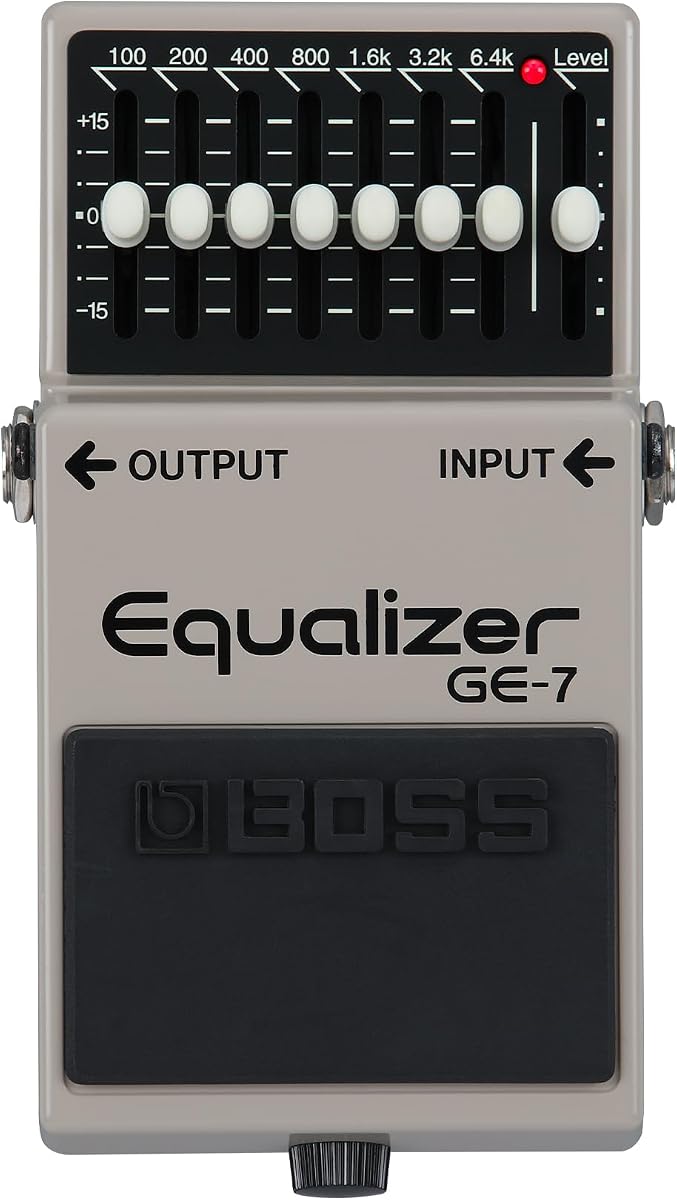
The BOSS GE-7 offers a level slider for volume balancing. Its seven bands cover optimized frequencies. It is highly rated for durability.
We may earn a commission when you buy through this link, at no additional cost to you.
The level slider allows precise output adjustments without extra gear. The ±15dB range supports significant tone sculpting. A five-year warranty protects your investment.
Though guitar optimized, it works well for bass. It is pricier than standard EQ pedals. But the build quality is superior.
Buy this for longevity and precision. Musicians needing a level slider will love it. A top choice for serious players.
The level slider lets you balance overall volume while EQ is active.
A five-year warranty ensures long-term reliability and peace of mind.
We may earn a commission when you buy through this link, at no additional cost to you.
STRICH provides ten independent bands with master level control. The aluminum shell ensures durability. It supports both guitar and bass use.
We may earn a commission when you buy through this link, at no additional cost to you.
Each band offers up to ±12dB adjustment. While less than some, it suits most mix needs. Sliders glide easily for quick adjustments.
It lacks a wider gain range for extreme tones. Build is solid but basic visually. Still, it offers good value for the count.
Choose this for a balance of bands and price. Ideal for players needing ten bands. Suitable for studio or live.
Each of the ten bands operates independently for precise shaping.
The aluminum shell protects internal components from damage.
We may earn a commission when you buy through this link, at no additional cost to you.
This pedal offers five dedicated centers for precise tone shaping. It features a wide ±18dB gain range. It is ideal for multiple genres.
We may earn a commission when you buy through this link, at no additional cost to you.
The metal housing ensures durability. True bypass switching preserves tone. It works well for rock and jazz alike.
Some users note generic branding. Power supply is not included. But performance remains consistent across applications.
Select this for versatility and robust gain. Ideal for changing lineups. Fits any live performance need.
Frequency centers are chosen to cover essential bass tones.
Gain adjustment allows deep cuts or strong boosts as needed.
We may earn a commission when you buy through this link, at no additional cost to you.
This unit offers a five band graphic with a master slider. It includes LED indicators for status. The metal shell adds stability.
We may earn a commission when you buy through this link, at no additional cost to you.
It provides standard centers for basic shaping. True bypass ensures clean signal when off. It serves well for simple tone needs.
Rating is lower due to some quality concerns. Features are basic compared to others. Still a functional option for some.
Choose if you need a basic five band unit. Fits simple boards. Good for entry level use.
Graphic EQ allows visual control of frequency levels.
Master slider controls overall output level effectively.
We may earn a commission when you buy through this link, at no additional cost to you.
MXR offers ten frequencies with dual outputs. It operates at 18 volts for headroom. This supports complex signal chains.
We may earn a commission when you buy through this link, at no additional cost to you.
Dual outputs allow routing for separate chains. High voltage ensures clarity under load. LEDs are highly visible on stage.
Though guitar focused, it is precise for bass. Higher cost may limit budget users. Performance remains top notch.
Choose for routing flexibility. Studio engineers will appreciate the dual outputs. Ideal for complex setups.
Dual outputs enable splitting signal into two separate chains.
Higher voltage ensures increased headroom and clean signal.
We may earn a commission when you buy through this link, at no additional cost to you.
EROK features a built-in boost circuit with EQ. It includes separate footswitches for flexibility. LEDs on sliders help visibility.
We may earn a commission when you buy through this link, at no additional cost to you.
You can run EQ and boost together or separately. This provides versatility without extra pedals. Sliders have indicators for dark stages.
Interface is complex for simple users. Brand is newer so community info is limited. Features are robust for touring.
Select for integrated boost and EQ. Good for soloists needing solo boost. Fits complex live needs.
Independent switches allow solo boost or combined modes.
LEDs on sliders show settings clearly on dark stages.
We may earn a commission when you buy through this link, at no additional cost to you.
Selecting the right EQ pedal requires understanding key factors like bands and build.
Band count determines how precise your control is. A ten-band pedal offers more specific frequency shaping than five bands.
For complex mixes, more bands are better. For simple tone tweaks, five bands suffice.
Ensure the pedal covers essential bass frequencies. Look for low-end range around 62.5Hz to 4kHz.
Full range response ensures your low end remains solid across styles.
Boost and cut range defines how much you can change tone. Look for ±15dB or more for flexibility.
Higher range allows deeper cuts for noise reduction or boosts for solos.
Metal construction ensures durability. A heavy shell protects internal components during transport.
Invest in sturdy build quality for reliability during long tours.
True bypass ensures signal integrity when off. It prevents tone loss or noise in the signal chain.
Always choose true bypass to preserve your natural instrument tone.
Some pedals include boost circuits or level sliders. These add versatility without extra pedals.
Look for dual footswitches if you need solo boosts alongside EQ.
Prices vary by features and brand. Budget options exist but may lack durability.
Determine your budget before choosing to balance features and cost.
Place your bass equalizer pedal near your amplifier or preamp in the signal chain. Use patch cables to connect input and output jacks securely.
Adjust sliders to shape tone. Start with all sliders in the center and move them as needed. Use a spectrum analyzer for precise tuning.
Store the pedal in a dry place when not in use. Avoid extreme temperatures or humidity to prevent damage to internal circuits.
It allows you to boost or cut specific frequencies to shape your bass tone. This helps you fit better in a mix or stand out during solos.
Not always, but dedicated bass EQs have frequencies optimized for low-end response. This ensures better clarity compared to guitar EQs.
Five bands are sufficient for basic tone shaping. Ten bands offer more precision for studio recording or complex genres.
True bypass means the signal passes directly through the pedal when off. This prevents coloration or signal loss when the effect is disabled.
Some guitar EQs work but may lack low-end clarity. Dedicated bass pedals ensure frequencies below 100Hz are handled correctly.
Yes, using a boost function lets you rise above other instruments. This helps ensure your bass remains audible during lead parts.
Most pedals use 9V DC. Check if the adapter is included; if not, buy a standard one matching voltage and polarity.
We reviewed the top ten bass equalizer pedals ranging from compact to professional models. Each unit offers unique advantages for specific needs.
Prioritize band count and build quality when selecting. A true bypass design ensures your tone remains intact during performances.
Check current prices and availability before purchasing. Our guide provides a reliable foundation for your next gear upgrade.