
Capture Card 4K HDMI
4.3Editor score
1080P 60FPS capture
Plug and play setup
HDMI loop-out feature
This guide compares the top dual PC streaming setup capture cards for 2026, evaluating performance, latency, and compatibility to help creators choose the
Streaming games requires reliable hardware to manage video feeds between two computers efficiently. A quality capture card ensures smooth transmission with minimal delay for professional results.
We evaluated ten leading models based on resolution support, latency performance, and connectivity options. Each product offers unique strengths for different streaming budgets and technical needs.
Every pick highlights key features and real-world performance metrics for informed decisions. Prices and availability fluctuate, so verify current details before purchasing your next device.
4.3Editor score
4.5Editor score

4.5Editor score
This table provides a side-by-side overview of all ten products to highlight their core specifications and capabilities for dual PC streaming setups.


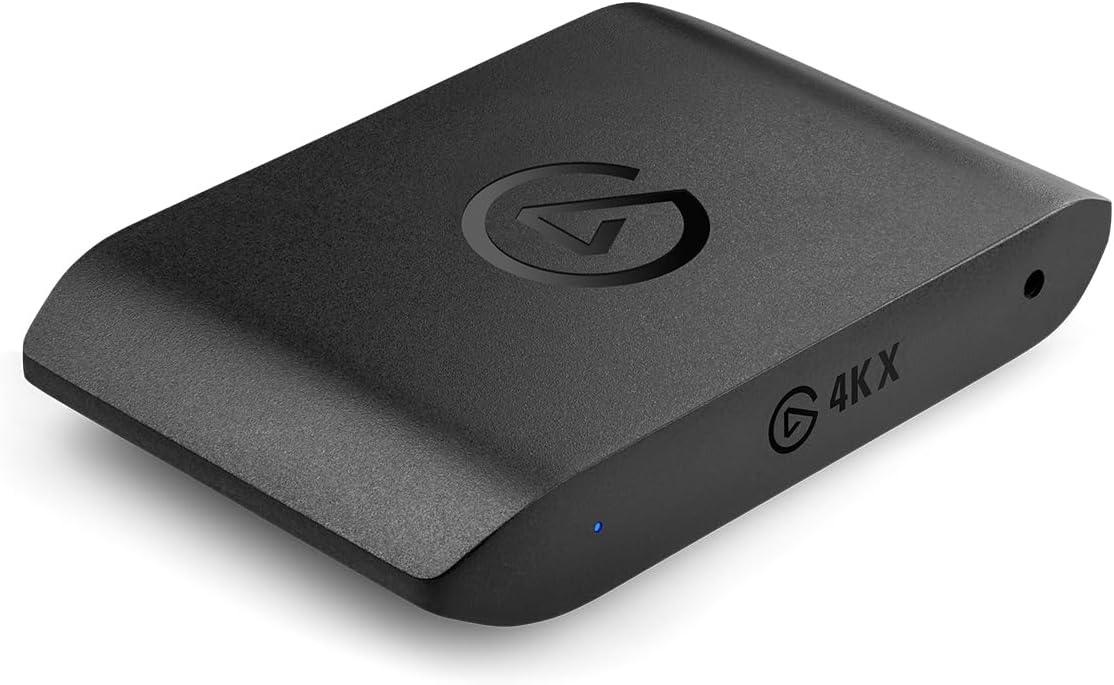
The Elgato 4K X Capture Card stands out as a top choice for streamers seeking high performance. It supports 4K144 capture with ultra-low latency to ensure synchronization.
We may earn a commission when you buy through this link, at no additional cost to you.
Its HDMI 2.1 in/out allows for 240fps recording in 1080p. VRR passthrough eliminates screen tearing for smooth gameplay visuals during broadcasts.
While the price is higher than budget options, the performance justifies the cost for professional users. The build quality ensures reliable operation under heavy streaming loads.
Creators who prioritize frame rates and image quality should choose this device. It delivers flawless streaming across platforms like Twitch and YouTube with ease.
The card captures 4K at 144 frames per second, ensuring sharp visuals during fast-paced gaming moments without lag.
It works effortlessly with major streaming apps like OBS and Streamlabs for flexible broadcasting across various platforms instantly.
We may earn a commission when you buy through this link, at no additional cost to you.
This internal PCIe capture card offers robust features for dual PC streaming setups with ease. It supports 4K60 passthrough and near-zero latency for instant gameview.
We may earn a commission when you buy through this link, at no additional cost to you.
Users can capture high-motion action at 240fps in 1080p for preserving intense gaming moments in high definition quality reliably. The lifetime warranty adds confidence to the purchase.
Installation requires opening a PC case which might deter some users. However, the performance gain for dual PC setups makes it worth the effort.
Gamers needing stable internal connections should consider this option. It delivers professional streaming quality while maintaining perfect sync between broadcast and gameplay.
Enjoy native 4K60 resolution while capturing every detail in matching quality to ensure no visual compromises during broadcasts.
A lifetime warranty and expert customer support ensure your streaming setup performs at peak levels over the long term.
We may earn a commission when you buy through this link, at no additional cost to you.
The RØDE X Streamer X combines a video capture card with a professional audio interface. It allows connecting two computers simultaneously with dual USB-C outputs for flexible setups.
We may earn a commission when you buy through this link, at no additional cost to you.
It supports 4K30fps recording or 1440p60fps with HDMI passthrough up to 4K60fps. The built-in wireless receiver connects RØDE Series IV products seamlessly without extra gear.
While its video frame rates are lower than competitors, the audio quality stands out significantly. The Neutrik inputs and Revolution Preamp capture broadcast-grade audio effectively.
Streamers prioritizing audio clarity should choose this model. It simplifies setups by merging audio and video tools into a single compact device.
Record professional-grade audio with high-quality inputs and a Revolution Preamp to ensure clear sound during streams.
An onboard wireless receiver allows direct connection to RØDE Series IV products for convenient and clean streaming setups.
We may earn a commission when you buy through this link, at no additional cost to you.
This internal capture card offers unrivaled gaming experience with 8K60 passthrough capability. It captures action in 4K60 quality while supporting high frame rates up to 240fps in 1080p.
We may earn a commission when you buy through this link, at no additional cost to you.
Seamless visuals are achieved through Variable Refresh Rate passthrough technology that eliminates screen tearing. Ultra-low latency ensures perfect synchronization between broadcast and gameplay moments.
The premium price reflects its high-end specifications and internal design. Users seeking maximum video fidelity should invest in this reliable internal solution.
Professional streamers needing internal stability and top-tier specs will appreciate this device. It delivers consistent performance for demanding gaming and recording scenarios.
Immerse yourself in pure gameplay at 8K60 resolution while effortlessly capturing the action in stunning 4K60 quality.
Harness HDMI 2.1 to record high frame rates reaching up to 240fps in pristine 1080p resolution for smooth visuals.
We may earn a commission when you buy through this link, at no additional cost to you.
This HDMI USB capture card provides an affordable entry point for streaming beginners. It captures resolution up to 1080p with HDMI loop-out for no delay during gaming.
We may earn a commission when you buy through this link, at no additional cost to you.
No driver or external power supply is required for true plug and play simplicity. Compatible with Windows and Mac OS using USB 3.0 technology for superior low latency.
While 4K input is supported at 30 or 60Hz, output is limited to 1080p. However, its price makes it accessible for casual streamers on a tight budget.
Beginners needing simple connectivity should pick this device. It supports commentary via mic-in and works with OBS and Twitch effectively.
No drivers or power supply needed; the device identifies automatically as a webcam once plugged in.
Suitable for Windows and Mac OS with USB 3.0 technology for easy live streaming to major platforms.
We may earn a commission when you buy through this link, at no additional cost to you.
The PORTTA DX20R supports stunning gameplay capture in 4K at 60Hz with ultra-low latency. It features advanced VRR and HDR technology for superior image quality and smoother gameplay.
We may earn a commission when you buy through this link, at no additional cost to you.
Real-time operation parameters are visible on a smart display for easy ring light control. It offers broad compatibility with Windows, macOS, and Linux without driver installation.
While it requires downloading utility software for enhanced control, the customization options are extensive. This flexibility appeals to users who want detailed settings management.
Streamers seeking balanced features should choose this model. It delivers high quality without breaking the bank while offering smart control features.
Enjoy superior image quality with Variable Refresh Rate and High Dynamic Range for smoother gameplay experiences.
Real-time parameters and a smart switch allow easy display and ring light control via a simple press and hold.
We may earn a commission when you buy through this link, at no additional cost to you.
This acer USB 3.0 capture card provides 4K input and smooth 1080P 60Hz output. It uses YUY2 technology to deliver richer colors than MJPEG for lifelike streaming.
We may earn a commission when you buy through this link, at no additional cost to you.
Users can plug in a headset or mic directly for easy commentary without extra adapters. It supports Windows, macOS, Android, and various gaming devices for broad use.
While the output resolution is limited to 1080P at 60Hz, the price point is highly competitive. It fits easily in a bag for outdoor streams due to its small size.
Budget creators needing simple streaming should consider this option. It offers low-latency performance and wide device support at a very accessible price.
Enjoy stunning clarity with 4K input and smooth 1080P 60Hz output for lifelike live streaming and recording.
Works with major platforms and devices including PS5, Xbox, Switch, DSLR cameras, PC, macOS, and Android.
We may earn a commission when you buy through this link, at no additional cost to you.
The XIIXMASK capture card supports up to 4K60 capture via USB 3.0 and handles 1080P input recording at 120FPS. It is a strong option for high-frame-rate needs.
We may earn a commission when you buy through this link, at no additional cost to you.
Setup is easy without drivers or external power. A convenient USB A/C connection works with Windows, macOS, and Android for broad platform compatibility.
While the design is basic, the video format options provide flexibility. It also includes 3.5mm ports for integrating external audio sources seamlessly.
Content creators prioritizing frame rates should pick this card. It balances performance with affordability for high-quality recording scenarios.
Handles high-frame-rate input and recording up to 1080P at 120 frames per second for smoother motion capture.
Works with Switch, PS5, Xbox, Quest, DSLR, webcams, and more for versatile device integration.
We may earn a commission when you buy through this link, at no additional cost to you.
The Osee GoStream M2 features two 4K60 HDMI inputs for connecting multiple streaming sources. It supports Picture in Picture and Picture by Picture layouts for switching screens easily.
We may earn a commission when you buy through this link, at no additional cost to you.
USB 3.0 increases transmission rate for smooth game video and audio capture. The built-in 3.5mm ports allow direct headset connection without extra equipment.
While the output is limited to 1080P at 60FPS, the dual input flexibility is unique. It allows mixing camera and game feeds simultaneously for diverse content.
Streamers needing flexible source switching should consider this model. Its unique layout options make it stand out for conference and gaming hybrids.
Two 4K60 HDMI inputs allow connection with two different sources like camera and gaming device simultaneously.
Supports Picture in Picture and Picture by Picture layouts to meet diverse needs for live streaming.
We may earn a commission when you buy through this link, at no additional cost to you.
The AVerMedia GC575 offers ultra-low latency internal capture for PS5 and Xbox Series X. It supports refresh rates up to 240Hz for competitive gaming experiences.
We may earn a commission when you buy through this link, at no additional cost to you.
With HDMI 2.1 internal PCIe design, it provides 4K60 recording and ultra-low latency sync. This internal integration ensures stable performance during long streaming sessions.
Installation requires an open PCIe slot but delivers reliable hardware performance. It is ideal for high refresh rate gamers needing consistent capture.
Gamers seeking high refresh support should pick this model. It ensures level-up gameplay with stable 240Hz capability for intense matches.
Level up your gameplay with support for refresh rates up to 240Hz for competitive precision.
Internal PCIe design ensures stable performance and ultra-low latency sync for demanding recording needs.
We may earn a commission when you buy through this link, at no additional cost to you.
Selecting the right capture card involves assessing resolution support, latency requirements, and connectivity options to match your streaming setup needs.
The resolution and frame rate capabilities determine the quality of your streamed video. Cards supporting 4K at high frame rates like 60Hz or 144Hz ensure sharp and smooth visuals for viewers. Lower resolution options like 1080P 60FPS may suffice for beginners but limit future upgrades.
Prioritize a card that matches your source output to avoid bottlenecks.
Latency is the delay between game action and its appearance on stream. Low latency ensures your audience sees events in real time. Models with USB 3.0 or PCIe internal designs typically offer lower latency than older USB standards.
Check for ultra-low latency features to maintain viewer engagement during fast-paced gameplay.
Connectivity refers to how the card connects to your computer and gaming console. USB external cards offer portability while internal PCIe cards provide stability. Ensure the ports like HDMI 2.1 match your console's output to utilize full features.
Choose connectivity based on your PC case and cable management preferences.
Software compatibility ensures the card works with streaming platforms like OBS or Streamlabs. Some cards come with proprietary tools for advanced settings while others rely on standard drivers. Verify that drivers are available for your operating system to avoid installation issues.
Select a card that integrates easily with your current streaming workflow.
Audio capabilities include microphone inputs and audio loop capabilities. Cards with built-in audio ports allow direct mic connection without extra interfaces. This simplifies setup for streamers who want high-quality commentary integrated into the video feed.
Look for 3.5mm mic-in ports if you need integrated audio commentary options.
Build quality affects the lifespan and reliability of the device during long sessions. Premium models often have metal housings and better heat dissipation. A solid warranty provides peace of mind against manufacturing defects or failure.
Invest in a well-built card with a warranty that covers streaming demands.
Budget considerations balance features against cost to find value. Premium cards offer high-end specs like 8K pass-through while budget options suffice for basic needs. Assess your streaming goals to determine if investing in premium features is worthwhile.
Match your spending to the performance level needed for your audience.
Start by connecting your gaming console to the input port and your PC to the output port using high-speed HDMI cables. Ensure the PC software recognizes the capture device as a camera source.
Adjust settings within your streaming software to match the resolution and frame rate of your source. Calibrate audio levels using the mic-in port if available for synchronized commentary.
Keep the card clean by avoiding dust and ensuring adequate airflow around internal components. Update firmware regularly to maintain compatibility with new consoles and software.
Internal capture cards install inside a PC and connect via PCIe slots for stable low latency performance. External cards connect via USB ports and offer portability for mobile setups but may require external power.
Most capture cards work with standard streaming software like OBS without extra drivers. Some models provide proprietary utilities for advanced settings like color grading or audio mixing options.
To eliminate audio sync issues check for ultra-low latency modes in your card settings. Adjust audio delay settings in streaming software until the microphone matches on screen lip movements.
Most single-input capture cards can only connect to one console at a time. Models with dual inputs allow switching between devices but require manual configuration to select sources properly.
USB 3.0 or higher is typically required to handle the bandwidth of 4K streaming. Older USB 2.0 ports may bottleneck the signal resulting in dropped frames or laggy video.
Blurry streams often occur when the capture resolution is lower than the source output. Ensure your capture card settings match the console output resolution for clear and sharp video.
The top picks like the Elgato 4K X offer superior performance for those prioritizing frame rates and low latency. Budget options provide essential connectivity for beginners without overspending.
Prioritize latency performance and software compatibility to ensure smooth broadcasting. Internal models deliver stability while external ones offer flexibility depending on your setup.
Prices fluctuate regularly so check current deals before buying. Investing in a reliable capture card enhances your streaming quality significantly for viewers.