
Sipeed Tang Nano 20K
4.5Editor score
Open source development board
RISC-V Linux support
Affordable entry level price
This guide compares the top FPGA retro consoles for authentic gaming, covering performance, connectivity, and core support to help enthusiasts find the perfect
FPGA retro consoles offer authentic hardware emulation with low latency and precise timing. These systems replicate classic game behavior better than software emulators. Enthusiasts value the open source nature and flexibility of FPGA based gaming devices.
We evaluated ten top FPGA retro consoles based on hardware specs, core support, and connectivity options. Each product was assessed for portability, expandability, and overall user experience. The list includes both development boards and handheld gaming devices.
Each pick highlights unique strengths for developers, collectors, or casual gamers. Prices and availability change frequently so check current listings before buying. Use this guide to match your specific needs with the right FPGA platform.
4.5Editor score

4.5Editor score

4.5Editor score
The following table provides a side-by-side comparison of all ten FPGA retro consoles evaluated in this guide. Each entry highlights key specifications to help you quickly identify the right system for your gaming or development needs.

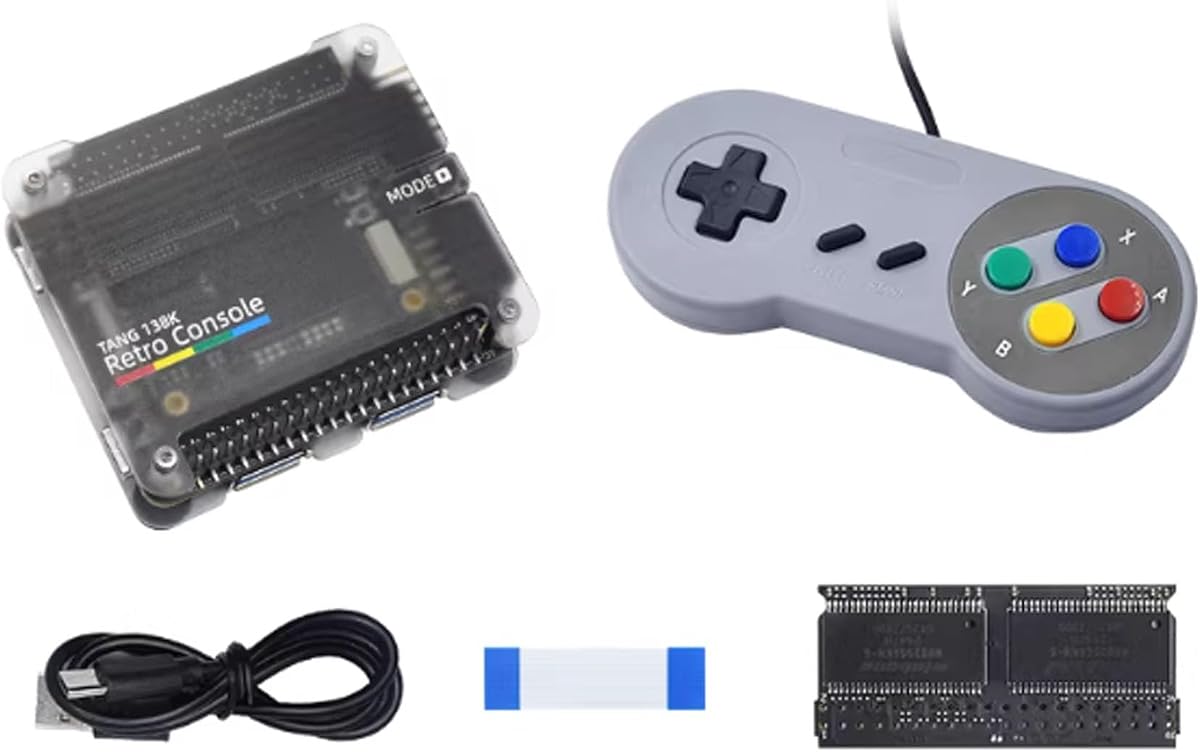


The Sipeed Tang Console 138K stands out as a top FPGA development board with retro gaming capabilities. Its large logic cell count allows for accurate emulation of classic consoles. The HDMI output ensures compatibility with modern monitors and TVs.
We may earn a commission when you buy through this link, at no additional cost to you.
Its high capacity FPGA supports demanding game cores like SNES and Amiga. The dual PMOD ports enable custom peripherals and controller support. Integration with the Raspberry Pi 5 as a PCIe HAT adds unique flexibility for desktop setups.
While it lacks preloaded games, the open source SDK empowers developers to customize the experience. The learning curve may be steep for casual users. However, the performance and expandability justify the effort for enthusiasts.
Buy this if you prioritize hardware accuracy and expansion options. It suits developers and retro gaming enthusiasts who want full control. The versatile connectivity makes it ideal for advanced project integration.
The 138K LUT4 logic enables complex cores that mimic original hardware timing and behavior closely.
Dual PMOD ports and PCIe HAT support allow for custom controllers and system integration flexibility.
We may earn a commission when you buy through this link, at no additional cost to you.
The Sipeed Tang Console FPGA is a Linux development board with strong retro console potential. It supports multiple SOM configurations from 60K to 138K LUTs. The USB3.0 and HDMI output ensure modern connectivity options.
We may earn a commission when you buy through this link, at no additional cost to you.
Its Linux system enables advanced customization and multitasking. The small form factor makes it easy to integrate into portable setups. The onboard BL616 MCU aids in debugging and firmware management.
Users may face a setup process before gaming. The lack of preloaded games means users must source ROMs. However, the flexibility offers rewards for those willing to invest time.
This device is perfect for developers wanting a dual-purpose board. It balances performance with portability. Choose it for its Linux capabilities and robust FPGA support.
Running Linux allows users to modify software and manage multiple emulator cores efficiently.
USB3.0 and HDMI provide high-speed data transfer and high-resolution video output.
We may earn a commission when you buy through this link, at no additional cost to you.
The Sipeed Tang Console 138K FPGA Development Board is designed for silent operation. Its fanless design makes it ideal for quiet environments. The integration of a RISC-V hardcore core adds processing versatility.
We may earn a commission when you buy through this link, at no additional cost to you.
With HDMI and 3.5mm audio outputs, it supports full multimedia experiences. The compact size fits into small setups. Dual PMOD and GPIO ports enable extensive customization.
The lack of preloaded games requires users to build their own library. The technical setup may be challenging for beginners. However, the silence and performance are unmatched.
Choose this for quiet and powerful FPGA gaming. It fits well in minimalist setups. Prioritize it if noise reduction and RISC-V features matter.
The fanless operation ensures zero noise, perfect for quiet gaming sessions.
Integrated RISC-V core allows for advanced processing and software flexibility.
We may earn a commission when you buy through this link, at no additional cost to you.
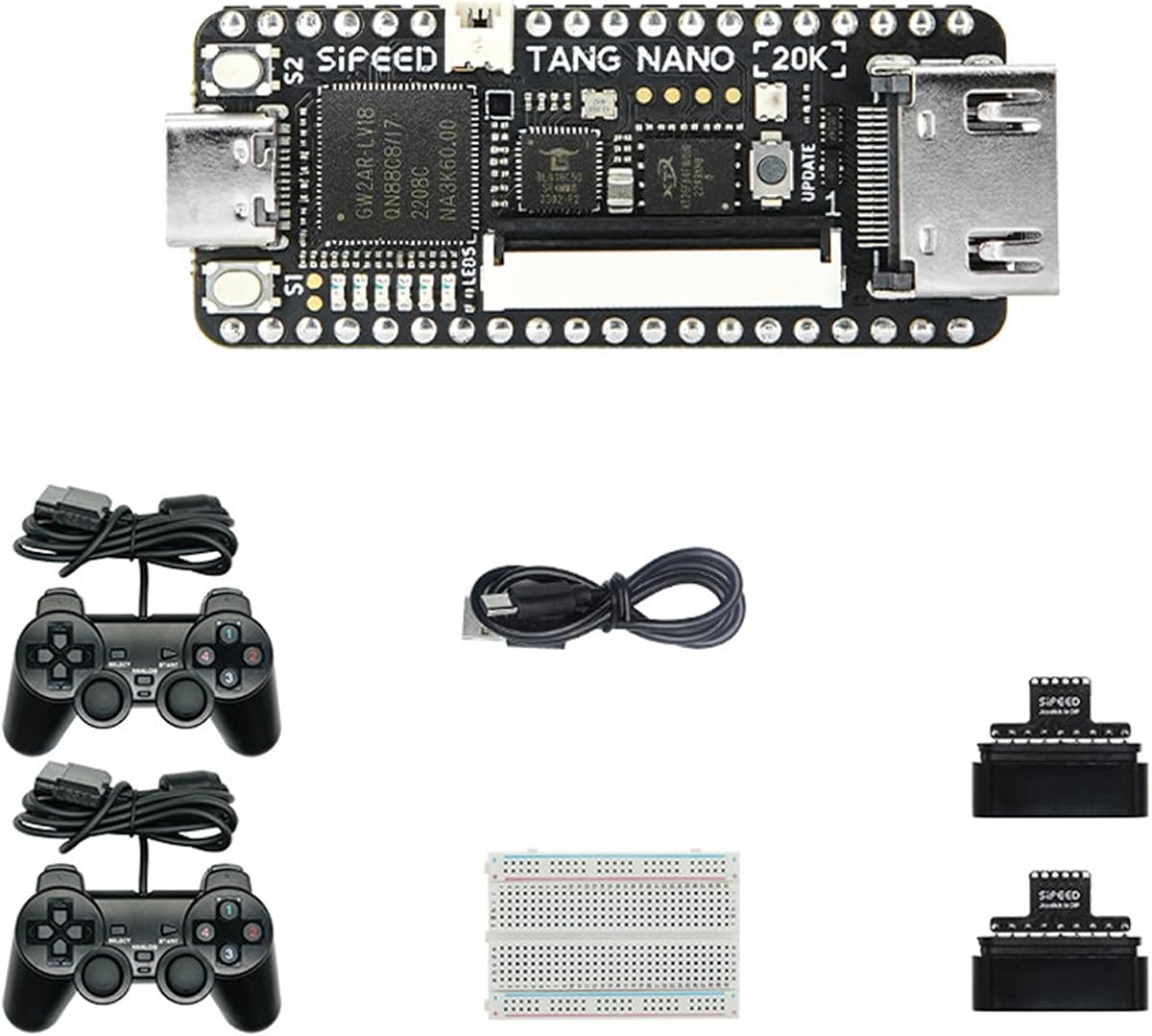
The Sipeed Tang Nano 20K is an affordable FPGA board ideal for beginners. It supports Linux and offers microSD storage for game libraries. The RGB LCD support enables visual customization.
We may earn a commission when you buy through this link, at no additional cost to you.
Its 20K LUT4 capacity suits classic game cores like NES and SNES. The JTAG and USB debugging tools simplify development. The community support helps users troubleshoot quickly.
Logic limits prevent supporting complex consoles like modern systems. Users must configure the system manually. Despite this, it remains the best budget option.
Buy this to start FPGA retro gaming without high costs. It offers robust features for the price. Choose it for its affordability and open source benefits.
Low cost makes it accessible for hobbyists entering the FPGA retro console market.
Runs Linux for enhanced software flexibility and emulator management.
We may earn a commission when you buy through this link, at no additional cost to you.
The Sipeed Tang Nano 20K Kit offers an open source FPGA solution. It runs a RISC-V Linux system for flexibility. MicroSD support allows easy game library management.
We may earn a commission when you buy through this link, at no additional cost to you.
Multiple display outputs including RGB and HDMI enhance compatibility. The community provides extensive tutorials and cores. This makes development easier for newcomers.
Advanced consoles may exceed the logic capacity. Setup requires technical patience. Yet the value and support make it ideal for hobbyists.
Select this for open source gaming flexibility. It provides great features at a low cost. Prioritize it for community-driven development.
Open source hardware allows users to modify and share their own cores.
Supports various displays including RGB and HDMI for versatile setups.
We may earn a commission when you buy through this link, at no additional cost to you.
The Sipeed Tang Nano 20K Single Board provides Linux retro gaming. The BL616 debugger simplifies firmware updates. High-speed SPI enables fast data transfer.
We may earn a commission when you buy through this link, at no additional cost to you.
NES emulator support ensures accurate classic gameplay. The compact design fits easily. Community support provides essential resources.
Complex cores may face limitations. Setup requires manual work. But it remains a reliable Linux solution.
Choose this for Linux-based FPGA gaming. It balances performance and cost. Prioritize it for debugging features.
The onboard BL616 chip simplifies debugging and firmware updates.
High-speed SPI supports fast communication with peripherals and memory.
We may earn a commission when you buy through this link, at no additional cost to you.
The Arduboy FX-C is a premium handheld console with over 300 preloaded games. USB-C enables multiplayer battles. Its credit card size fits in wallets.
We may earn a commission when you buy through this link, at no additional cost to you.
Long battery life supports extended gaming. STEM coding tools help learn C. The OLED screen ensures clear visuals.
It supports 8-bit games only. Screen size is small. Yet it remains great for casual play.
Buy this for portable retro gaming. It suits travelers and coders. Choose it for preloaded convenience.
Over 300 games come preloaded for instant gaming.
USB-C and link cable enable local multiplayer battles.
We may earn a commission when you buy through this link, at no additional cost to you.
The Trimui Brick Pro features a high resolution IPS display. Hall effect joysticks ensure precise control. The Allwinner A133P chip supports 20+ emulators.
We may earn a commission when you buy through this link, at no additional cost to you.
5000mAh battery lasts up to 5 hours. Fast charging reduces downtime. The screen offers wide viewing angles.
No preloaded games mean users must add ROMs. An SD card is needed. But the display quality is excellent.
Choose this for portable high-quality gaming. It suits visual enthusiasts. Prioritize it for its screen.
The 3.95-inch IPS screen delivers sharp and vibrant visuals.
Hall effect joysticks provide precise and drift-free control.
We may earn a commission when you buy through this link, at no additional cost to you.
The RG40XXV is a Linux handheld with game library. It supports various emulators. The controls enable precise gameplay.
We may earn a commission when you buy through this link, at no additional cost to you.
Battery life supports long sessions. Storage is expandable. The system is stable.
Setup may vary. No games preloaded. Yet it offers strong performance.
Choose this for Linux handheld gaming. It suits collectors. Prioritize it for software flexibility.
Runs Linux for flexible software and core management.
Games come preloaded for instant classic gaming.
We may earn a commission when you buy through this link, at no additional cost to you.
The TRIMUI Brick PRO offers a fully laminated screen. Open-source Linux OS enables customization. RGB mood lighting adds style.
We may earn a commission when you buy through this link, at no additional cost to you.
Dual USB-C ports support charging and accessories. Battery life is strong. Controls are precise.
Requires SD card for games. Setup involves manual work. But the screen is stunning.
Choose this for premium portable gaming. It suits visual fans. Prioritize it for its screen.
The laminated screen reduces glare and improves contrast.
Runs open-source Linux for flexible software management.
We may earn a commission when you buy through this link, at no additional cost to you.
Selecting the right FPGA retro console depends on your technical needs and gaming preferences. Consider factors like logic capacity, output options, and system flexibility before buying.
Logic capacity measured in LUT4s determines how many and which game cores the console can run. Higher capacity allows for complex emulation like SNES or Amiga. Lower capacity is enough for NES or GBA. Choose based on desired retro systems.
Look for at least 20K LUT4 for basic needs or 60K+ for advanced cores.
HDMI support ensures compatibility with modern displays. Some boards offer RGB or LCD outputs for original setups. Resolution and refresh rate affect visual fidelity. Check output options match your display.
Prioritize HDMI for modern TV compatibility and high refresh rates.
PMOD ports and GPIO pins allow for custom controllers and peripherals. USB3.0 provides fast data transfer. Some boards support Pi HATs for integration. Evaluate ports needed for your project.
Choose boards with sufficient ports for your desired hardware extensions.
Linux support enables software customization and multitasking. Open source SDKs allow core modifications. Some units are plug-and-play. Others require coding. Decide based on technical comfort.
Linux support adds flexibility but may require more setup time.
Handheld consoles offer on-the-go gaming. Development boards fit desktop setups. Dimensions matter for transport. Weight affects usability. Choose based on gaming habits.
Prioritize portable form factors for travel or desktop for home use.
Some units come with preloaded games. Others require manual installation. Preloaded saves time but limits library. Check content availability before purchase.
Look for preloaded libraries if you want instant gaming.
Active communities provide cores, tutorials, and troubleshooting. Open source projects benefit from contributions. Check forums and wikis for resources.
Choose platforms with strong communities for easier development.
For handhelds, battery capacity affects play time. Look for efficient chips and large mAh. Charging speed also matters. Check battery specs before buying.
Prioritize larger batteries for longer portable sessions.
Begin by reading the user guide and SDK documentation. Install required drivers and software tools. Connect controllers and cables securely before powering on. Use the HDMI or appropriate video output for display.
Load ROMs via SD card or USB. Configure emulator cores through the system settings. Adjust refresh rates to match your display. Save settings to preserve configurations. Test games for smooth performance.
Store the device in a cool dry place. Keep vents clean to prevent overheating. Use soft cloths to clean screens. Avoid excessive bending or pressure on connectors. Update firmware regularly for new features.
FPGA retro consoles are hardware devices that use Field Programmable Gate Arrays to emulate classic gaming systems. They replicate original hardware timing and behavior more accurately than software emulators. These consoles offer low latency and precise gameplay for retro enthusiasts.
Some units require technical knowledge to configure software and cores. Others come preloaded and are plug-and-play. Basic coding helps for customization but is not always mandatory. Check product specs for difficulty level.
Most FPGA consoles do not accept physical cartridges directly. They use digital ROMs loaded via storage. Some units support adapters for cartridge playback. Check specific board capabilities before purchase.
FPGA hardware itself is legal. Emulating games depends on ownership of original software. Using ROMs you do not own may violate copyright. Ensure compliance with local laws and licensing.
Entry-level boards like the Tang Nano 20K are ideal for beginners. They offer open source support and community help. The Arduboy FX-C is also user-friendly with preloaded games. Start simple to learn the basics.
Many boards have PMOD or GPIO ports for custom controllers. USB ports also support standard gamepads. Use adapters or open source libraries to interface devices. Check compatibility with your preferred controllers.
Most FPGA devices support firmware updates via USB. Developers release updates regularly. Use provided tools to flash new firmware. Always follow instructions to avoid bricking the device.
Supported games depend on the FPGA capacity and core. Systems support NES, SNES, GBA, MD, and more. Check core compatibility for desired classics. Community forums list available cores.
The top picks for FPGA retro consoles include the Sipeed Tang Console for development power and the Arduboy FX-C for portable gaming. Each offers unique strengths for different needs.
Prioritize logic capacity, output quality, and system flexibility based on your goals. Beginners may prefer plug-and-play units while developers benefit from open-source boards.
Prices and availability fluctuate so verify current listings. Check community support before buying to ensure long-term usability and resources.