
Proster LCR Meter
4.5Editor score
Rotatable LCD screen
Complete test kit
9V battery powered
This guide compares the top Lcr Meter models for electronics repair and hobbyists, detailing accuracy, features, and value to help you choose the right tool
An Lcr meter is an essential tool for anyone working with electronics, offering precise measurements of inductance, capacitance, and resistance. Unlike standard multimeters, these devices provide deeper insights into component health and performance, making them vital for repair shops and labs.
We evaluated ten leading Lcr meter options based on accuracy, range, usability, and additional features like sorting and calibration. Our analysis covers handheld units for portability and benchtop models for professional-grade stability and data logging capabilities.
Each pick highlights key strengths and ideal use cases to help you find the best fit for your needs. Please note that prices and availability can change frequently, so check current listings before making your final purchase decision.
4.5Editor score

4.7Editor score

4.4Editor score
The following table provides a side-by-side overview of the ten top-rated Lcr meters available today. Compare their key specifications, display types, and connectivity options to quickly identify the model that best suits your specific testing requirements.

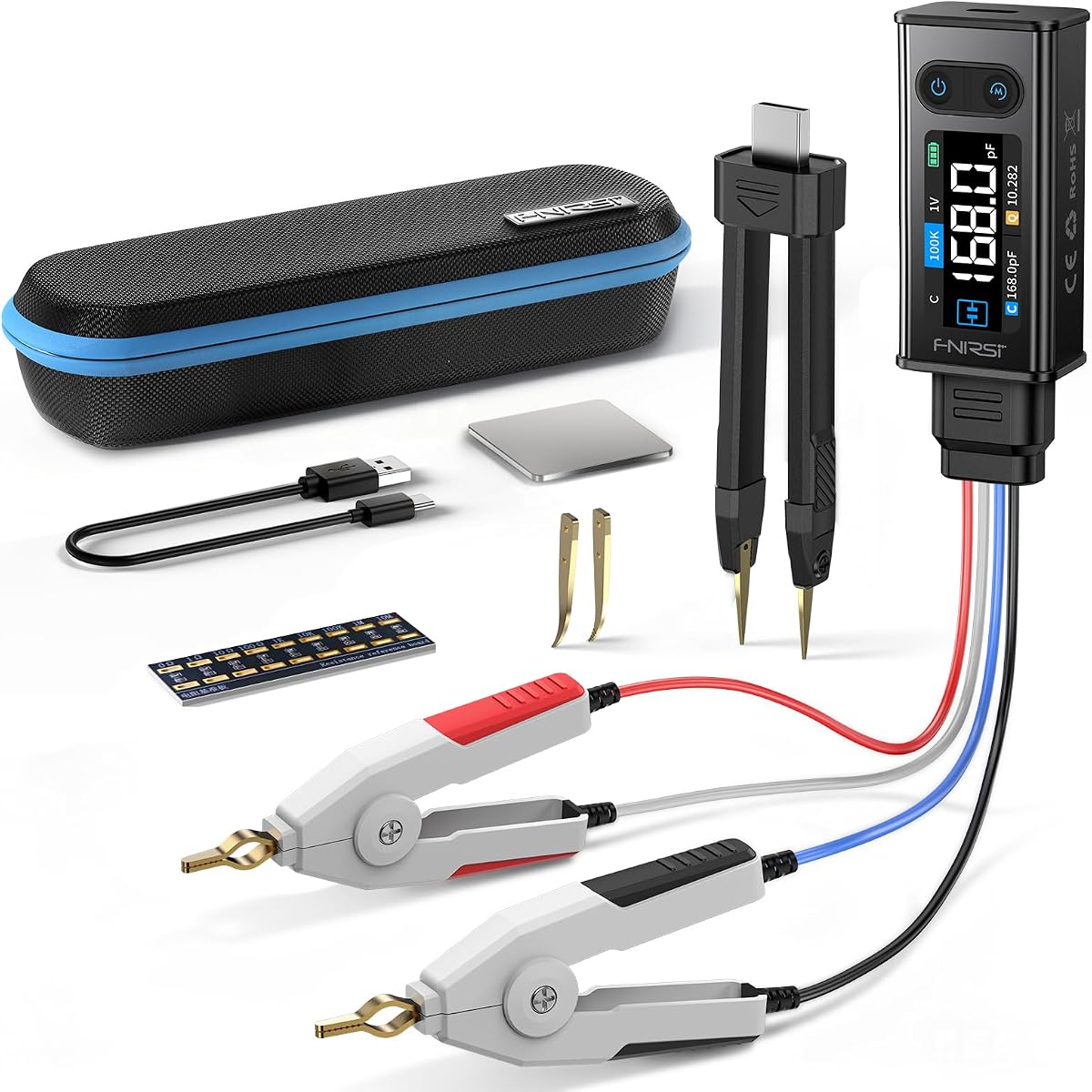


The FNIRSI LC1020E stands out as a top-tier handheld Lcr meter offering high precision and user-friendly features. With a 19,999 count display and dual parameter readout, it delivers detailed insights for electronics enthusiasts and professionals alike.
We may earn a commission when you buy through this link, at no additional cost to you.
Its smart sorting mode calculates relative error against preset tolerances, making component screening highly efficient. The adjustable test voltage and internal bias options allow for versatile testing across capacitors, resistors, and inductors.
While it requires components to be discharged before measurement, this is standard practice for safety and accuracy. The lack of onboard testing capability is a minor trade-off given the overall performance and portability of the device.
Anyone needing a reliable tool for repair shops or hobby labs will find this model ideal. Its balance of accuracy, speed, and modern interface makes it a strong recommendation for general Lcr meter needs.
Fast sampling rates and multiple frequency options ensure accurate readings for various component types quickly.
The large color display and intuitive menu system reduce learning curves and improve daily usability.
We may earn a commission when you buy through this link, at no additional cost to you.
The DE-5000 Handheld Lcr Meter is a robust tool known for its straightforward operation and comprehensive measurement capabilities. It supports dual display modes to show primary and secondary parameters simultaneously for deeper analysis.
We may earn a commission when you buy through this link, at no additional cost to you.
Its fully auto ranging feature simplifies the process by selecting the best range automatically. Users can measure inductance, capacitance, and resistance directly without needing to manually adjust settings for each test.
The lack of digital connectivity like USB limits data logging capabilities compared to modern models. However, its physical durability and classic design remain appealing for those who prefer simplicity.
This model is well-suited for field technicians and hobbyists who need a durable unit without complex setups. Its wide frequency range and accessory options make it a solid choice for general testing.
Auto ranging and smart mode reduce the need for manual input during repetitive testing tasks.
While it offers solid standalone performance, it lacks modern ports for computer data transfer.
We may earn a commission when you buy through this link, at no additional cost to you.
The MATRIX MCR5200 is a high-end benchtop Lcr meter designed for environments demanding top-tier accuracy and stability. With a basic accuracy of 0.1%, it is ideal for quality control and research applications.
We may earn a commission when you buy through this link, at no additional cost to you.
It supports a wide frequency range from 40Hz to 200kHz, covering nearly all standard testing scenarios. Connectivity options like USB and RS232C allow for seamless data transfer and integration with PC software.
Its large benchtop footprint means it is not portable, and the price reflects its professional positioning. These factors are acceptable trade-offs for users who prioritize precision and data management over portability.
Lab professionals and quality assurance teams will appreciate its detailed measurement capabilities and robust features. It represents the top end of the market for those needing reliable, high-resolution testing.
The 0.1% accuracy ensures that even minute component variations are detected reliably.
Multiple communication ports enable efficient archiving and analysis of test results.
We may earn a commission when you buy through this link, at no additional cost to you.
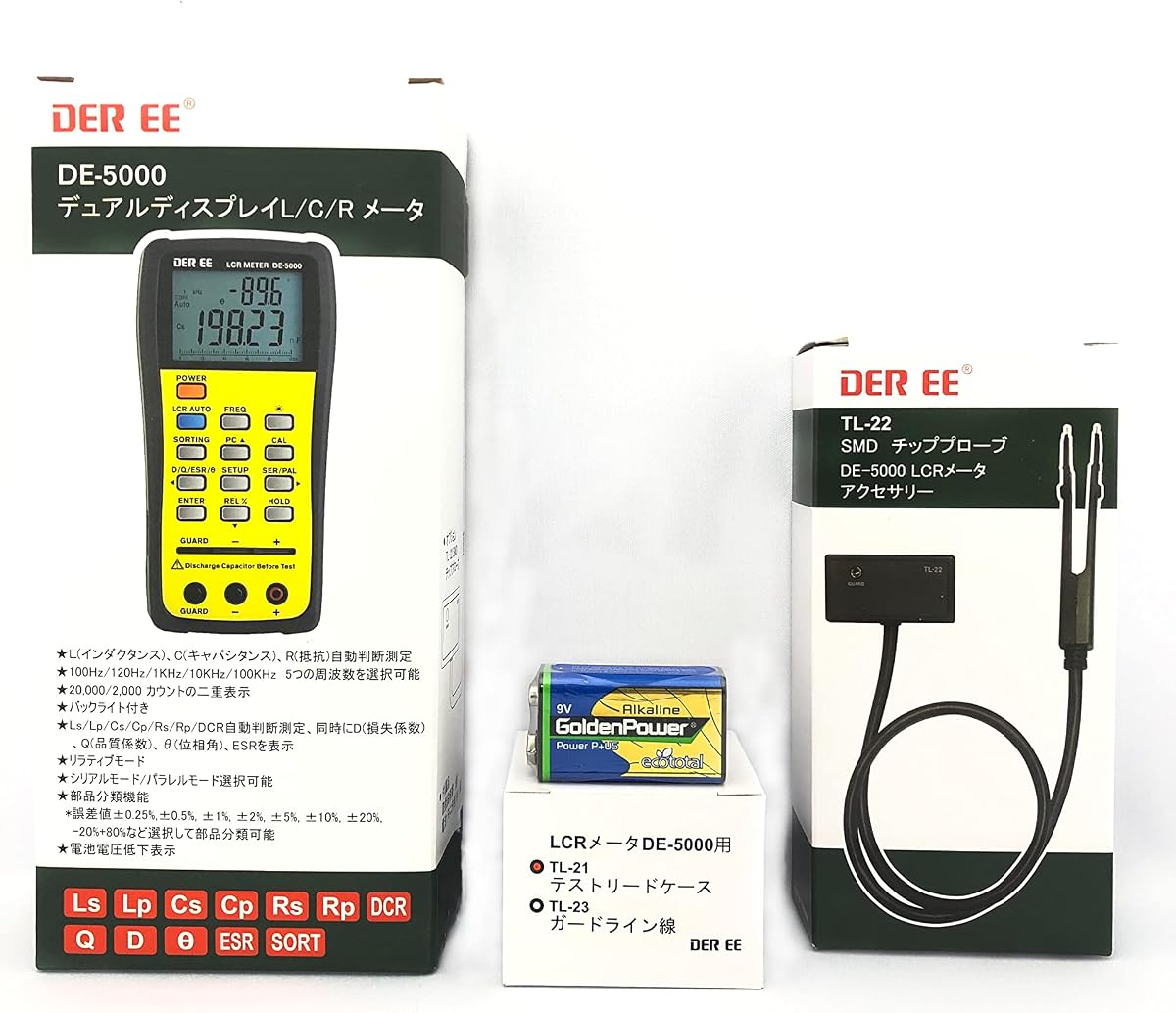
This DE-5000 High Accuracy variant offers a complete kit including essential test leads for immediate use. The backlit display ensures readability in various lighting conditions, making it versatile for workbenches and field use.
We may earn a commission when you buy through this link, at no additional cost to you.
Its ISO 9001 certification assures consistent quality control during manufacturing. Users can configure multiple tolerance settings to suit different project requirements without needing complex external tools.
The device relies on older design elements such as a monochrome screen and heavier casing. These features do not detract from its core performance but may feel dated compared to newer models.
It is an excellent choice for users who value certification and completeness in their purchase. The ready-to-use setup saves time and ensures you have everything needed for testing right out of the box.
ISO certification provides confidence in the reliability of the device and its measurements.
Included test leads and cases mean you can start testing immediately after purchase.
We may earn a commission when you buy through this link, at no additional cost to you.
The Proster LCR Meter is designed to provide accurate inductance, capacitance, and resistance measurements at an accessible price. Its rotatable LCD allows users to view readings from any angle comfortably during long sessions.
We may earn a commission when you buy through this link, at no additional cost to you.
With a 3 times per second sampling rate, it offers quick feedback for component verification. The inclusion of zero adjust for capacitance helps eliminate stray lead effects for more accurate results.
While it lacks advanced features like sorting or high frequency options, it covers the essentials for hobbyists and students. The build quality is sufficient for light to moderate use without breaking the budget.
This model is perfect for entry-level electronics work or educational purposes. It strikes a practical balance between cost and functionality for those who do not need professional-grade specs.
The adjustable screen and simple layout make it easy to learn and operate.
It delivers essential testing capabilities at a fraction of the cost of premium units.
We may earn a commission when you buy through this link, at no additional cost to you.
The FNIRSI LCR-ST2 is a specialized Lcr meter built specifically for testing SMD and through-hole components with precision. Its tweezer design allows for easy handling of small parts without requiring complex fixtures or leads.
We may earn a commission when you buy through this link, at no additional cost to you.
It supports a full range scan from 100Hz to 100kHz, covering most common electronics needs. The primary and secondary display modes provide detailed data such as impedance and quality factor for thorough analysis.
The rechargeable battery and magnetic back add convenience for workspace organization. However, the small display might be difficult to read in low light conditions compared to larger models.
This unit is highly recommended for electronics repair technicians working with modern surface mount devices. Its portability and ease of use make it a valuable tool for quick diagnostics on the bench.
The tweezer tips provide direct access to tiny components without soldering or clamps.
Built-in magnet and rechargeable battery reduce cable clutter and improve mobility.
We may earn a commission when you buy through this link, at no additional cost to you.
The Peak Atlas LCR45 focuses on delivering enhanced resolution for precise impedance measurements and component analysis. It automatically or manually selects component types to simplify the testing workflow for users.
We may earn a commission when you buy through this link, at no additional cost to you.
Its ability to measure down to 0.2uH and 0.2pF makes it suitable for high sensitivity applications. The menu system is designed to be straightforward, reducing the time needed to access specific settings.
The unit lacks digital storage features which may limit its use in data-heavy environments. Despite this, its high accuracy and reliable performance remain strong points for specialized technical tasks.
Professionals looking for a dedicated impedance and Lcr meter will find this unit highly capable. Its warranty and build quality provide confidence for long-term usage in demanding settings.
The enhanced resolution ensures that subtle variations in components are not missed.
A clean interface and automatic detection minimize user errors during testing.
We may earn a commission when you buy through this link, at no additional cost to you.
The B&K Precision 879B is a professional handheld Lcr meter that excels in clarity and universal measurement capabilities. Its dual display system shows both primary and secondary parameters to ensure users get full context.
We may earn a commission when you buy through this link, at no additional cost to you.
With a backlit display, it performs well in dark or shadowed environments where visibility is key. The design is optimized for handheld use with a compact form factor that fits comfortably in one hand.
Battery life can be a constraint during extended testing sessions without a spare. Additionally the interface design does not feel as modern as some newer digital competitors.
This meter is ideal for technicians who need a trusted tool for consistent field performance. Its balance of readability and functionality makes it a robust choice for daily maintenance tasks.
Dual displays and backlighting ensure accurate data reading in various conditions.
The handheld design allows for easy transport between workstations or job sites.
We may earn a commission when you buy through this link, at no additional cost to you.
The Extech LCR200 provides a practical solution for testing passive components with a built-in fixture for easy setup. Its dual backlit display allows for clear simultaneous readouts of primary and secondary parameters.
We may earn a commission when you buy through this link, at no additional cost to you.
It supports open and short calibration to eliminate stray impedance which improves measurement accuracy significantly. The five selectable test frequencies offer flexibility for different component testing scenarios.
The built-in fixture is convenient but can restrict portability compared to fully handheld units. Navigation through menus can sometimes feel slower than expected when changing settings quickly.
Users who need a reliable unit for routine lab testing will appreciate its consistent performance. It is a strong contender for those who value built-in tools and calibration options.
Open and short calibration ensures high accuracy by correcting for environmental interference.
Dual backlit screens provide excellent visibility for complex data sets in any light.
We may earn a commission when you buy through this link, at no additional cost to you.
The Pro1-100KHz LCR Meter combines high accuracy with smart tweezers to offer a professional testing solution. With a basic accuracy of 0.1%, it meets the needs of precision electronics work and diagnostics.
We may earn a commission when you buy through this link, at no additional cost to you.
It provides three test voltage options and a wide range for resistance, capacitance, and inductance. Additional features like diode testing add versatility to the standard LCR measurement capabilities.
Advanced features may require some time to master for new users. The price point is higher than basic units but justified by the detailed performance and support offered.
This model is best for professionals needing high fidelity measurements and flexible testing tools. Its combination of accuracy and accessory support makes it a strong value for serious users.
The 0.1% accuracy ensures reliable performance for critical component verification tasks.
Multiple voltage levels and diode testing expand the range of testable devices.
We may earn a commission when you buy through this link, at no additional cost to you.
Selecting the right Lcr meter requires considering your specific testing needs and budget constraints.
Accuracy is critical for professional applications where small errors matter. Look for meters with 0.1% basic accuracy or better for reliable component verification and research.
Higher resolution allows you to see minute changes in components which is vital for detecting early signs of failure.
Different components behave differently at various frequencies. Ensure the meter covers frequencies relevant to your work like 100Hz to 100kHz for general electronics.
A wider frequency range gives you flexibility to test more diverse component types effectively.
A clear display with backlighting ensures you can read values in any environment. Dual displays are advantageous for seeing primary and secondary parameters simultaneously.
An intuitive interface reduces errors and speeds up your workflow during repetitive testing tasks.
USB or RS232C ports allow you to log data to a computer for analysis. This is essential for quality control and detailed reporting.
If data logging is not required, a standalone unit might be simpler and more cost effective.
Handheld units are best for field work or mobile repair. Benchtop models offer better stability for stationary lab work.
Consider the weight and size of the device along with battery life for portable options.
Features like auto sorting, ESR measurement, and calibration modes add value. Sorting helps quickly identify components within tolerance limits.
Look for units that include necessary accessories like test leads to avoid extra costs.
Prices vary significantly from budget models to professional benchtop units. Determine your budget early to narrow down suitable options quickly.
A good warranty ensures protection against manufacturing defects and provides peace of mind for your investment.
Established brands often provide better support and firmware updates. Check reviews for long-term reliability of the model.
Choosing a reputable brand can save time on troubleshooting and repairs later.
Before using the meter, ensure that all components are fully discharged to avoid damaging the device. Calibrate the meter using open and short settings to ensure accurate readings.
Select the appropriate test frequency based on the component type and impedance to get the most precise results. Always use the correct test fixtures or leads for the best contact.
Store the meter in a dry place and avoid exposure to extreme temperatures or moisture. Regularly check and replace batteries if using a portable unit to maintain reliability.
A standard multimeter measures basic resistance and continuity but lacks specialized parameters for inductance and capacitance. An Lcr meter provides detailed readings like ESR and Q factor which are crucial for component health.
To calibrate, start by connecting an open lead to measure stray capacitance and then a short lead to measure internal resistance. Use the meter's calibration mode to reset these values for accurate testing.
Measuring components in circuit is risky due to parallel paths affecting accuracy. It is best to desolder components before testing to ensure reliable results and prevent meter damage.
Equivalent Series Resistance or ESR measures internal resistance in capacitors which impacts performance. High ESR indicates a failing capacitor that might need replacement soon.
Yes standard probes are hard to use on small surface mount parts. Tweezer style testers are designed to grip SMD components easily for accurate testing without clamps.
Components react differently at various frequencies so multiple options allow for versatile testing. Higher frequencies are needed for RF parts while lower frequencies suit general capacitors and inductors.
Keep the device in a protective case away from dust and humidity to prolong its life. Ensure batteries are removed if storing for long periods to prevent leakage damage.
With proper care a quality LCR meter can last many years of regular use. Regular calibration and avoiding overloads help maintain its precision and reliability over time.
Our review highlights the FNIRSI LC1020E as the top overall choice with its balance of features and accuracy. For budget users the Proster model offers great value without sacrificing essential capabilities.
When selecting a meter prioritize accuracy and display clarity to ensure your testing is efficient and reliable. Consider connectivity and portability based on whether you work in a lab or field.
Prices and availability fluctuate so always check current listings before purchasing to get the best deal. Investing in the right tool will improve your work quality and reliability for future projects.