
RC Cellmeter 7
4.7Editor score
Compact digital voltage checker
Handles multiple cell types easily
Affordable price for hobbyists
This guide compares the top lithium ion battery testers for accuracy and speed helping you choose the right tool for automotive and small cell testing needs.
Finding the right lithium ion battery tester is essential for anyone managing vehicle power systems or small electronics. A good tester provides accurate health readings without damaging delicate cells.
We evaluated ten top models based on compatibility, accuracy, and ease of use. Each product was analyzed for its ability to handle specific battery chemistries and voltage ranges effectively.
Every pick highlights key features and real-world performance. Prices fluctuate often so verify current listings before purchasing to ensure you get the best value for your needs.
4.7Editor score

4.5Editor score

4.5Editor score
The following table offers a side-by-side comparison of all ten selected models allowing you to quickly identify the best fit for your specific testing requirements and budget constraints.


The ANCEL BT410 stands out as a top choice for modern vehicle diagnostics. It handles both lead acid and lithium ion batteries with ease. Its high accuracy ensures reliable data for critical decisions.
We may earn a commission when you buy through this link, at no additional cost to you.
This model excels in providing comprehensive health metrics like SOH and SOC. The QR report feature allows you to share data with professionals instantly. It covers cranking and charging systems too.
While it is pricier than basic models the versatility justifies the cost. It requires power from the battery being tested which limits use on completely dead cells. Otherwise it is robust.
Buyers needing a single tool for mixed fleets should choose this unit. It offers professional grade insights without the complexity of full scan tools. It is a reliable long term investment.
Its ability to test both 12V and 24V systems plus lithium chemistries makes it unique in its price range.
The QR code report function simplifies communication with mechanics by providing a digital snapshot of test results.
We may earn a commission when you buy through this link, at no additional cost to you.
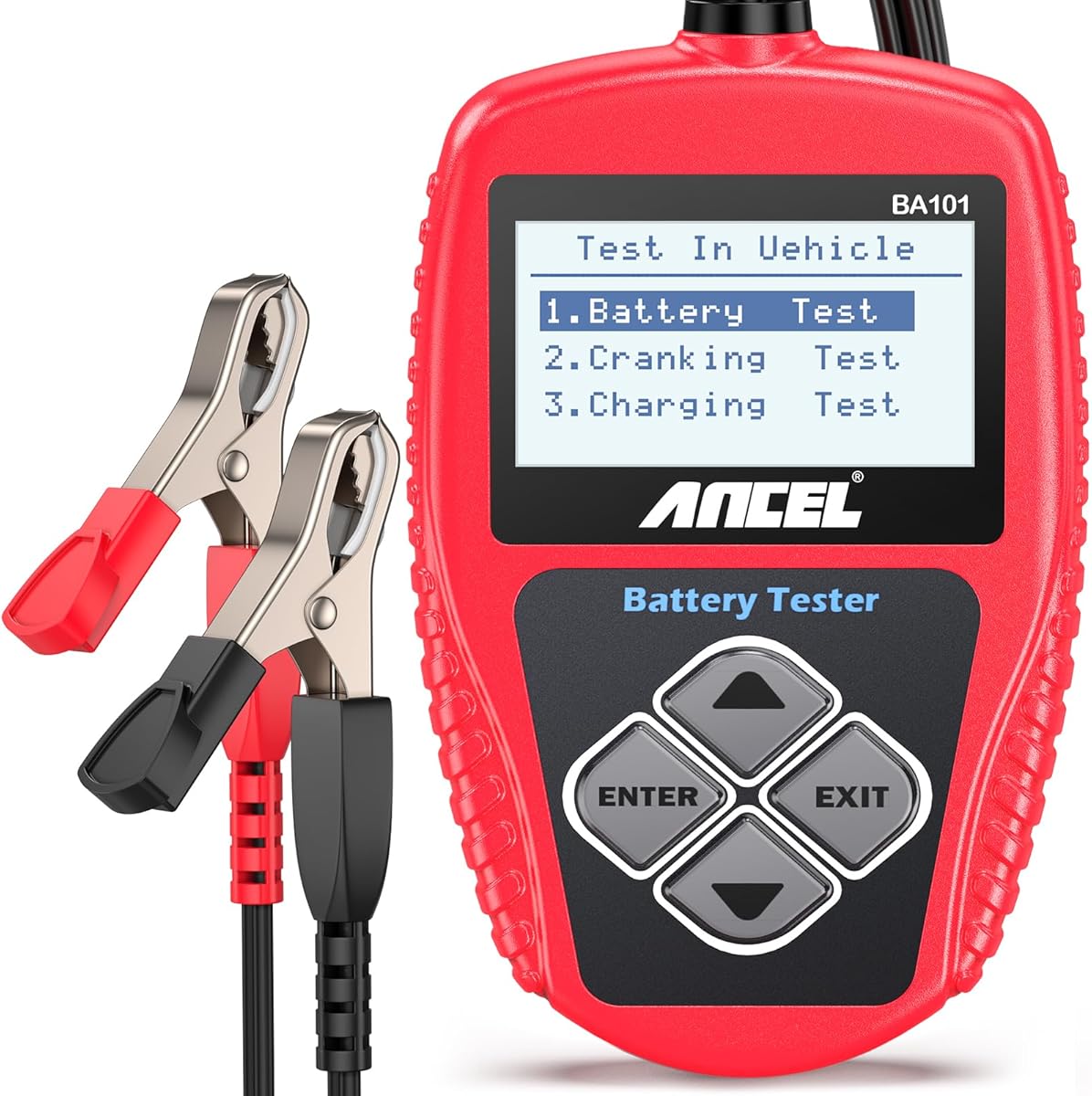
The ANCEL BA101 is a straightforward tool for 12V lead acid batteries. It offers clear readings for voltage and health status. It is designed for quick checks without complexity.
We may earn a commission when you buy through this link, at no additional cost to you.
Its copper clips and smart chip deliver dependable results for most users. The backlight ensures visibility in dark garages. It handles charging system checks effectively too.
It lacks lithium ion support which limits its use for modern EVs. The monochrome screen is functional but less vibrant than newer color models. Still it is a solid budget pick.
Home users focused on standard cars and trucks will find this sufficient. It balances cost and performance well for routine maintenance tasks. It is a trusted option for basic diagnostics.
Simple menu navigation allows anyone to run tests quickly without needing a manual constantly.
Built in safeguards prevent damage from accidental reverse connections ensuring safe use every time.
We may earn a commission when you buy through this link, at no additional cost to you.
This module is ideal for hobbyists working with 18650 lithium cells. It measures capacity and resistance accurately without extra tools. It allows four tests at once for efficiency.
We may earn a commission when you buy through this link, at no additional cost to you.
The real-time voltage display helps track discharge curves clearly. It integrates charge and discharge to save setup time. It is specific to one cell format though.
Users must follow manual steps carefully to get best results. It does not support automotive batteries which limits general use. However it is perfect for pack builders.
Those building custom power banks should prioritize this tool. It gives deep insights into individual cell health for reliability. It is a cost effective solution for electronics.
It supports testing up to 99999mAh allowing it to handle large pack configurations easily.
Resistance data helps identify weak cells that might cause heat or failure during high load.
We may earn a commission when you buy through this link, at no additional cost to you.
The BT310 offers strong performance for routine checks. It supports lithium batteries and stores past test results. This helps track health changes over months or years.
We may earn a commission when you buy through this link, at no additional cost to you.
Its five result modes simplify decision making for users. You do not need to guess if a battery is good. The silicone case protects it from drops and bumps.
It lacks a color screen which makes data harder to read in some light. Manual entry of ratings is required which adds a step. Still it is robust.
Fleet managers tracking multiple vehicles will appreciate the history log. It prevents missed issues by showing trends. It is a practical choice for repeated maintenance.
Stored data allows you to see how a battery ages over time before it fails completely.
The reinforced case and cables withstand rough shop environments for long term use.
We may earn a commission when you buy through this link, at no additional cost to you.
This unit is small enough to store in a glove box. It tests 12V lead acid batteries efficiently. The LED lights provide quick status without reading numbers.
We may earn a commission when you buy through this link, at no additional cost to you.
Its spark proof clamps ensure safety during connection. The menu system is intuitive for first time users. It is great for quick roadside checks or home use.
It does not support lithium or 24V systems which limits versatility. The compact size means slightly less robust build than larger tools. Still it is handy.
Drivers who want a backup tool in their car should pick this. It offers peace of mind without bulk. It is a smart addition for any fleet.
Colored LEDs allow rapid assessment of battery health without detailed technical knowledge.
It draws power from the vehicle so you never need to charge the tool itself.
We may earn a commission when you buy through this link, at no additional cost to you.
The RC Cellmeter 7 is a pocket sized tool for hobbyists. It checks cell balance and voltage gaps effectively. It is ideal for RC drones or small packs.
We may earn a commission when you buy through this link, at no additional cost to you.
It shows lowest and highest cell voltages clearly. This helps identify imbalanced packs before damage occurs. It is very light and easy to carry around.
It is not designed for large car batteries. Users need a specific adapter for some cell types. Still it is the best for portable precision checking.
Hobbyists building custom packs will love this gadget. It ensures safety by checking individual cells. It is an essential tool for electronics.
Displaying voltage gaps helps you spot unbalanced cells that could cause failure.
Its tiny size and weight make it perfect for field work or travel.
We may earn a commission when you buy through this link, at no additional cost to you.
The BT705 is built for pros needing one-person testing. Its long cable lets you see results from the driver seat. It guides you step by step through tests.
We may earn a commission when you buy through this link, at no additional cost to you.
It performs well in cold conditions down to 32F. The hard case protects it during transport. It is reliable for professional fleet maintenance.
It lacks lithium testing which might limit future proofing. The price is higher than entry models. However the cable length solves a major pain point.
Mechanics working alone will find it highly efficient. It reduces the need for helpers. It is a solid tool for serious shops.
The long cable allows you to start the car and read results alone without assistance.
Trusted by Project Farm it has proven reliability in independent testing scenarios.
We may earn a commission when you buy through this link, at no additional cost to you.
This upgraded version offers speed and clarity. It delivers results 30% faster with refined algorithms. The color screen makes data readable in all light.
We may earn a commission when you buy through this link, at no additional cost to you.
It includes ripple voltage testing for alternator health. This helps spot charging issues early. It is robust and built for frequent use.
The price is high and it excludes lithium batteries. However the speed and color display are significant upgrades. It is a premium choice for pros.
High volume users will benefit from the efficiency. It reduces time per test. It is a top tier option for modern shops.
Faster processing means less wait time for diagnostics during busy repair sessions.
Ripple voltage detection helps you spot alternator issues that standard tests miss.
We may earn a commission when you buy through this link, at no additional cost to you.
This tester is perfect for household batteries. It fits AA to 9V with a magnetic slot. You just press a button to get health info.
We may earn a commission when you buy through this link, at no additional cost to you.
It is rechargeable via USB which saves cost. The magnetic slider keeps batteries secure during tests. It is quick and easy to use.
It requires manual type selection which slows testing slightly. It does not show detailed graphs like lab tools. Still it is handy for home.
Families with many batteries will find it convenient. It reduces waste by confirming old batteries status. It is a smart home tool.
The magnetic slot prevents slipping making one handed testing smooth and safe.
USB-C rechargeability reduces the need for disposable batteries inside the tester itself.
We may earn a commission when you buy through this link, at no additional cost to you.
The La Crosse tester is a classic easy to use model. It uses a tray insert for secure contact. LEDs show strength without complex numbers.
We may earn a commission when you buy through this link, at no additional cost to you.
You just slide the tray closed to test. It covers common types like AA and 9V. It is durable and requires no extra batteries.
It lacks digital precision which might matter for exact work. The analog style is good for rough checks. Still it is very affordable.
For general home use this is a great pick. It helps you save money by avoiding waste. It is a reliable budget option.
The pull tray design makes inserting batteries simple even for users with less dexterity.
It runs on the test battery so you never need to buy replacements for the tool.
We may earn a commission when you buy through this link, at no additional cost to you.
Selecting the right tester requires understanding your battery types and test needs. This guide outlines key factors to ensure accurate and safe diagnostics.
Confirm the tester supports Lithium Ion cells. Many automotive units focus on lead acid and fail with lithium. Check the specs for compatibility with your battery type before purchasing.
Always verify lithium support if you use modern vehicles or electronics.
Ensure the unit covers your system voltage like 12V or 24V. Some hobby tools only test small cells and won't work on car batteries. Matching voltage prevents damage to the device.
Select a tester that matches your system voltage for safe operation.
Look for high accuracy chips that offer 99%+ precision. Faster processing saves time during routine checks. Reliable data is critical for making repair decisions.
Prioritize models with proven accuracy for critical diagnostics.
Choose a display that works in your environment. Color LCDs help in bright sunlight but basic backlit screens work indoors. Clear results prevent errors during testing.
Pick a display type that suits your working conditions.
Reverse polarity and short circuit protection are vital. They protect your battery and the tool from mistakes. Quality testers include these features as standard.
Always ensure your tester has built-in safety protections.
Long cables help reach batteries in tight spots. A 5-foot cable allows you to test while seated in the driver seat. This improves comfort during long sessions.
Opt for longer cables if access to the battery is difficult.
Extra features like QR reports or data history add value. They help track battery health over time. These features are useful for fleet management.
Consider data tracking features for long-term maintenance.
A robust case protects the tester from drops. Industrial grade tools often include hard cases. Durability ensures the device lasts longer in shop environments.
Look for sturdy housings to extend the life of the unit.
Start by selecting the correct battery type on the tester. Match this to the label on your battery for accurate results. Ensure the device is powered up before connecting.
Connect the red clamp to positive and black to negative. Avoid touching metal parts during the test to prevent shorts. Follow the on-screen prompts to run the test.
Store the tester in a dry case after use. Clean the clamps to prevent corrosion over time. Check the manual for storage instructions specific to your model.
No standard car testers do not support lithium batteries. You must use a unit that explicitly states compatibility with Li-ion chemistries to avoid damaging the cell or the tool.
Most automotive testers draw power from the battery being tested. This means you cannot use them on completely dead batteries. Small hobby testers may use internal batteries.
Testing every few months is ideal for vehicles. For electronics like drones check before each flight. Regular checks help catch voltage drops early before they affect performance.
SOH stands for State of Health. It indicates how much capacity your battery retains compared to when it was new. It is a key metric for deciding on replacement.
Yes if the tester supports 3.7V Li-ion. Always verify the voltage range. Magnetic slots help prevent reverse polarity which is a common risk with small cells.
Use a soft cloth to wipe off dirt or corrosion. Apply a light layer of dielectric grease to prevent future buildup. Clean clamps ensure better contact and accuracy.
CCA means Cold Cranking Amps. It measures a battery power to start an engine in cold weather. You must enter this value correctly for accurate load test results.
Low voltage could mean a depleted battery or a failing alternator. Run a full charging test to see if the system is charging properly. This helps isolate the problem.
We reviewed ten options covering automotive and hobby needs. The ANCEL BT410 leads with dual system support. The RC Cellmeter 7 is best for portable checks.
Prioritize models that support your specific lithium chemistry. Accuracy and safety are more important than extra features for most users.
Check current prices as they change frequently. Selecting the right tool saves money on battery replacements and repairs.